


Trump Meets Xi in Beijing With Trade Deals, Taiwan Tensions and Iran War on the Agenda
Synopsis
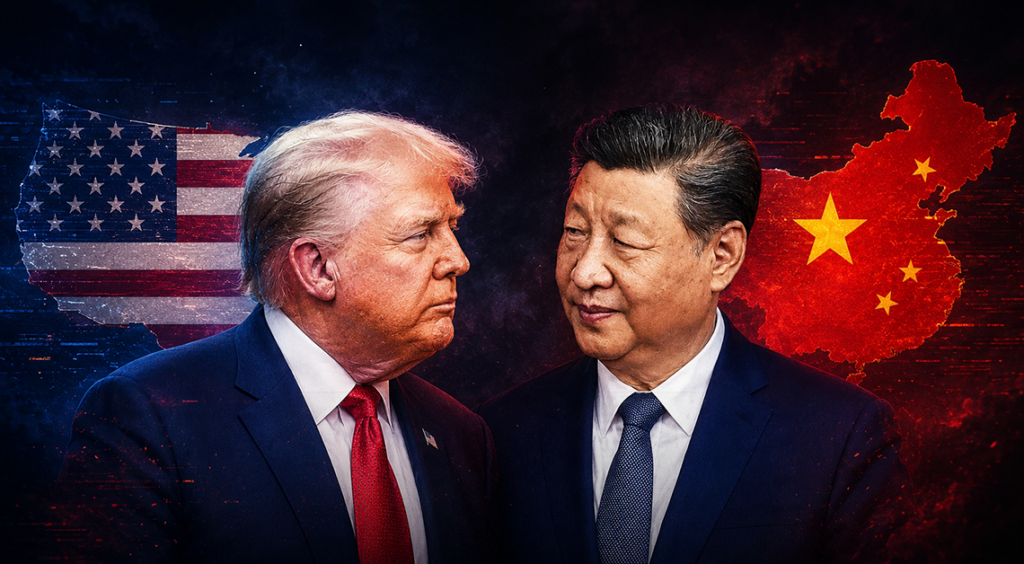
U.S. President Donald Trump met Chinese President Xi Jinping in Beijing for high-level talks focused on trade, Taiwan, and the ongoing Iran war. The meeting comes during rising tensions between Washington and Beijing over military activity around Taiwan, economic competition, and global security concerns. Trade agreements are expected to be a key part of the discussions as both countries try to stabilize relations after months of political pressure and military warnings. The leaders are also expected to address the growing conflict involving Iran, making the summit one of the most closely watched diplomatic meetings of the year.
Donald Trump is headed to Beijing this week for talks with the Chinese president Xi Jinping, but analysts say he arrives weak, not strong. The Iranian conflict, judicial defeats over tariffs and declining approval numbers.
Key Highlights
- Trump will hold an in-person meeting with Xi Jinping on May 14-15 in Beijing.
- Expected deals are smaller beans, beef and the Boeing jets.
- Most Americans believe Trump is handling the Iran war poorly, he needs China’s help to stop it.
- Business leaders accompanying Trump to Beijing include Elon Musk and Apple CEO Tim Cook.
Trump is in Beijing with Xi for the first time since October
Donald Trump heads to Beijing this week for talks with Chinese President Xi Jinping on May 14 and 15, their first in-person summit since the two leaders hit pause on their bruising trade war in October. The trip will include a summit at the Great Hall of the People, a tour of the Temple of Heaven and tea and lunch together, as well as a state banquet.
Trump will be accompanied by a smaller business delegation than in 2017, when he last visited Beijing, with Tesla CEO Elon Musk and Apple chief Tim Cook on his list. Other topics Trump said he would raise include arms sales to Taiwan, the case of jailed media tycoon Jimmy Lai and the release of two Americans who have been detained in China for over a decade.
Why Trump Is Visiting China
Trump was convinced that his tariffs would bring China to heel last year. That has not happened. US courts have overturned key planks of his tariff strategy, the Iran war has sucked up his political capital and approval ratings are plunging in a foretaste of November’s midterm elections.
An Ipsos poll reveals his Iran war is disapproved of by more than 60% of Americans. Expected economic outcomes from the Beijing summit have been markedly downgraded, to just a few commodity agreements and arrangements for handling trade going forward. Trump also wants Xi to leverage China’s relationship with Iran in an effort to help bring about a deal to end the conflict. Beijing is also a key buyer of Iranian oil, raising the prospect that it could be a critical intermediary, given China’s close ties with Tehran.
Global Impact and Ties Between China, US, and Taiwan
The states extend beyond trade. Since October, China has been tightening its grip on the West. It limited rare earth shipments, revealing the extent to which the US, Europe, and Australia rely on China-dominated inputs for electric cars to weapons systems. China is now demanding that the Trump administration rescind existing technology export controls and promise no future retaliation in trade.
Taipei, however, would need to send a clear signal that Washington would not support Taiwanese sovereignty for such an undertaking; the kind of pledge that sets off alarm bells across every US ally in Asia.
What Analysts Are Saying
No breakthrough is expected by analysts. Alejandro Reyes, a Chinese foreign policy expert at the University of Hong Kong said Trump “kind of needs China more than China needs him” and is looking for a foreign policy achievement that signifies he can provide stability rather than just disruption. “I think the most likely result is a token ceasefire that’s mainly to China’s benefit,” Scott Kennedy of Washington’s Centre for Strategic and International Studies said.
Australia’s interests are affected directly by the outcome. Australia’s trade with China is the core of its export system, and every alteration in the US-China relationship, on rare earths, innovation controls or Taiwan, has a prompt effect on Australian markets, products and vital collusions.
FAQs
- When is Trump meeting Xi?
Their first summit since the trade war truce in October, May 14-15 in Beijing.
- Why is Trump going to China?
With close ties to Tehran and with China buying Iranian oil in large quantities, it is however seen as a potential go-between for a settlement of the conflict.
- What does China seek in return?
Relaxation of US policy on Taiwan, relaxation of technology export control, and a pledge to no further tit-for-tat trade actions.
- How does this affect Australia?
Australia is heavily dependent on China as an export market. STherefore, any changes in US-China relations on rare earths, technology or Taiwan directly affect Australian trade and commodities as well as regional security arrangements.
Follow Inspirepreneur Magazine for daily global business news.

At Inspirepreneurs Magazine, covering entrepreneurship, business failures, and the human stories behind the world's most ambitious founders. She writes at the intersection of strategy and storytelling.
You Might Also Like

EU Tariffs Spark Tensions with China over Electric Vehicles

How to Stay Relevant in a Rapidly Evolving Career Landscape
