


EO: How Jaimie Fuller Turned a Sports-Tech Idea Into a Business
Synopsis
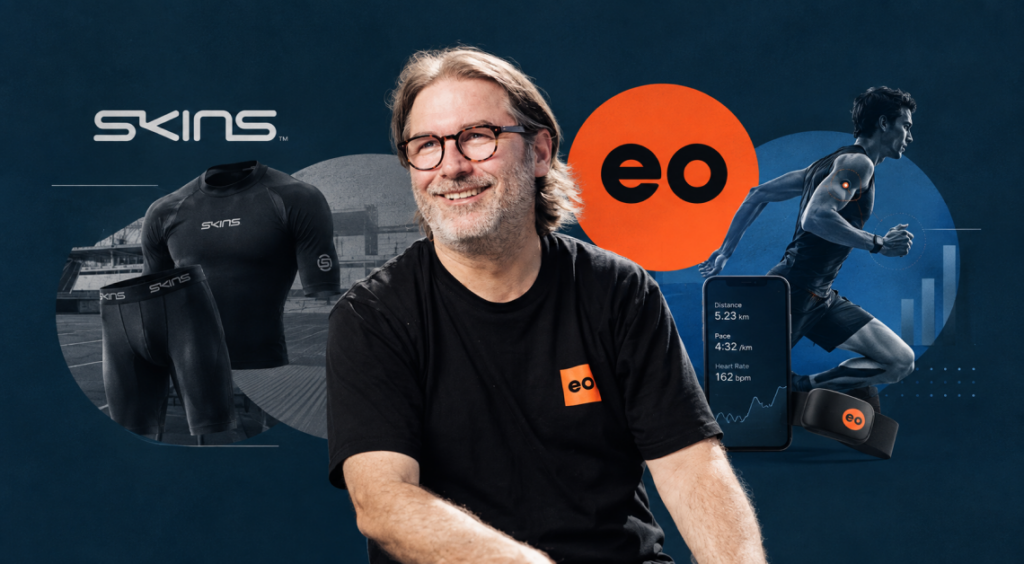
After SKINS collapsed, Jaimie Fuller started again. His next bet was EO, a sports-tech company using data and technology to help athletes perform better.
For Jaimie Fuller, starting anew after SKINS was never about just beginning another apparel company. He had built SKINS up from a floundering sportswear start-up into a worldwide brand, only to watch it crash into bankruptcy, indebtedness and the brutal realisation that even the most successful business can get into trouble when its finances become overly complex. And a parent company of SKINS went bankrupt in Switzerland in January 2019. Fuller had been with the company for 17 years and to see it end this way is hardly an ending he dreamed about.
However Fuller didn’t leave sport behind. Instead, he got into an area nearly the opposite of what he had done previously. Instead of creating clothes for athletes, he wanted to create technology that could reveal insights to athletes that they may not realise on their own. That notion evolved into eo, a sports-technology firm creating devices to evaluate performance, recovery and other physiological qualities of an athlete.
The new business offered Fuller a second chance at building something, but this time with a prized possession: Everything he’d taken away from SKINS.
A Very Different Business
The idea came up after Fuller had started to look at opportunities on the sports tech side following SKINS’ collapse. His initial idea is rather simplified. He was keen on developing an electronic sports ankle brace. However, things changed as he started talking with others in the field of sports science.
Fuller was a great absurdist, and some of the most significant people that Fuller met included Dr Kenneth Graham (sports scientist) who had been associated with elite athletes. Graham came equipped with a long list of ideas and the problems athletes and coaches faced. Instead of attempting to build one product in particular, the group started asking a more general question: how could the components of sport be measured better?
Subsequently, the team welcomed Dean Hawkins. Hawkins had previously worked for a partner of Fuller’s where Hawkins also held senior positions at Adidas, including Germany CFO of Adidas The trio brought vastly different experience. Fuller was the guy that got brands and sport, Graham knew science and athletes, Hawkins had a finance and business background.
The cross was important because eo isn’t gonna be another sportswear brand. It was going to be a measurement-focused technology business.
The First $2.5 Million Bet
The company needed cash to actually build those ideas into real products. The company was able to secure $2.5 million in its seed round, allowing the new firm to continue work on its technology. It then secured further $3 million in Series A financing in 2022, bringing the disclosed money raised by those two rounds to at least $5.5 million. The company was also in the process of raising around $5 million to aid its expansion at the time.
For Fuller, money had been raised not just to have more cash in the business. It taught him that financial decisions often turn into an organization’s greatest challenge, and his experience with SKINS had shown him what happens when they go badly wrong. This time, there was a conscious effort to create a company based on hard-to-copy products that provided athletes with solutions to real-world problems.
That was, like a huge shift in thinking. SKINS had been built around a physical product and incredibly strong branding. The technology, data and scientific research EO was building around were just appendages at that time.
Then Came a Strange Little Device for Swimmers
SwimBETTER was the first big release from EO; it wasn’t anything like Fuller had ever designed and delivered products before.
Unlike a shirt or pair of compression tights, SwimBETTER is made up of small devices that simply hug the hands of a swimmer. The technology captures the forces acting on a swimmer as he or she moves through the water, including any combination of stroke rate and path of hands.
The idea is surprisingly simple. While a coach may observe an athlete swimming, even the most talented coaches cannot view all things underwater. Consider how two swimmers may look the same during their stroke but one might produce less force or move their hand through the water differently. SwimBETTER was created to transform those movements into numbers for swimmers and coaches to analyze.
According to Good Design Australia, each device weighs approximately 30 grams. It uses sensors to gather data during a swim and transmits that information to software for analysis. Put another way, EO was trying to create the type of performance metrics in swimming that have long existed for sports like cycling and athletics.
A Product That Wasn’t Trying to Be Cheap
SwimBETTER had launched in 2022 with the idea that it was not selling to a casual customer, but instead serious swimmers. The device itself sold for around US$800, and an upgraded version with more memory cost about US$1,000 in addition to a software subscription.
That price is itself a flashing beacon of what sort of business Fuller was trying to build. He wasn’t hawking multimillion dollar exercise stealers. Originally, the first customers were elite swimmers/coaches and serious amateurs and triathletes that were willing to pay something to potentially improve their performance.
Launched only by invitation initially, the product rolled out widely in the summer of 2022. This allowed EO time to get the technology into serious athletes’ hands to gather feedback before widening its market reach.
This method of constructing a sports business was so different to the one Fuller used at SKINS. EO therefore focused on doing one thing first, convincing people who cared about the problem that this tech was useful rather than making everyone want the product.
Elite Athletes Became Part of the Story
Fuller already knew the value of elite sport. Prolific athletes had helped elevate SKINS from a small Australian sportswear brand at the time of their rise.
That was the path EO followed only this time, rather than wearing clothing, the athletes were helping validate technology.
Swimmer Kyle Chalmers, Olympic champion and now a face of the company in tandem with Vincent Luis - French triathlete. EO delivered work for sporting organisations including Swimming Australia, South Sydney Rabbitohs and Melbourne City FC. Chalmers and Luis were also described as investors of the firm.
What this worked out to give EO was exactly what a very young sports-technology company requires: people within the professional game who can use the products and gauge whether or not the information was actually useful.
It was also able to answer a question every new sports-technology company eventually has to confront. Does this technology operate out in the wild, or does it just look pretty on a slide?
SwimBETTER Won an Award
In 2022, EO received a second preliminary endorsement when SwimBETTER won in the Sport and Lifestyle category at an Australian Good Design Award.
The product was recognised for its design and the challenge of measuring performance in a sport like swimming. It had to be small enough that it would never get in the way of a swimmer, robust enough to endure repeated baths and useful enough to convert complex metrics into data an athlete could understand.
Being awarded is of little commercial worth to a young company. Yet this is an important milestone as it indicates that the product was being established for more than what its marketing narrative was. And Fuller wasn’t done swimming.
From Swimming to the Brain
The companies second, and largest product for EO, opened up just how ambitious of a company EO actually was.
The business created eo NuroCHEK, a platform that supports neurological evaluation including concussion evaluation. Given that the gold standard to judge an athlete’s condition involves traditional observation and questioning, the technology was created to generate a quantitative score—an objective quantification used by clinicians as part of their clinical assessment.
It consists of a regulated EEG squad and visual stimulation to record response in the brain. EO is set to expand later, but NuroCHEK had previously won FDA 510(k) clearance and the company has direct experience with a far more austere environment than typical consumer fitness technology.
The two products are probably as unrelated as it gets. One observes how a swimmer travels through water; the other analyzes a bodys neurochemical reaction.
Essentially they all have the same core idea. Measure something invisible to the naked eye.
Fuller Was Building More Than One Product
This was back in the day when Fuller was building more than one product. EO never aspired to be just a company that sold a swimming device. This includes performance enhancement, recovery and injury prevention as well as rehabilitation. Which opened up products for other sports and other athletes.
It also looked at other technologies, including research into assessing sweat and hydration. According to SmartCompany, EO was developing sweat-analysis technology alongside CSIRO that could indicate what an athlete loses while exercising.
That was significant, because Fuller was creating a portfolio rather than rolling up the million-dollar bet for one product on one turn.
This also meant that EO might have multiple entry points into the world of sport. Swimming may have been the first entry point, but it didn’t have to be the final destination.
The Technology Started Producing Real Results
But the most interesting element of EO story is what occurred when athletes got serious about using the technology.
The EO website today includes the story of American swimmer Paige Madden who used SwimBETTER to train for the 2024 Paris Olympics. The analytic gave her a good idea of where she needed to work on improving her overall swimming efficiency, Madden and EO said. Over time, she shaved 19 seconds off her 800-metre freestyle personal best and won a bronze medal at the Paris Olympics.
This doesn’t mean that SwimBETTER was solely responsible for the 19-second improvement; an Olympic swimmer’s performance is a function of many components including training, coaching, and fitness. But that is exactly the type of story EO requires. They aren’t peddling data because it sounds cool to be selling data. The intent is to teach athletes how that information can translate into better decisions.
EO recently also features customer stories on other improvements featuring a swimmer who swam 0.8s higher, and another one who improved his/her own swim by 12 seconds per 100 metres. These are not independent scientific trials, but user stories published by the company, so each should be taken as an individual case rather than a certainty.
Yet, they demonstrate that the company has made progress beyond just a whiteboard mock-up. This translates into actual usage of the products.
EO Today Is Still Evolving
Instead of regarding the original product as an endpoint, EO has continued to build upon SwimBETTER. It now sells a feature called eoi, which harnesses this swimming data in a more personal analysis, and synthesizes where someone should spend time in a swim practice.
Ao work on eo SweatTEST, an electrolyte sweat assessment that uses a patch rather than blood samples EO calls it a real-time system to help athletes know what their sweat is costing them during exercise. The product is still listed as ‘coming soon’ on the website.
It gives us a clue about what Fuller was doing with his second business. He isn’t looking to just sell a victorious device and then be done with it. He is attempting to build a business that can with monotonous regularity, find problems in sport then solve them with product. It is a much longer game.
How Fuller Changed the Second Time
The biggest win for EO may not even be a funding round or award. The difference is in the way Fuller approached his second company.
Years of developing a sports brand with SKINS had led him to find himself under a massive financial load. EO is where he created an intersection between science, business and sport. He garnered outside investment and baked technology around thorny problems instead of just making another trendy athletic gadget.
He had also filled the meeting with people who could push back on his concepts. That is important because one of the takeaways from SKINS was that an entrepreneur can’t do it alone.
However, EO’s implementation is not yet fully complete. There is no verifiable public number, suggesting it has grown into a sizable revenue-producing enterprise, so declaring another global behemoth would be premature. But the indications are there: more than US$5.5 million in seed and Series A funding reported, having a commercial product, high profile sporting users and collaborations, an Australian Good Design Award to name a few, additional products in some respects on the way and aspirations internationally as well.
That’s a very nice second act for someone whose last company ended in bankruptcy.
What Fuller Changed the Second Time
Or maybe Jaimie Fuller could have attempted to reboot SKINS. Instead, he decided to create something that had little in common with it.
The first company that worked technology in clothes. The second entail bettign on poker with a casino itself.
But the concept of EO’s SwimBETTER devices is far bigger than any individual device. They are an attempt to convert movements that can only be partially seen by athletes and coaches into useful information. NuroCHEK borrows the same mindset to neurological health, while products in development by the company move toward such things as recovery and hydration.
Isn’t the irony though, that Fuller built EO because of a business he lost?
SKINS made him realise the effects of over-extended credit on a business. It taught him that for growth to happen, it must be backed up with the right monetary choice and surrounded by the right people. And it taught him that the value of building something is not just in how sexy a product looks from the outside.
While EO is still in the works, Fuller has a new idea. He is not trying to see whether athletes could wear his technology any longer. The technology would help athletes know themselves better, that is what he too has tried to do. And after he lost one sports business, it may well end up being the most interesting thing he built next.

At Inspirepreneurs Magazine, covering entrepreneurship, business failures, and the human stories behind the world's most ambitious founders. She writes at the intersection of strategy and storytelling.
You Might Also Like
Asian Countries Buying US Energy to Ease Tariff Pressure
Zuckerberg Denies Allegations of Targeting Kids at Trial
