


Zuckerberg Denies Allegations of Targeting Kids at Trial
Synopsis
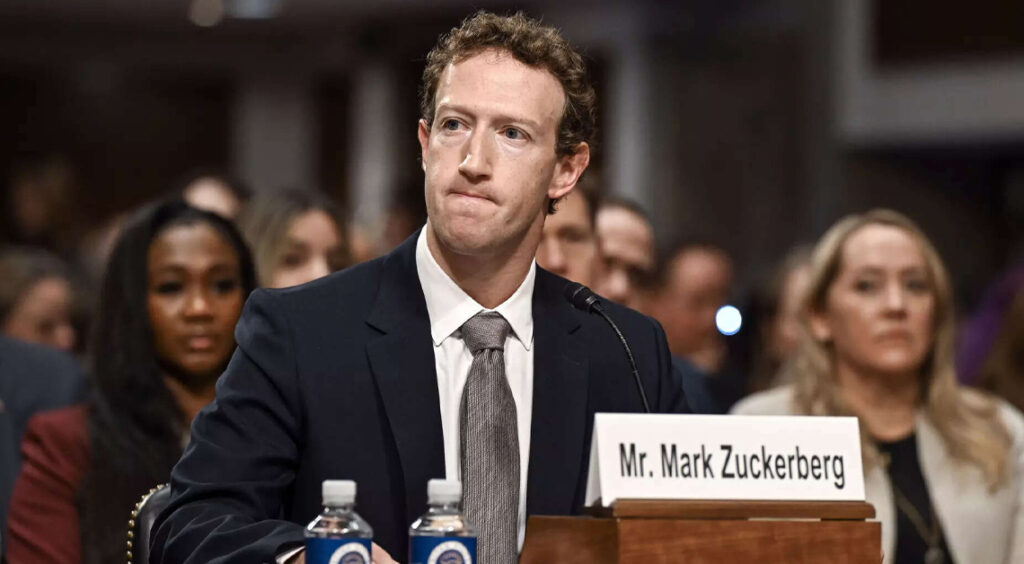
Mark Zuckerberg, the chief executive of Meta, testified on behalf of his company in a Los Angeles trial about whether Instagram and Facebook intentionally damaged the mental health of children. Although internal emails indicate an aspiration to capture the “tween” market, Zuckerberg told a hearing that Meta has a 13-plus age limit. He said responsibility for age verification should rest on mobile firms. The outcome of this test case could significantly alter the law under which social media companies can be held accountable for user safety and addiction.
The chief executive of Meta, Mark Zuckerberg, testified in a Los Angeles courtroom and stated that Instagram didn’t go after children under 13 even as internal documents have shown the company considered “tweens” to be a critical market. The trial, a test case for youth mental health claims, includes fiery debate over whether Meta deliberately created addictive features.
Key Highlights
- Mark Zuckerberg was grilled in Los Angeles about accusations that Instagram is bad for children.
- Internal records reveal previous debates on how to target younger users as tweens.
- Meta CEO says age checks should be the job of phone makers.
- The trial has the potential to establish an enormous legal precedent when it comes to social media liability.
- Competing platforms Snap and TikTok had already settled before they tried their parts of the case.
A Fight About Intent and Internal Documents
The Los Angeles trial hit a boiling point with Mark Zuckerberg testifying to defend Meta over accusations that it contributed to a youth mental health crisis. Central to the case is the testimony of a California woman who says she became depressed and suicidal because of Instagram and YouTube, both designed to encourage addiction from social media.
Zuckerberg held his ground, arguing that Meta does not permit users under 13 on its main platforms. But the tone of the courtroom changed when Mark Lanier, a lawyer for the plaintiff, introduced internal documents dating to 2018 that had said winning “tweens” was essential for the company’s long-term growth.
The Age Verification Blame Game
One particularly controversial moment included an email from Meta’s own head of global affairs, Nick Clegg, who had previously said that the company’s age limits were essentially unenforced or even unenforceable. lock out children, Zuckerberg pivoted the technical burden away from social media companies. He argued that the makers of mobile devices and operating systems, implicitly pointing toward Apple and Google, are better positioned to verify a user’s true age at the device level, rather than individual apps trying to police every sign-up.
The cross-examination also honed in on past remarks made by Zuckerberg before Congress about user engagement. Although the CEO said Meta doesn’t aim to optimise for “maximising time spent” on apps in court, jurors were shown older emails where he held ambitions to achieve double-digit growth in user duration. Zuckerberg defended the discrepancy, explaining that on a wide range of issues, the company’s philosophy has changed markedly over the past decade. He said his previous testimony was accurate, and that the company now focuses on meaningful social interactions instead of mindless scrolling.
A Turning Point for Big Tech Liability
This case is much larger than a personal injury suit; it’s a “test case” (in lawyers’ words) for thousands of cases brought by families, school districts and states across the United States. Traditionally tech giants have been immune from liability for how users behave towards their platforms. But a verdict from this jury, if it holds Meta accountable for the plaintiff’s mental health pain, could lead to a flood of litigation that would cost the industry billions. Snap and TikTok decided to resolve rather than let a jury decide how high the stakes are for the future.
The Global Pushback Against Social Media
The trial arrives at a time when Silicon Valley is under more scrutiny around the world than ever before. Countries including Australia have already tried to limit the use of social media for anyone under 16 and Florida has enacted similar state-level restrictions in the United States. Although Meta’s defence team insists that the plaintiff’s problems originated in a troubled childhood, rather than from an app, it appears the court of public opinion is starting to look skeptical.
At a time when governments and parents are increasingly demanding that technology companies be held responsible for the ways they plug children into their systems, this trial is shaping up to be a pivotal moment in how adolescents will, or perhaps won’t, bond with Big Tech over the next decade.
Follow Inspirepreneur Magazine for the breaking news.

At Inspirepreneurs Magazine, covering entrepreneurship, business failures, and the human stories behind the world's most ambitious founders. She writes at the intersection of strategy and storytelling.


