


Over the Wire: How a Brisbane Startup Built a Multi-Million-Dollar Telecommunications Business
Synopsis
Over the Wire grew from a Brisbane startup into a $112 million telecommunications and IT business by combining connectivity, cloud, voice and managed services before its $347 million acquisition by Aussie Broadband.
For businesses, reliable connectivity is no longer just another technology requirement. It is the infrastructure that keeps employees communicating, customers connected and increasingly important business systems running. But Australia's business telecommunications market was very different when broadband and cloud services were still developing. Companies often had to deal with separate providers for internet, voice, hosting and IT support, creating a fragmented technology environment that could be difficult to manage.
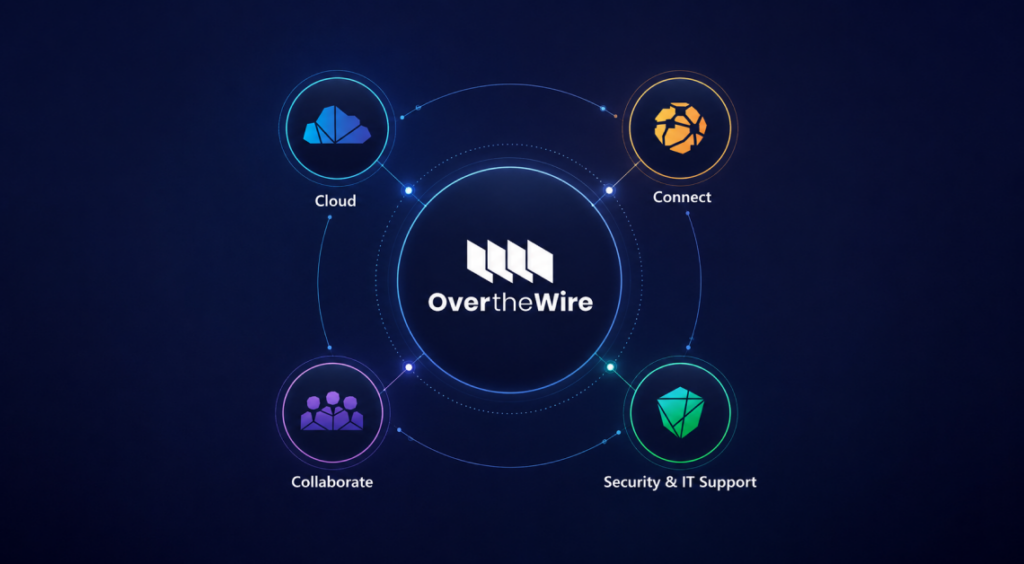
This was the opportunity that Over the Wire pursued. Established in Brisbane in 2007 by Michael Omeros and Brent Paddon, the company built an integrated telecommunications, cloud and IT services business for corporate customers. It brought together services such as data networks, internet, voice, hosting, security and managed IT services under one provider.
Over time, the business expanded through acquisitions, listed on the ASX and grew into a company with more than 16,000 customers and annual revenue of more than A$112 million before it was acquired by Aussie Broadband in 2022.
For entrepreneurs, however, the most interesting part of the story is not the eventual acquisition. It is how two Brisbane technology entrepreneurs identified a fragmented market, combined complementary businesses and steadily built a company large enough to attract one of Australia's fastest-growing telecommunications challengers.
An Industry Moving Beyond Traditional Telecommunications
When Over the Wire emerged in 2007, Australia's telecommunications sector was already changing rapidly.
Broadband internet was becoming essential for businesses while voice communications were gradually moving from traditional telephone systems towards internet-based technologies. Cloud computing was also beginning to change how companies approached their IT infrastructure.
The numbers show how quickly internet use was expanding. According to the Australian Bureau of Statistics, the intermediate use of internet services by Australian businesses increased from A$6.5 billion in 2006–07 to A$7.0 billion in 2007–08, before continuing to rise strongly in subsequent years. By 2017–18, the figure had reached A$25.5 billion.
The opportunity was clear, but businesses faced a practical problem.
Internet connectivity, telephone services, hosting, data networks and IT management were often treated as separate requirements. Businesses had to coordinate different suppliers and technologies, while growing dependence on digital systems meant that failures could quickly affect day-to-day operations.
Over the Wire took a different approach. Instead of concentrating on just one telecommunications product, it aimed to provide an integrated technology environment for businesses.
Two Technology Entrepreneurs Build the Foundation
The company was built around two Brisbane entrepreneurs, Michael Omeros and Brent Paddon.
Omeros had an unusually strong combination of engineering and technology qualifications. He completed a Bachelor of Engineering in Electronics with First Class Honours and a Bachelor of Information Technology with Distinction from Queensland University of Technology in 1994. Before Over the Wire, he held a senior management position at GBST, worked for Zurich Insurance in the UK and founded Celentia, which was later absorbed into the Over the Wire group.
Paddon also came from the telecommunications and IT sector. He completed a Bachelor of IT at QUT in 1996 and later a Graduate Diploma in Business Administration. Before Over the Wire, he founded Brisbane Internet Technology, which was sold to Asia Online, and subsequently held senior roles at WebCentral and PIPE Networks.
The founders therefore did not enter the market as outsiders trying to learn telecommunications from scratch.
They already understood the industry.
That experience became important because Over the Wire's strategy was not simply to sell cheaper internet connections. It was to build a broader technology relationship with corporate customers.
Building an Integrated Business
Between 2007 and 2011, Omeros, Paddon and business partner Jay Binks were involved in building a collection of businesses across telecommunications, cloud and IT. Their focus was on providing corporate customers with an integrated suite of products and services.
One of the company's important early developments was NetSIP, its voice platform.
Binks, who joined Over the Wire in 2008, was instrumental in developing the company's voice platform and helped turn NetSIP into one of its core solution categories. His technology background complemented the founders' broader telecommunications strategy.
This gave Over the Wire a broader offering than a conventional internet provider.
The Business Was Built Through a Series of Strategic Moves
| Year | Milestone | Strategic Importance |
| 2007 | Over the Wire established in Brisbane | Entered the corporate telecommunications and IT market |
| 2008 | Jay Binks joined the business | Helped build the NetSIP voice platform |
| 2009 | Appeared on the BRW Fast Starters list | Early recognition of rapid growth |
| 2015 | Consolidated several businesses and listed on ASX | Created a larger integrated technology company |
| 2015 onward | Organic growth and acquisitions | Expanded customers, products and capabilities |
| 2020 | Acquired Digital Sense | Strengthened cloud and hosting capabilities |
| 2021 | Revenue reached A$112.69 million | Demonstrated scale of the standalone business |
| 2022 | Acquired by Aussie Broadband | Created a larger national telecommunications group |
The ASX Listing Changed the Scale of the Business
A major turning point came in 2015. Michael Omeros led the consolidation of several businesses under the Over the Wire umbrella, including NetSIP, VoIP and PBX provider FaktorTel, and data and hosting business Sanity Technology.
The combined company raised A$10 million and listed on the ASX at a market capitalisation of approximately A$43.5 million. For a technology company, an ASX listing provided something particularly valuable: access to capital for expansion.
Over the Wire used its platform to continue growing organically while also acquiring businesses that could add customers, technology and capabilities.
The strategy was quite straightforward. Rather than building every capability internally, the company could acquire businesses that already had expertise and customers, then bring them into a broader platform.
That approach became particularly visible with the acquisition of Digital Sense Hosting.
Buying Capabilities Instead of Starting From Scratch
In 2020, Over the Wire agreed to acquire Digital Sense Hosting for an upfront consideration of A$27 million, with additional deferred consideration of up to A$12 million based on performance targets. Digital Sense had generated approximately A$18.3 million in revenue and A$5.4 million in EBITDA in FY2020.
The acquisition strengthened Over the Wire's cloud and hosting capabilities.
This was important because the market was moving away from simply buying connectivity. Businesses increasingly wanted technology partners that could provide connectivity, cloud infrastructure, security and managed services together.
Over the Wire's own FY2021 annual report shows how diversified the business had become. Data networks and internet, voice, hosting, and security and managed services were all significant revenue streams. Total revenue reached A$112.687 million, up 29% from A$87.611 million a year earlier. Hosting revenue alone increased 115% to A$21.815 million.
Over the Wire's FY2021 Revenue Mix
| Business Segment | FY2021 Revenue | Growth vs FY2020 |
| Data Networks & Internet | A$37.021m | -1% |
| Voice | A$34.945m | +78% |
| Hosting | A$21.815m | +115% |
| Security & Managed Services | A$18.906m | -7% |
| Total Revenue | A$112.687m | +29% |
The figures reveal something important about the company's evolution. Its future was increasingly tied to services beyond traditional internet connectivity.
Why Aussie Broadband Wanted Over the Wire
By 2021, Over the Wire had become an attractive acquisition target. Aussie Broadband was growing rapidly but had a stronger presence in residential broadband. Over the Wire, meanwhile, brought a significant business, enterprise, government and wholesale customer base, along with voice, cloud and managed IT capabilities.
The two businesses were therefore complementary.
In December 2021, Aussie Broadband announced a proposed acquisition of Over the Wire. The deal was eventually completed on 15 March 2022, with total consideration of approximately A$347 million, including A$275 million in cash and the balance in Aussie Broadband shares. Over the Wire was subsequently removed from the ASX official list.
The acquisition was not simply about buying customers. Aussie Broadband expected annual cost synergies of A$8 million to A$12 million within three years, while also gaining Over the Wire's network, technology capabilities and business customer relationships.
The early results demonstrated why the combination made sense.
Over the Wire contributed A$38.5 million in revenue and A$9.6 million in EBITDA during the three and a half months it was owned by Aussie Broadband in FY2022. By August 2022, Aussie Broadband had already achieved A$5.2 million in annualised synergies.
Where the Telecommunications Industry Stands Today
The market that Over the Wire entered in 2007 has become far more dependent on digital connectivity.
In 2025, 99.7% of Australian adults accessed the internet, according to the Australian Communications and Media Authority. Fibre has also become the dominant fixed-line technology across the NBN, while Australians continue to increase their use of online services and data.
The volume of data moving through Australian networks illustrates the change. In the three months to June 2025, around 13.6 million terabytes of data were downloaded across retail broadband services, including 11.6 million terabytes through the NBN. Average monthly NBN data usage per connection reached 529GB in June 2025, up from 481GB a year earlier.
At the same time, the industry remains competitive and capital-intensive. The ACMA described Australia's telecommunications market in 2026 as competitive, cost-conscious and structurally changing, with operators focused on efficiency, investment and stronger cash flows.
In other words, the basic opportunity identified by Over the Wire has only become larger.
The Entrepreneurial Lesson
Over the Wire's journey offers a useful lesson for founders. The company did not attempt to compete with every major telecommunications provider from day one. Instead, it focused on a specific customer group and built a collection of services around their needs.
For entrepreneurs, perhaps the biggest takeaway is that Over the Wire did not need to invent an entirely new industry. It identified an existing problem in a changing market: businesses were becoming increasingly dependent on technology but did not necessarily want to manage a collection of disconnected technology providers.
Over the Wire built its business around solving that problem.
What started in Brisbane in 2007 eventually became valuable enough to command a deal worth roughly A$347 million.
That is a useful reminder that entrepreneurial opportunities do not always come from creating something completely new. Sometimes, they come from taking an existing industry, understanding what customers find difficult and building a better way to bring everything together.
Sources:
- Over the Wire – FY2021 Annual Report
- Over the Wire – Digital Sense Hosting Acquisition
- Aussie Broadband – Our History
- Aussie Broadband – FY2022 Annual Report
- Australian Bureau of Statistics – Services in the Australian Economy

Vishal is an experienced Editor at Inspirepreneur Magazine with key interests in artificial intelligence, eCommerce, entrepreneurship, lifestyle and startup sector. Prior to joining Inspirepreneur, he was a Content Writer cum Correspondent at Siliconindia Magazine, where he worked on Company Profiles, Cover Stories, Executive Profiles, Feature Articles and Thought Leadership content.

