The $105k Fashion Dream That Became a Failure Nightmare: The 99Dresses Failure Story
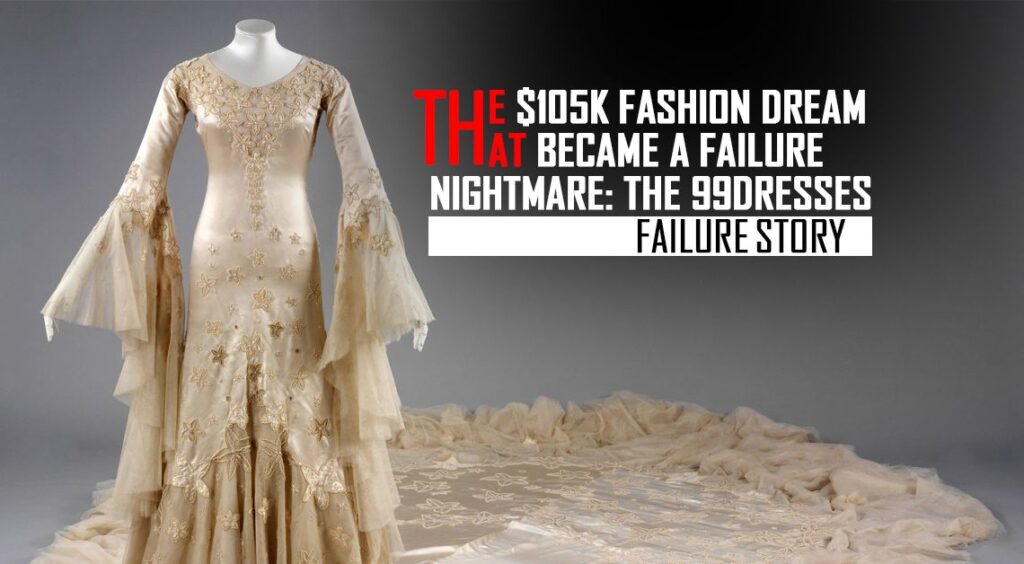
99dresses shut down in June 2014, after burning through $105,700 in funding and six years of founder Nikki Durkin’s life. The Australian fashion startup that once promised to solve every woman’s “nothing to wear” problem became a textbook example of how even a good idea can fail when execution meets the real world. Over 99% of start-ups fail, but 99dresses wasn’t supposed to be part of that statistic. The company had real users, backing from Y Combinator, and genuine interaction, but a combination of technical problems, market challenges, and difficulties eventually proved impossible to overcome.
When Problems Look Like Golden Opportunities
Nikki Durkin was 18 years old in 2010 when she found the problem that would consume the next six years of her life. Like thousands of females around the world, she had a closet full of clothes, but she always felt like she had nothing to wear. Designer dresses would be purchased once or twice. Then they would be hung and unused for months while she bought new items to fill the gap in her closet.
The solution seemed very obvious - create a platform where women could trade their barely worn clothes with others facing the same frustration. 99dresses launched as a virtual closet concept that would allow users to swap fashion items instead of letting them collect dust in their homes. Durkin had no technical background, no experience, and had never heard the word “start up” before launching the platform. She was a high school graduate with a university scholarship that she had to leave because her work required full-time attention.
After 99dresses was launched, the response in Australia was very motivational. Multiple women signed up on the platform, started listing their clothes, and began making trades. Fashion blogs wrote about the concept, users shared the platform with their friends, and it seemed like the company had found its place in the market.
Technical Disaster and Financial Bleeding
As more Australian press got to know about 99dresses in 2011, they couldn’t wait to cover the story of an 18-year-old founder. So Durkin did multiple interviews almost weekly, explaining her idea. While they were writing about her as a success story, the actual scene behind it was that the company was failing due to technical issues. The platform was going through failures, which made even basic functions unreliable. When users try to upload their pictures, the system crashed immediately. Some trade requests would disappear from the app on their own. And payment processing would fail randomly. These are not some simple issues, but core infrastructure problems that require technical support.
Durkin is a simple girl with no programming skills, and she depended directly on some contractors who either couldn’t fix the root cause or would disappear after taking the money from her. The company was spending money, which was also limited, on paying technical workers who rarely delivered any strong results. Meanwhile, the transaction fees model generated very little revenue because the trades kept failing.
The First Breakdown and Recovery Attempt of 99dresses
In late 2011, the stress brought Durkin to a breaking point. She spent a week at her parents’ house, unable to work a function normally. The weight of running a failing company while maintaining a positive public image had become unbearable for a 19-year-old with no business training or support system.
Then her mother suggested closing the company and looking for some other opportunities, recognising that the pressure was clearly affecting her mental health. Most people would have accepted this advice and moved on to something more manageable. But instead, Durkin decided to make one more attempt at saving 99dresses.
She entered the university business competition, wrote a comprehensive business plan, and won the $10,000 first prize. She immediately used the money to buy a plane ticket to the US, convinced that the Silicon Valley resources could solve the problems destroying her company. This decision to keep fighting instead of quitting defined the next three years of life.
How Silicon Valley Success Led to Devastating Betrayal
When she won the Y company, this acceptance felt like a reason that 99dresses was worth saving. This gave Durkin access to multiple mentors, investors, and technical resources that had been missing in the Australian market. She bought two new cofounders who seemed technically sound and shared her vision for revolutionising fashion sharing. The team completely rebuilt the platform from scratch, fixing many technical issues that had been killing the user experience before. Then they launched the app in the US market and signed a $1.2 million seed funding round with investors who believed this was the next big thing in fashion technology. For the first time since the company was started, everything seemed to be working properly.
Then came the betrayal that nearly destroyed the company completely. The day after signing the funding paperwork, both the cofounders quit their work without giving any sign of warning. They didn’t give notice, they didn’t offer any transitional help, and they didn’t provide a proper reason to leave. Durkin had to fly back to Australia for Visa issues, which meant she wasn’t even in the country when her technical team decided to leave. The lead investor pulled out immediately after learning about the co-founder issue, followed by others who saw it as a major red flag. Durkin was left with funding commitments and no team to take any action, taking her back to where she started as a single, non-technical founder.
Starting Over In The Cave of New Hope
But even after so many issues, five investors still believed in our dream. They cut her valuation in half, but provided her with something around $595,000 to try again. Then Marcin quit his corporate job to join the company, and they set up operations in an office so terrible, they called it “The Cave” because it had no natural light and cheap rent. They rebuilt 99 dresses again and re-launched it in the US market, but working in an American start-up from Australia while handling inventory and building a community was very, very difficult.
The market had evolved very fast while they were rebuilding the company. So that meant that they were behind it. Competitors had secured huge funding rounds and caught significant market share. Creating a two-sided marketplace is very challenging under ideal conditions, but doing it from the wrong continent, with limited resources, made success nearly impossible for them. Despite their continuous efforts, customer acquisition remained expensive, and retention rates couldn’t justify the cost of scaling the platform. The fundamental challenge of getting both buyers and sellers active together became harder and harder.
When Government Red Tape Destroys Everything
Just as they were going ahead, Durkin was hit by the US immigration system. Getting a work visa as a young Australian without a college degree was not possible. After almost 7 months of paperwork and legal fees, she finally got approval for an O1 visa. But the approval was only the first hurdle. At the US consulate in Sydney, an immigration officer put her through “extra processing which is reserved for potential security threats. What should have taken a few days stretched into a month while Durkin was trapped in Australia and her startup burned money and lost its path in the US.
Her company’s fate depended on government bureaucrats who seemed indifferent to the urgency of her situation. She spent months calling the consultant daily, trying different approaches to solve her case, while watching competitors ground themselves in the market, while she was still trying to enter it. This delay cost valuable time and money to her that she couldn’t afford to lose.
The Final Push That Almost Saved Everything
When Duncan finally reached New York, the team made their last serious attempt at the success of 99dresses. They used growth tactics that quickly got them to over 1000 trades per week. Some App Store reviews were overwhelming, the positive power users were spending hundreds of dollars on the platform, and retention rates looked good. For a few months, it seemed like they had finally solved the puzzle and cemented themselves in the US market. The team was motivated about reaching profitability before running out of money, and using user engagement metrics suggested that they had built something people genuinely liked.
But sustainable growth was not sustainable enough. The average value of traded items began to go down, which directly hurt transaction-based revenue models. When they moved to address the issue, the existing community reacted very negatively. Their topline metric improved, but the actual transaction dropped a lot. The fundamental problem was that fashion resale was becoming very competitive with fully-funded companies offering cash purchases instead of trades, making the 99dresses model less attractive to users.
The Phone Call That Ended It All
With cash running extremely low, Durkin approached existing investors for a bridge funding round. They had one institutional investor who initially seemed very motivated about leading the round and even suggested that they might find the entire amount themselves. Then came the phone call that ended everything for her. The investor’s partner had decided the fashion resale market was too competitive, with competitors raising tens of millions of dollars. Despite 99dresses’ differentiated approach and solid user metrics, they were withdrawing their support.
Durkin barely maintained her composure during the call. After years of struggle and dreams, this felt like the final blow to the whole 99dresses. The team was willing to continue fighting, but the financial reality was unavoidable. They were out of money and out of realistic options to raise more money. The math was quite simple and brutal without funding; there was no way for 99dresses to continue.
Losing Everything
Closing 99 dresses meant more than shutting down a business for Turkey. She had been a “99dressess girl” since the age of 18, and the company had become a part of her identity. Without the startup, she struggled to understand who she was as a person for a very long time. The physical and emotional aftereffects had been building for years. Chronic stress had led to panic attacks during routine activities.
Losing the company also means losing a US visa. After fighting with bureaucracy to go to America, she had 10 days to pack up her life and return to her home. The irony was very brutal - success would have meant staying in her dream city, but failure meant going home with nothing. She had to sell her belongings, say goodbye to the team, and leave behind the life she had worked so hard to create.
But the failure taught harsh lessons about the importance of technical expertise, stable leadership, team, etiquette, funding, and relisting market entry strategies. It also highlighted how the startup world’s emphasis on positive messaging can isolate founders who are struggling and need actual support rather than more pressure to be more successful in the outside world.
How Nikki Durkin Turned Failure into Wisdom
Now Nikki Durkin has transformed her painful 99dresses experience into something more valuable for her. From her first venture, 99dresses, a platform for trading clothes, to her current mission to completely transform coding education for children through CodeMarker, Nikki’s journey is a huge example of resilience, passion, and relentless pursuit of making a difference in the world.
The vision behind CodeMarkers was based on Nikki‘s understanding of the importance of coding in the digital era. She believes that this skill should be made accessible to children at an early age. And she recognises the traditional education system that fails to provide the required tech education, so she is now working to fill this gap with CodeMakers. At CodeMakers, the mission is not just about the Sana code, but it’s more about providing a lot of coding and helping them understand its practical applications.
The young woman who fought every day to keep her dream alive has transformed a failed experience into a meaningful company that impacts the next generation, proving that sometimes the greatest setback becomes the foundation for the most important work.
You can explore more about Nikki Durkin’s professional journey on her LinkedIn profile, where she shares her experience and valuable insights as a mentor.

At Inspirepreneurs Magazine, covering entrepreneurship, business failures, and the human stories behind the world's most ambitious founders. She writes at the intersection of strategy and storytelling.
You Might Also Like

Swipe right, but verified: World ID moves into Tinder to tackle bots

Paramount to Pay Trump $16 Million for 60 Minutes Interview