


Syria’s New Rulers Signal Shift to Free-Market Economy
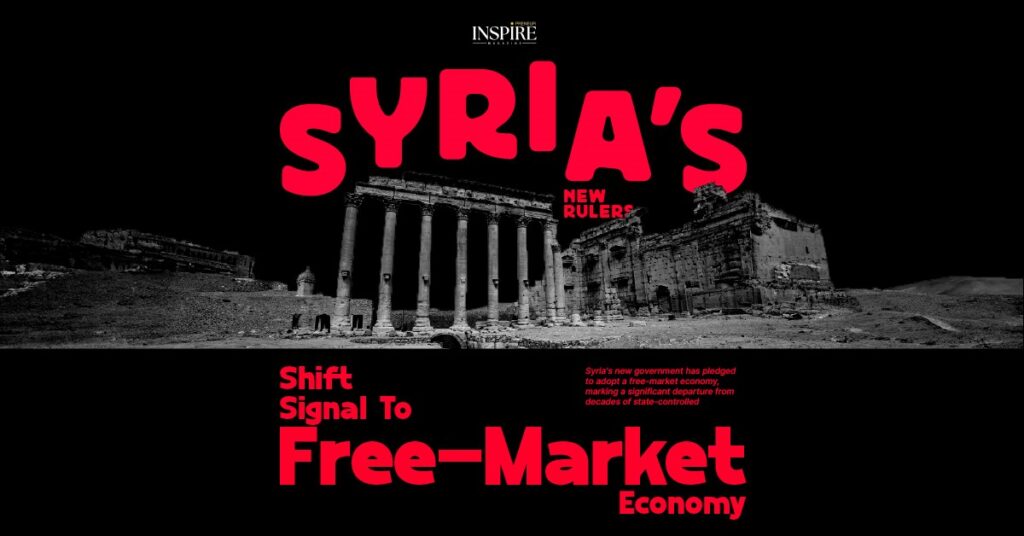
Syria's new government has pledged to adopt a free-market economy, marking a significant departure from decades of state-controlled policies. This historic shift aims to integrate Syria into the global economy after years of corruption, war, and economic isolation. Bassel Hamwi, head of the Damascus Chambers of Commerce, described the transformation as a move "based on competition" following the rebel forces' toppling of President Bashar al-Assad's 54-year dynasty.
For years, Syria’s economy has been stifled by strict trade controls, rampant inflation, and international sanctions. The war-torn country now faces the mammoth challenge of rebuilding its shattered infrastructure and reviving a devastated economy. Could this pivot to a free-market economy be the solution Syria desperately needs?
A Country in Transition
The Syrian conflict, spanning over 13 years, has left widespread devastation. Prominent businesses and citizens alike are eager to understand how the new leadership, spearheaded by the Islamist-rooted Hayat Tahrir al-Sham group, intends to govern. Despite officially disavowing its al-Qaeda ties, questions remain about whether the group’s administration will create an open society or lean towards forming an Islamic state.
Business leaders, both at home and abroad, have cautiously welcomed the initial signs of economic liberalisation. "The message so far has been promising," shared one Syrian businessman based in Beirut. However, uncertainty lingers, with the business community awaiting concrete evidence of systemic reform.
Promises of Market Liberalisation
At the core of Syria’s new economic plan is market liberalisation. This includes dismantling stifling trade and customs systems that have historically hampered economic activity. Before the reforms, traders were obligated to deposit Syrian pounds at the central bank in exchange for dollars — a process riddled with delays, shortages, and bureaucratic red tape.
Under the renewed vision, businesses registered at local chambers of commerce will have the freedom to import goods more efficiently. "It’s a long-awaited shift," Hamwi stated, addressing the outdated customs practices. Several Syrian businessmen interviewed by Reuters corroborated Hamwi’s optimism, noting that the early signals from the new government signify a radical departure from policies that allowed loyalist elites to control the economy under Assad’s regime.
The anticipated reforms couldn’t come sooner. Damage to commercial and industrial hubs like Aleppo and Homs, compounded by inflation driven by years of civil unrest, has shattered Syria's financial standing. The Syrian pound, once trading at 50 to the dollar, now hovers beyond 15,000, inflating the cost of basic goods and hammering everyday shopkeepers.
Attracting Investment and Rebuilding Trust
Economic stabilisation is critical to Syria's recovery, not only to attract foreign investment but also to pave the way for the return of millions of displaced Syrians. Many members of Syria’s educated middle class fled the conflict and have established successful careers abroad. Encouraging their involvement could inject much-needed capital, talent, and vision into the rebuilding process.
Syria has untapped potential in its global diaspora, characterised by relative wealth and education. Bassel Hamwi highlighted the need to engage this group, noting the "massive investment" required across industries. From reconstruction to modernising services, the opportunities are vast if the government can foster an environment of transparency and trust.
"People need to see credible progress for things to happen," a senior financial official in the region commented. Stability in Syria’s monetary policies and commitment to fair trade practices will be pivotal in transforming goodwill into tangible economic growth.
The Challenges Ahead
Despite glimpses of progress, Syria's road to recovery is fraught with challenges. Western sanctions persist, and public confidence remains fragile. Businesses worry about monopolies and systemic corruption in a reforming yet unstable state.
Additionally, the leadership's former ties with extremist groups present reputational challenges that could hinder international cooperation and foreign direct investment. A senior analyst noted, "They’ll need to work hard to clean up their image and prove their commitment to inclusivity and economic transparency."
Rebuilding vital infrastructure, from transportation to telecommunications, requires immense financial input. Coupled with the need to stabilise the currency and manage inflation effectively, these issues underscore the enormity of the task at hand.
Could This Be Syria's Economic Turning Point?
Syria’s move towards a free-market economy marks a potentially game-changing moment for the country’s future. By working to join the global economy, encouraging competition, and loosening trade restrictions, the new government is laying the groundwork for recovery. But the real test will be in how well this vision is put into action and whether the government can build lasting trust with investors and businesses.
Source
Explore more entrepreneurial insights and success stories at Inspirepreneur, your go-to magazine for business innovation and leadership.

At Inspirepreneurs Magazine, covering entrepreneurship, business failures, and the human stories behind the world's most ambitious founders. She writes at the intersection of strategy and storytelling.
You Might Also Like

Dropbox’s Strategic Evolution: From Freemium to Enterprise Powerhouse

Bondi Attack: Australian PM Open To National Inquiry
