Tesla’s Cybercab Rollout Draws NHTSA Scrutiny Over Safety Rules
Synopsis
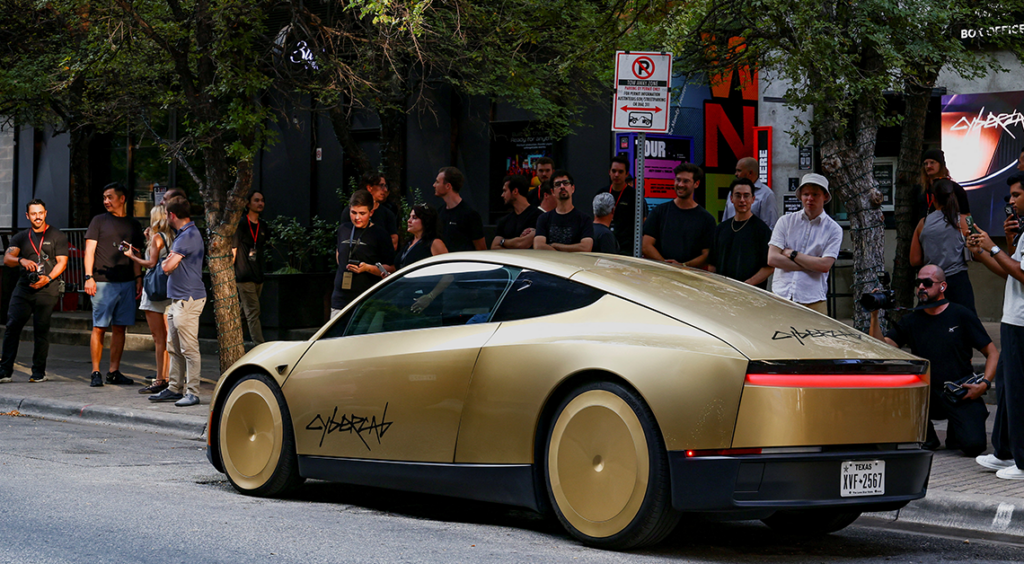
Tesla’s Cybercab rollout in Austin is facing regulatory scrutiny after NHTSA said it is evaluating the autonomous vehicle which lacks a steering wheel, pedals and mirrors required by traditional US vehicle safety standards.
Tesla’s long-awaited Cybercab rollout is facing early regulatory scrutiny after the US National Highway Traffic Safety Administration (NHTSA) said it is evaluating the company’s introduction of the autonomous vehicle in Austin, Texas.
The agency confirmed it is in contact with Tesla after the electric vehicle maker began offering Cybercab rides in limited parts of the city.
NHTSA did not disclose what action, if any, it might take.
The review comes as Tesla moves closer to its vision of deploying purpose-built vehicles without conventional driving controls.
Cybercab Challenges Existing Safety Standards
The two-seat Cybercab is designed without a steering wheel or pedals, removing the controls traditionally used by human drivers. It also lacks exterior mirrors. Those features create a regulatory challenge because existing US federal vehicle safety standards generally assume vehicles will have conventional driver controls and equipment.
Tesla had been testing Cybercabs on public roads before the rollout, with production of the vehicles beginning earlier this year. However, the company had not publicly confirmed whether it had secured the regulatory approvals or exemptions needed for broader commercial deployment.
The latest NHTSA evaluation therefore comes at a critical moment for Tesla’s autonomous driving strategy. The company is seeking to move beyond driver-assistance technology and build a robotaxi business around vehicles specifically designed for fully autonomous operation.
A Major Test for Tesla’s Robotaxi Ambitions
Tesla’s Austin launch also puts it directly into a rapidly developing US robotaxi market. Amazon’s Zoox received approval in July for limited commercial deployment of steering-wheel-free robotaxis, becoming the first company to secure such approval in the country.
Tesla, meanwhile, has been positioning autonomous transportation as an increasingly important part of its future. The Cybercab is intended to operate without a human driver and eventually form part of a larger robotaxi network.
For now, however, the NHTSA review highlights one of the biggest hurdles facing that ambition. Tesla must demonstrate that a vehicle built around autonomy can satisfy safety requirements originally designed for cars controlled by humans.
Source: Reuters

Vishal is an experienced Editor at Inspirepreneur Magazine with key interests in artificial intelligence, eCommerce, entrepreneurship, lifestyle and startup sector. Prior to joining Inspirepreneur, he was a Content Writer cum Correspondent at Siliconindia Magazine, where he worked on Company Profiles, Cover Stories, Executive Profiles, Feature Articles and Thought Leadership content.
You Might Also Like

South Korea Votes For New President After Martial Law Failure

Real Growth Begins with Realness: How Embracing Vulnerability Fuels Real Personal Growth