


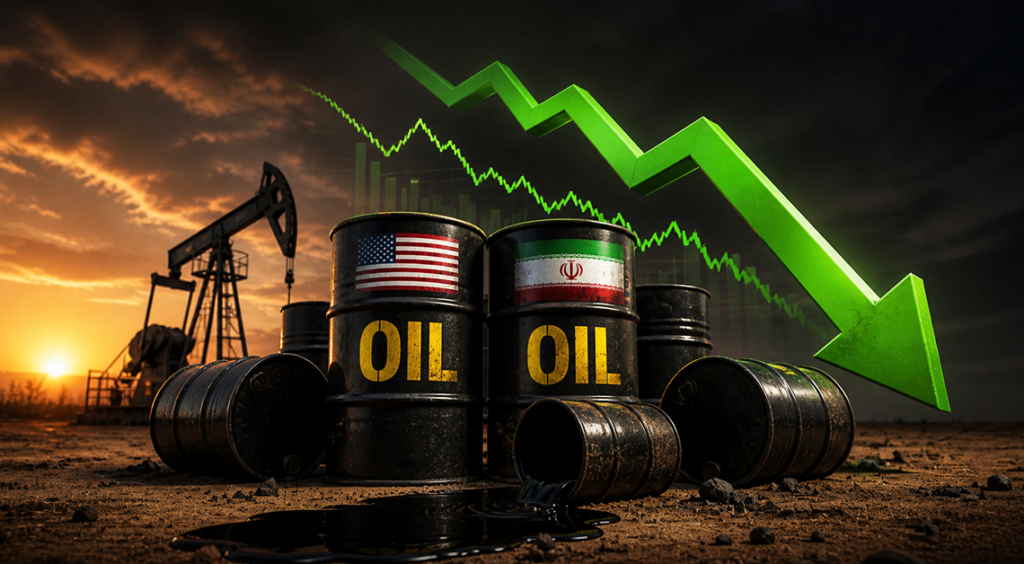
Oil Prices Dip as Traders Weigh US-Iran Peace Prospects
Synopsis
Oil prices retreated to US$102 as thin holiday trading and headlines regarding U.S.-Iran peace negotiations prompted investors to reduce risk. Despite the daily dip, WTI crude notched an 8% gain for the week as the Strait of Hormuz remains largely closed. Major oil executives from Chevron and ConocoPhillips have warned of critical shortages beginning in June as the conflict enters its third month and global stockpiles dwindle. While U.S. exports have hit record highs to fill the gap, new sanctions against Chinese terminals and Iranian exchanges highlight the ongoing pressure campaign from the Trump administration. Experts suggest that without a diplomatic breakthrough, demand destruction via higher prices may be the only way to balance the stressed global energy system.
Oil prices fell marginally as investors weighed cautious optimism for new peace talks against a tightening in global oil supply. The benchmark West Texas Intermediate (WTI) dipped to close at near US$102, but still recorded a second consecutive weekly gain of some 8% as the war entered its third month.
Key Highlights
- WTI settled close to US$102 down from a four-year peak earlier this week
- The Strait of Hormuz continues to be blocked forcing some big oil companies to issue warnings that “critical shortages” will emerge in June
- Negotiations are being mediated by Pakistan–despite downbeat comments both from President Trump and Iran’s leadership.
- U.S. crude exports reach new heights in record week as foreign buyers scour for replacements for Middle East barrels.
- The U.S. issued new sanctions against Iranian currency exchanges and a Chinese oil terminal.
Prices cool on diplomatic headlines
Oil prices slipped after news that Iran has signalled a willingness to restart diplomatic efforts aimed at resolving the nine-week old conflict. After news that Tehran had passed on its latest negotiating position to Washington via Pakistani mediators, traders peeled back some risk ahead of the weekend.
The market is notably volatile even as West Texas Intermediate (WTI) swung toward US$102 a barrel. Scores of world markets were shut for Labour Day, resulting in a very thin volume although dramatic price swings as investors tried to decipher conflicting noises from the two warring countries.
The Strait of Hormuz deadlock and supply alerts
The ongoing partial blockade of the Strait of Hormuz remains closed, which is likely to be the main reason behind strong prices. The war has caused a global energy crisis due to control over this vital waterway becoming a key leverage point. This week ConocoPhillips and Chevron warned that “critical shortages” are imminent for oil-dependent importers by June with major oil firms but they saw hope in high prices. Due to the fact that tankers were already on their way and most likely will now be more scarce, they stated that the grace period has now passed.
U.S. crude exports climbed to a record last week as international buyers rushed to fill barrels lost from the Middle East with American supply. But the U.S. The Treasury still tightens the noose, sanctioning a Chinese oil terminal and several currency exchanges.
Analyst’s view on the risks of Demand Destruction
The market has begun to understand that the Strait of Hormuz will not open up again anytime soon, energy strategists said. Analysts at Danske Bank say higher prices might be needed to cool global demand enough to lift supply into balance with the decline in production.
Japan has indicated it is willing to intervene in the market to defend its currency if necessary with oil-driven spikes, but there are warnings that the prices and real-world cost of oil are coming closer together. Failure to secure a deal soon will trigger an unprecedented supply squeeze from June that threatens the global economy, according to analysts.
FAQs
- Why did oil prices fall?
Prices dip on news that Iran intends to talk peace, prompting some traders to close out positions before the weekend.
- Will there be an oil shortage in June?
Countries dependent on imports could be found short critically by June as existing stockpiles are exhausted, with firms such as ConocoPhillips warning about the situation.
- How is the U.S. replacing low oil?
There is currently a record amount of oil that U.S. producers are exporting to other countries which can no longer get barrels from the Middle East.
Follow Inspirepreneur Magazine for daily global business news.

At Inspirepreneurs Magazine, covering entrepreneurship, business failures, and the human stories behind the world's most ambitious founders. She writes at the intersection of strategy and storytelling.
You Might Also Like

What Is Robotax and How Does It Affect Australians?

Thriving in a Changing Market: A Guide to Financial Success in 2024
