


OpenAI vs New York Times: Trump Administration Picks a Side
Synopsis
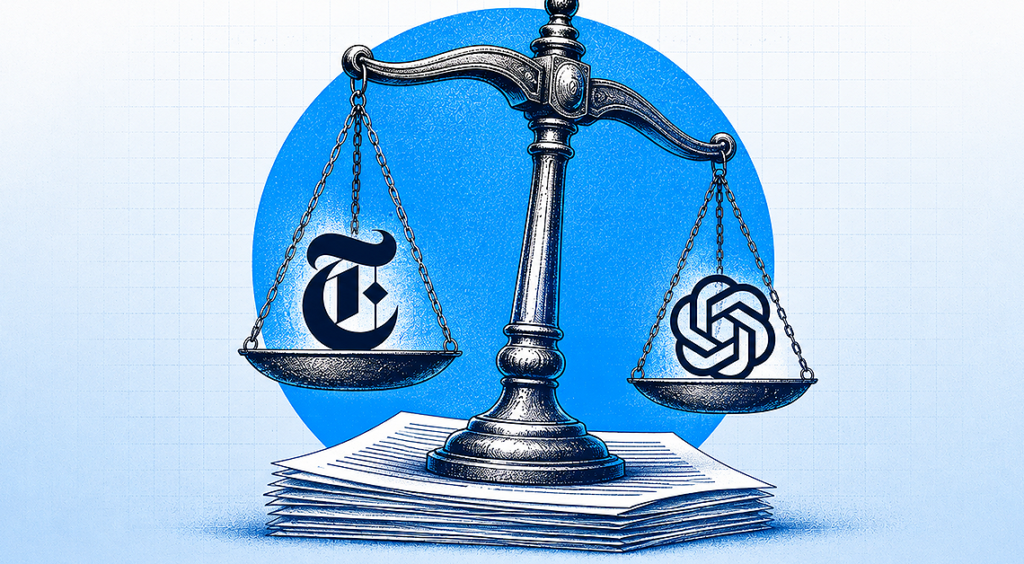
The Trump administration has backed OpenAI against The New York Times in a landmark copyright dispute, arguing that training large language models on copyrighted material can fall under fair use and support technological progress.
The OpenAI copyright case has entered a new phase following the backing of the Trump administration to the AI firm's stance that using copyrighted content to train its AI models can be protected by US fair-use law.
The US Department of Justice filed a brief in Manhattan federal court on September 1, arguing that limiting AI training could affect scientific research, national security and economic activity. The filing marks the first time that the federal government has intervened in the latest round of AI copyright lawsuits.
Government Steps Into OpenAI Dispute
The OpenAI copyright case started with the lawsuit filed by The New York Times against OpenAI and Microsoft in December 2023. The newspaper has claimed that millions of its articles were utilized without authorization to train the systems that run ChatGPT.
The controversy over AI copyrights is not limited to OpenAI, but extends across other copyright owners, including publishers, authors, music studios, and more. So far, the courts have given varying opinions on whether AI training is fair use.
The government filing does not win the case, it merely gives the government the advantage of claiming the victory. It provides the court with the viewpoint of the Justice Department in addressing the copyright issues involved with the training of AI.
Commerce Secretary Howard Lutnick also urged G20 nations to ensure that AI firms can use creators' content for this training while still protecting rights holders. The comments were made during a technology meeting of the G20 summit in North Carolina on September 2.
Australia Takes a Different Route
For Australian companies that are using or developing AI, the OpenAI copyright case is important because it highlights the lack of a broad US-style fair-use exception for training AI.
The government is still considering copyright and AI via the Copyright and Artificial Intelligence Reference Group according to the Australian IP Report 2026 prepared by IP Australia. The government is taking steps to provide more clarity about AI and copyrighted content via licensing and other measures.
The Australian Copyright Commission (ACC) determined that copyright law in Australia usually mandates a licence from the copyright owner for the use of public domain works in the training of AI. It also pointed out that there was a significant amount of training in AI outside of Australia, which raises questions about the application of Australian rules.
This is not the UK's way. In March 2026, it released its Report on Copyright and Artificial Intelligence, which explored the possibilities of regulating copyrighted content in the development of AI, and stated the government would not be setting out on reform until it was assured these changes would achieve its goals.
OpenAI's financial footprint has grown, too. Its revenue for the year is more than $20 billion, as compared to $6 billion in 2024, the company said.
The US Copyright Battle now puts the US government's fair-use position squarely in front of the court, while Australia and UK continue to develop their copyright strategies.
Source: AFR

Pooja Malik is a business journalist with over six years of experience covering startups, entrepreneurship, and emerging trends. She has previously worked with leading media platforms such as YourStory Media and BW BusinessWorld, where she reported on business, policy, and market developments. Currently, she serves as Editor at The Inspirepreneur Magazine, where she writes and edits stories across business, lifestyle, and travel, with a focus on clarity, accuracy, and reader relevance.
You Might Also Like

Barb Hyman: The Aussie Tech Leader Changing How We Hire

Spotify Faces Backlash for AI Songs on Late Artists’ Pages
