


Nanosonics: Scaling a Recurring Model in Healthcare Technology
Synopsis
A structured overview of Nanosonics, detailing its trophon platform, founder journey, revenue model, and global scale, with insights into how the company standardised infection prevention through automated disinfection and recurring consumables across healthcare systems.
Infection prevention is a top priority in all healthcare systems. Medical devices have advanced to the level of providing a better diagnosis and treatment, but the cleaning and disinfection processes have not always followed. Traditional systems and practices, such as manual work, inconsistent records, and inconsistent compliance, have been a source of patient safety issues in the past.
To solve this, Australian medical technology company Nanosonics Limited was founded based in Sydney. The Company has been active in developing automated disinfection technologies since 2000, when it was incorporated, and 2007 when it was listed on the Australian Securities Exchange (ASX: NAN).
Founding Direction and Leadership
Maurie Stang, an entrepreneur with experience building and scaling healthcare-related businesses, is the founder of the company. His emphasis was to identify commercial opportunities in health systems where there was a need for operational improvement.
In 2004 the medical biochemist, Dr Ron Weinberger, was part of a significant addition to the leadership team. His knowledge guided the scientific direction and product development at the company. He then went on to become Managing Director and CEO from 2011 to 2013, and subsequently moved on to a senior position with a technology and innovation function at Nanosonics
This approach of business strategy and scientific ability helped convert concepts into commercially viable solutions for Nanosonics.
Identifying a Critical Workflow Gap
The use of ultrasound probes is very common in hospitals and diagnostic centres. They are frequently used again and again and often make contact with mucous membranes or damaged skin. This results in a need for high level disinfection between patient uses.
Traditional methods of disinfection have included hand washing and chemical soaking. These approaches can vary depending on operator technique, time constraints, and documentation practices. Variability in processes can result in inconsistent processes, outcomes, and limited audit visibility.
To fill this need, Nanosonics created automated systems that can provide repeatable and validated disinfection cycles.
The trophon Platform: Core Technology
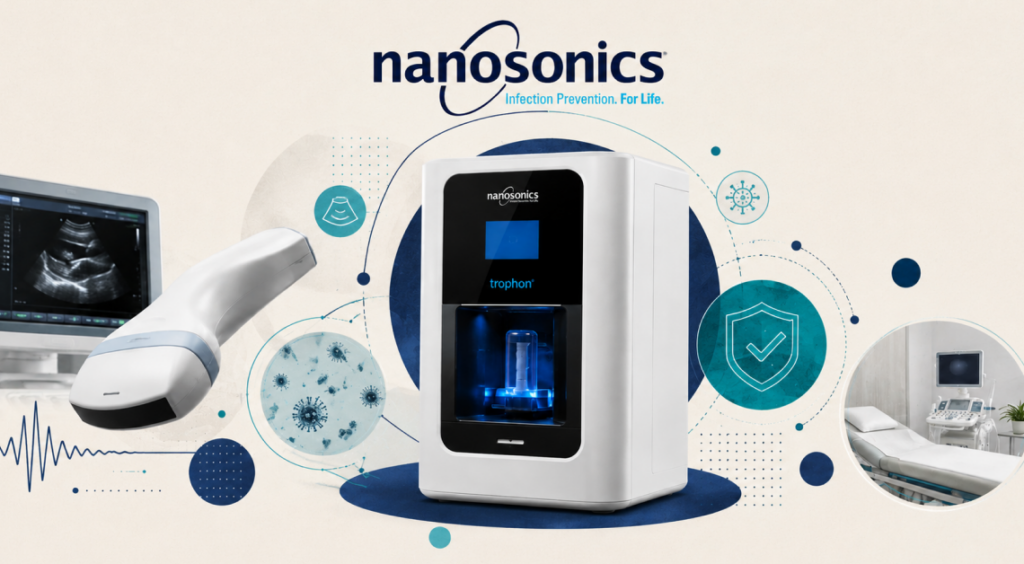
The company’s primary product platform is the trophon system, developed for high-level disinfection of ultrasound probes.
The process is in creating a fine mist of H2O2 by placing the probe in a chamber which contains a solution of H2O2 and then exposing it to ultrasonic energy. This mist will cover the probe and provide a controlled dose of disinfectant. Each cycle is recorded digitally which allows traceability.
The design was based on the aim of minimizing the need for manual lifting and ensuring adherence to infection control measures. The first commercial product, trophon EPR, was introduced in 2009, and approved by the United States Food and Drug Administration in 2011
Product Development and Portfolio Expansion
Nanosonics has added new products to its portfolio without straying too far from its focus on workflow integration.
trophon3
The new system, trophon3, features quicker disinfection cycles and new integration options with hospital information systems. Based on company revelations from 2025–2026, cycle times have been shortened by over 40 per cent when compared to previous versions. The system also has the capability of digital record keeping, in line with clinical workflow.
Installed Base and trophon2
trophon2 is still widely used in the healthcare sector. It covers the functions of AcuTrace, which utilizes RFID technology to connect probes, operators and disinfection cycles. The software enhancements in trophon2 Plus have enhanced connection and workflow integration.
AuditPro
AuditPro introduces the capability to track disinfection data from a central location, enabling the entire trophon ecosystem. It integrates device utilization, operators and patient workflows into a system of reporting. This helps meet the needs for compliance and audit in healthcare environments.
Consumables
Every trophon system uses approved consumables such as hydrogen peroxide cartridges, chemical indicators and cleaning accessories. These consumables are necessary for every disinfection cycle, and are an integral part of the company's revenue structure.
CORIS Platform
Nanosonics has also grown its flexible endoscope reprocessing business on its CORIS platform. Flexible endoscopes have internal channels and need to be thoroughly cleaned. CORIS aims to enhance automation and validation in this regard. The approvals and commercialization of the product differs from region to region (Source: Nanosonics updates).
Revenue Model and Business Structure
The company has a multi-component revenue structure, which includes both capital equipment sales and recurring revenues.
| Revenue Component | Description |
| Capital equipment | Sale of trophon systems to healthcare providers |
| Consumables | Recurring purchases required for each disinfection cycle |
| Software | Workflow management and traceability tools |
| Service | Installation, maintenance, and technical support |
| Pipeline products | Future platforms such as CORIS |
This will enable the company to obtain recurring revenue from their installed base and still enter new product lines.
Nanosonics is active in several markets worldwide such as the United States, Europe, United Kingdom, Japan, and Australia. It serves a range of clients, such as hospitals, diagnostic imaging centres, and healthcare networks.
The company's latest available disclosures indicate that over 114,000 ultrasound probes are processed every day with the company's systems, and over 28 million procedures are performed per year (2026).
These are the numbers based on its installed base.
Revenue Flow Structure
System Deployment
↓
Growth in Installed Base
↓
Recurring Consumable Usage
↓
Ongoing Revenue Generation
↓
Software and Service Integration
↓
Expansion into New Platforms
Product Evolution Timeline
trophon EPR (2009)
↓
trophon2 (RFID tracking introduced)
↓
trophon3 (faster cycles, digital integration)
↓
CORIS (endoscope reprocessing platform)
Milestones in Company Development
| Year | Milestone |
| 2000 | Company established |
| 2004 | Dr Ron Weinberger joined |
| 2007 | Listed on ASX |
| 2009 | trophon EPR launched |
| 2011 | FDA clearance in the United States |
| 2013 onwards | Global expansion across healthcare markets |
| 2020s | Launch of trophon3 and workflow software |
| 2022 | Maurie Stang stepped down from the board |
| 2025–2026 | Continued global adoption and CORIS development |
Operational Focus
Nanosonics has been focused on infection prevention, and has targeted device reprocessing. It has seen the shift from equipment to integrated solutions which incorporate hardware, consumables and software.
Some of the components of this approach are:
- Further automation of disinfection processes.
- Use of low-temperature chemistry suitable for sensitive devices
- Existence of integration with hospital systems to align workflow.
- Traceability and compliance is emphasized.
The company has created a model with clinical relevance and scalable to commercial use by meeting an identified operational need in healthcare settings.
Sources
Nanosonics Official Website
Nanosonics Investor Centre
Nanosonics Annual Reports
trophon Product Information
trophon3 System Overview

Pooja Malik is a business journalist with over six years of experience covering startups, entrepreneurship, and emerging trends. She has previously worked with leading media platforms such as YourStory Media and BW BusinessWorld, where she reported on business, policy, and market developments. Currently, she serves as Editor at The Inspirepreneur Magazine, where she writes and edits stories across business, lifestyle, and travel, with a focus on clarity, accuracy, and reader relevance.
You Might Also Like

Nvidia & AMD to Give 15% of China Chip Sales Revenue to the U.S.

From Garage to Global: The Entrepreneurial Mastery of Ben Francis
