UK Politician Rachel Reeves Pledges ‘Iron Grip’ as Borrowing Costs Hit Crisis Peak
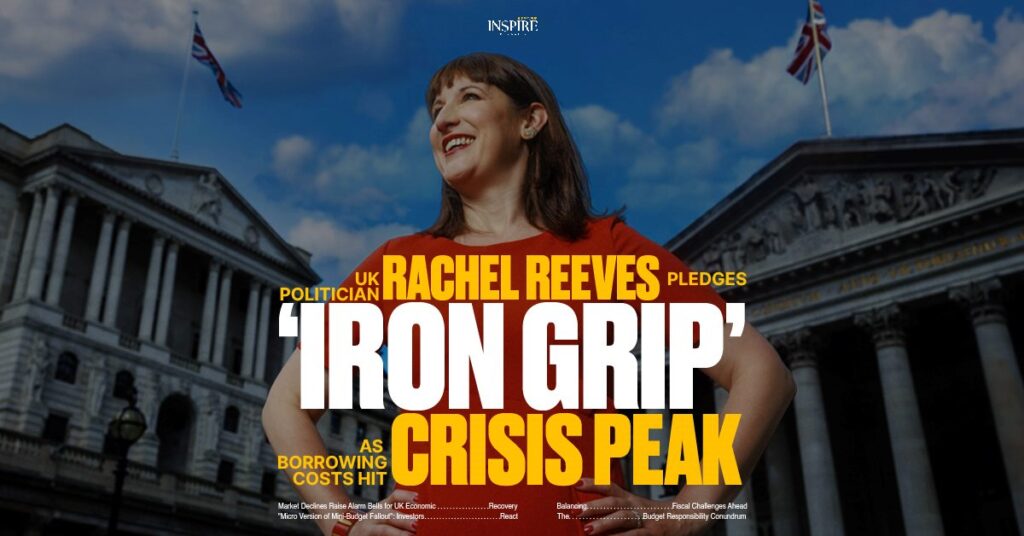
The UK's financial landscape has been shaken as 10-year government borrowing costs skyrocket to their highest levels since the 2008 financial crisis. Against this backdrop, Shadow Chancellor Rachel Reeves has issued a stern message, promising an "iron grip" on the nation's public finances. This rare public statement—her second in just two days—responds to mounting anxieties fueled by a sharp sell-off in UK bond markets.
Investors and analysts are now closely scrutinising the government's fiscal policies amidst troubling signs in the broader economic environment. Could the government’s fiscal strategy avert a budding financial crisis? Here’s what unfolded this week.
Treasury Issues a Second Warning Amidst Mounting Concerns
Over two consecutive days, the Treasury has released statements aimed at calming the markets. On Wednesday, Reeves reiterated that meeting her fiscal rules is “non-negotiable,” stating that the government will “leave no stone unturned” in its bid to foster economic growth and protect working people. A Treasury spokesperson echoed her words, labelling investors’ current speculations as “pure conjecture.”
However, the numbers paint a worrying picture. Yields on 10-year UK government gilts saw a sharp rise, reaching 4.825%—the highest since the 2008 financial crisis. This marked a significant jump from just 4.679% the day prior and 4.2% in December. Meanwhile, 30-year gilts also saw yields peak at 26-year highs earlier this week.
The fallout wasn’t just limited to gilts. The pound plummeted by 1.2% to $1.232, its lowest level against the dollar since April this year, while domestically-focused stocks suffered on the FTSE 250 index, dropping to an eight-month low on Wednesday.
"Micro Version of Mini-Budget Fallout": Investors React
Echoing comparisons to the turmoil following Liz Truss’s 2022 mini-budget, investors believe the current government’s tax and spending policies have unsettled the markets. Brad Bechtel, global head of foreign exchange at Jefferies, stated, “UK gilts continue to melt down and that has so far not impacted the currency as much as it did during the Liz Truss episode, but the pound seems to be reacting to gilts more and more. That means we are spilling further and further into fiscal emergency territory.”
Sentiments aligned with the idea that the UK is entering the crosshairs of "bond vigilantes"—investors who drive rapid sell-offs in government debt when fiscal discipline appears compromised.
The Budget Responsibility Conundrum
The growing turbulence in the bond markets raises questions about Reeves' fiscal headroom. The £9.9bn buffer outlined in her October budget may face significant erosion due to these developments. Analysts warn that if borrowing costs continue to climb, the government may fall short of its self-imposed fiscal rules.
Paul Johnson, Director of the Institute for Fiscal Studies (IFS), stressed the precariousness of the situation. “What’s happened in bond markets since the budget is roughly speaking enough to wipe out the very small amount of headroom Rachel Reeves left herself,” he said. He further added that without additional tax increases, cuts to spending are the only viable solution to bridge any potential fiscal gaps.
Reeves’ post-2025 spending plans already involve constrained growth, projected at 1.3% annually, implying funding freezes for many departments. Any reductions below these levels, Johnson noted, risk sparking internal political strife within the cabinet.
Market Declines Raise Alarm Bells for UK Economic Recovery
With inflation data due in the coming weeks, financial analysts anticipate heightened scrutiny of the UK's fiscal resilience. This week has already seen the FTSE 250 index—a key benchmark for domestically-focused organisations—drop by 2%, its biggest one-day decline since August last year. The larger FTSE 100 index, focused on blue-chip stocks, remained relatively flat as banking profits offset declines in the retail and housing sectors.
The uncertainty has extended beyond equity markets as well. Kathleen Brooks, director of research at XTB, cautioned that bond-focused anxieties are unlikely to fade anytime soon. She said, “The UK is looking like an outlier and is in the sights of the bond vigilantes. It feels like the UK is in a tricky spot.”
Balancing Fiscal Challenges Ahead
The government’s next fiscal moves will be meticulously watched, particularly the response to the economic forecast being prepared by the Office for Budget Responsibility (OBR). Scheduled for parliamentary review on 26 March, this forecast may reveal whether Reeves’ fiscal rules are on track. Potential strategies could include additional spending cuts, given that the Treasury has ruled out further tax increases in the short term.
However, the road ahead is fraught with challenges. While Reeves has vowed to deliver economic growth and stability, the balance between tax policy, public spending, and ensuring market confidence remains delicate. As the shadow of crises past looms large, maintaining a steady trajectory will require astute decision-making in the face of persistent fiscal pressures.
Source
Explore more entrepreneurial insights and success stories at Inspirepreneur, your go-to magazine for business innovation and leadership.

At Inspirepreneurs Magazine, covering entrepreneurship, business failures, and the human stories behind the world's most ambitious founders. She writes at the intersection of strategy and storytelling.