


RBA Rate Hike Threatens 1.3 Million Australian Mortgages

Synopsis
RBA rate hike appears likely at the February 3 meeting after inflation jumped to 3.8 percent in December, well above the central bank's target range. Most economists now predict the RBA will raise interest rates next month and possibly again in May, reversing last year's three rate cuts. However, a 0.25 percentage point increase could push 1.3 million Australian households into mortgage stress according to Roy Morgan data. Some economists argue the RBA should wait longer to avoid damaging consumer confidence and spending, though hot inflation data may force action.
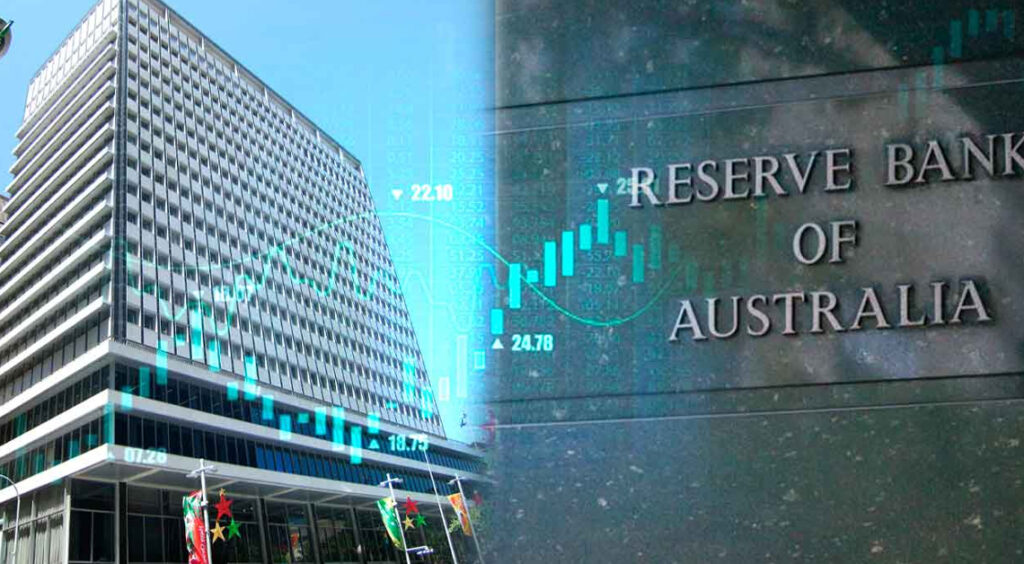
An RBA rate hike in February is looking more probable than not after inflation came out hotter than expected, with most economists now expecting the Reserve Bank to lift interest rates next month and possibly again in May. Such a move could push around 1.3 million Australian households into mortgage stress, according to recent figures. The RBA cut rates three times last year in the belief that inflation would cool, but that has not happened, leaving borrowers facing renewed financial pressure.
The Consumer Price Index rose to 3.8 per cent in December, well above market expectations and stubbornly outside the RBA’s 2 to 3 per cent target range. Moody’s Analytics head of Australia economics Sunny Nguyen said the CPI result is “the kind that dares the RBA to prove it means what it says” about controlling inflation.
“Households feel nervous, but they’re still spending. Behaviour is trumping emotion,” Nguyen said. She added that a February 3 rate hike would signal the board is unwilling to gamble that above-target inflation will drift back into range without extra restraint, particularly while the labour market remains strong.
Massive Mortgage Stress Risk
Roy Morgan data shows a 0.25% point rate increase in February could push 1.3 million households into mortgage stress. With house prices having surged and debt levels higher relative to income, the impact of rate rises is sharper than in previous cycles.
AMP chief economist Shane Oliver warned of the risk to economic growth, saying the RBA should consider waiting. “In terms of what I think they will do, they probably will hike, but what they should do is wait a little longer to see how consumer spending holds up,” he said, noting that economic data can be noisy and prone to false signals.
Arguments Against Rushing to Hike
“It’s rare to see inflationary pressures accelerate this quickly, so early in an economic recovery. Normally it takes longer, and there’s a real chance this could be an anomaly,” Shane Oliver said. He noted that monetary policy is a “blunt instrument” because it affects all households, but hits hardest those with the least financial flexibility.
“The risk with hiking is that you undermine confidence and heavily impact households already stretched by mortgages. They pull back spending again, and the improvement we’ve been seeing in consumer activity disappears,” Oliver explained. While RBA deputy governor Andrew Hauser has said the central bank takes a one-to-two-year view on inflation, critics argue moving too fast still risks unnecessary damage.
RBA’s Communication Challenge
The Reserve Bank has long struggled to persuade heavily indebted borrowers that higher rates are ultimately in their best interests. In recent months it has turned to social media to reinforce its message, including a November Facebook post stating: “High inflation hurts everyone. That’s why it’s the RBA’s job to keep inflation low and stable.”
But keeping inflation between 2 and 3 per cent while supporting full employment is far more complex than a social media slogan can convey. Both current governor Michelle Bullock and former governor Philip Lowe have acknowledged how difficult it is to communicate these trade-offs to households weighed down by housing debt. The RBA itself has admitted that the burden of inflation and rate rises is not shared evenly.
How Inflation Measures Miss Reality
The challenge is compounded by the way inflation is measured. Economists point out that CPI is a broad indicator and does not fully reflect households’ true living costs. Mortgage interest payments were removed from the CPI in 1998, even though they remain part of the ABS Living Cost Index.
CPI also excludes existing homes and land prices, focusing instead on new construction and major renovations. ANU associate professor Ben Phillips says that when interest rates change, CPI often understates the short-term impact on household budgets.
Financial Stress on the Rise
Phillips notes that data from the Household, Income and Labour Dynamics in Australia survey shows financial stress among mortgage holders has increased since COVID. “When rates are rising, CPI understates the rise in living costs, and when rates are falling, it can overstate them,” he said.
While RBA financial stability reviews suggest overall stress levels remain relatively low, many households are struggling with much larger mortgages. Governor Bullock acknowledged last year that monetary policy is a blunt tool, adding that “it’s not just interest rates hurting people, it’s the broader cost of living.”
What Happens Next
The RBA board meets on February 3 to decide whether to lift the cash rate from its current 3.6 per cent. If rates are raised, near-term growth is likely to slow as confidence weakens and housing-sensitive spending cools, with labour market impacts following later. Inflation would ease, but at the cost of higher growth risks through 2026.
How much weight the RBA gives to rising mortgage stress remains uncertain, underscoring the difficult balance between controlling inflation and protecting households.
Follow Inspirepreneur Magazine for Australian breaking news updates.
At Inspirepreneurs Magazine, covering entrepreneurship, business failures, and the human stories behind the world's most ambitious founders. She writes at the intersection of strategy and storytelling.
You Might Also Like

How To Watch Alcaraz Vs Djokovic At Australian Open 2026 Final
King River Targets Hidden Value at Historic Mindoolah Gold Project
