


Australia Invited to Trump’s ‘Board of Peace’ – Is It a Risky Move?
Synopsis
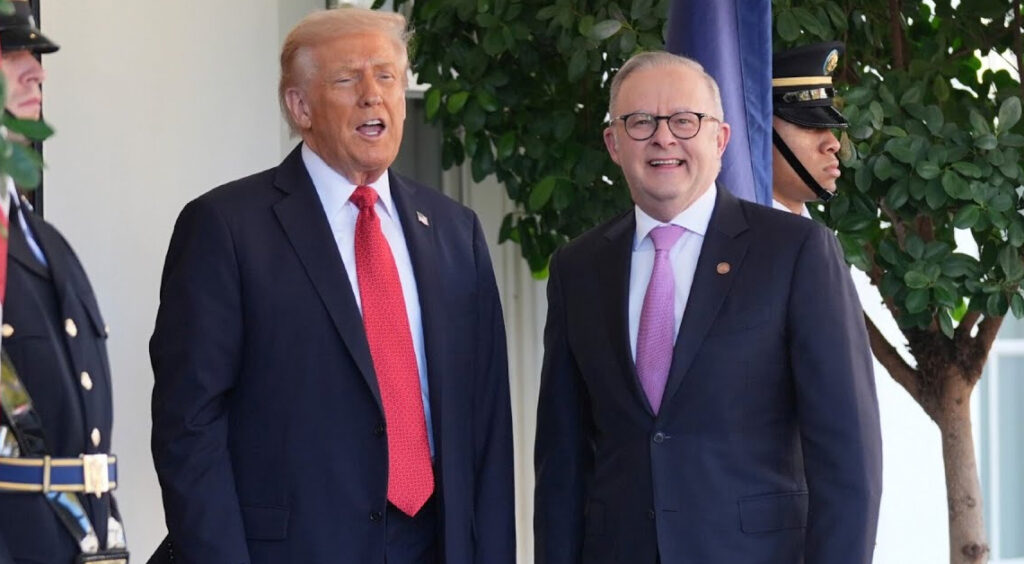
Australia has been invited to join former U.S. President Donald Trump’s proposed “Board of Peace,” a new initiative pitched as a bold diplomatic forum. Supporters argue the move could give Canberra greater influence in global security discussions and strengthen ties with Washington. Critics, however, warn the invitation carries political and strategic risks, including entanglement in unpredictable foreign policy agendas. As regional tensions rise and alliances are tested, Australia now faces a delicate choice between potential diplomatic clout and the dangers of aligning too closely with a controversial power play.
Australia Drawn Into Emerging US Peace Proposal
Australia has been invited to take part in a proposed international body described by former US president Donald Trump as a “Board of Peace,” according to public remarks and reporting around Trump-aligned foreign policy circles.
The proposal, still lacking formal structure, is intended to address major global conflicts, including tensions in the Middle East and the ongoing Gaza crisis. While the invitation underscores Australia’s importance as a US ally, it also places Canberra in a diplomatically sensitive position at a time of heightened global instability.
What Is Trump’s ‘Board of Peace’?
The “Board of Peace” is not an established multilateral institution. Instead, it appears to be an informal advisory group envisioned under a potential future Trump administration, involving select allied nations and strategic partners.
Unlike bodies such as the United Nations or G20, the proposal emphasises leader-led diplomacy over treaty-based governance. Details around decision-making authority, enforcement power, and international legitimacy remain unclear.
Why Australia’s Inclusion Matters
Australia’s reported invitation reflects its standing as a trusted US ally with a history of participation in global security and diplomatic efforts. Canberra is often viewed as a stabilising middle power capable of engaging constructively across geopolitical divides.
Australia’s relatively balanced public positioning on Middle East issues may also make it an appealing participant, particularly as global powers seek to broaden diplomatic coalitions beyond traditional Western leadership.
Alliance Loyalty Meets Foreign Policy Risk
The invitation highlights a long-standing tension in Australian foreign policy: balancing close alliance ties with Washington while maintaining strategic independence.
Participation in a Trump-led peace initiative could be interpreted internationally as alignment with US political objectives rather than neutral mediation. That perception may complicate Australia’s diplomatic relationships in regions wary of US-led conflict resolution efforts.
Gaza and the Middle East: A Diplomatic Minefield
Any peace framework involving the Middle East carries inherent risk. Gaza remains one of the most polarising global issues, with deeply divided international positions on ceasefires, humanitarian access, and long-term governance.
Australia’s involvement in a US-centric initiative could limit its flexibility in multilateral forums, where it has traditionally positioned itself as a supporter of international law and humanitarian principles.
Strategic Risks for Canberra
The most immediate risk is reputational. If the “Board of Peace” is viewed as symbolic or politically driven, participating countries could face criticism for legitimising an initiative with limited practical impact.
There is also a domestic political dimension. Association with a Trump-branded initiative may draw scrutiny within Australia, particularly if the proposal becomes entwined with US election dynamics.
Potential Diplomatic Upside
Despite the risks, participation could offer Australia greater access to high-level diplomatic discussions shaping future conflict resolution efforts. It may also strengthen Australia’s influence within US strategic circles during a period of shifting global power alignments.
Any benefits, however, would depend on clearly defined terms of engagement and safeguards that protect Australia’s independent foreign policy stance.
What Happens Next
At this stage, the “Board of Peace” remains a proposal rather than a formal institution. Australia has not publicly confirmed any commitment, and any decision would likely depend on further clarification around the initiative’s scope and governance.
For now, the invitation itself signals Australia’s growing relevance in global diplomacy—along with the increasingly complex choices that come with it.
Bottom Line
Australia’s reported invitation to Trump’s “Board of Peace” presents both opportunity and risk. While it reinforces Canberra’s role as a key US ally, it also raises questions about independence, credibility, and long-term diplomatic flexibility.
In an era of fractured global politics, even peace initiatives can carry significant strategic consequences.
Follow Inspirepreneur Magazine for Australian breaking news.

At Inspirepreneurs Magazine, covering entrepreneurship, business failures, and the human stories behind the world's most ambitious founders. She writes at the intersection of strategy and storytelling.
You Might Also Like

Prince Andrew Released After Arrest Over Epstein Ties

Artificial Intelligence or Artifice? The Taylor Swift Deepfake Incident Fueling Policy Debates
