


Why AI Safety Fears Are Reshaping Silicon Valley’s IPO Calendar
Synopsis
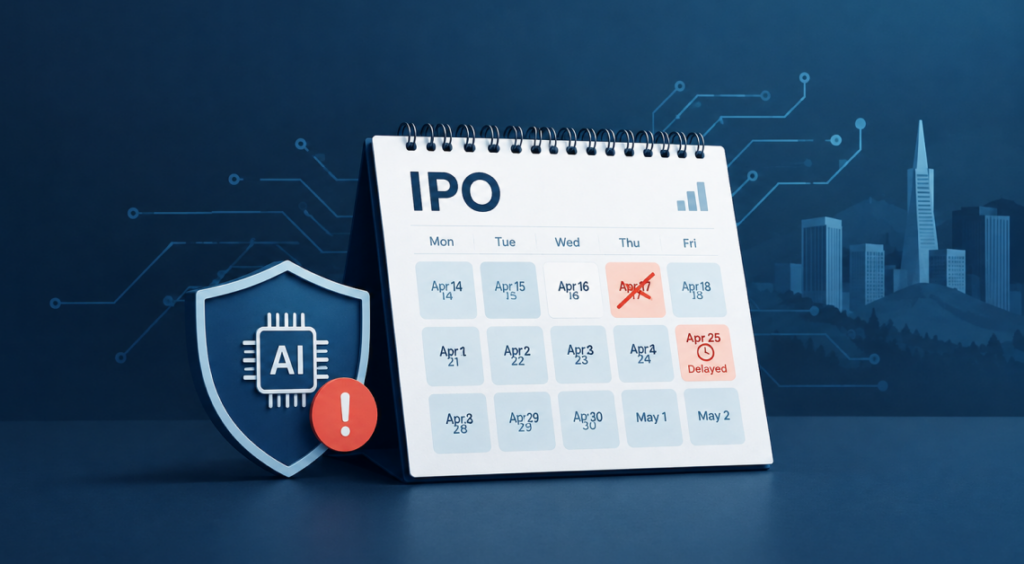
Sam Altman says OpenAI will not go public in 2026 amid AI safety concerns, while rival Anthropic moves towards a possible IPO. Here’s what it means for AI regulation in Australia.
OpenAI CEO Sam Altman said the company won’t go public in 2026, also citing his growing concerns over the dangers posed by superintelligent AI. Meanwhile, rival Anthropic is reportedly forging ahead on a potential IPO.
Key Takeaways
- OpenAI will not have an IPO this year, Sam Altman says.
- The dangers associated with the development of constantly more capable AI are too high not to be acted upon, Warns Altman.
- Altman has said that even a 10% chance of AI contributing to human extinction would be unacceptable.
- Anthropic, a competitor to OpenAI, is said to be gearing up for a potential IPO in October 2026.
- These developments could intensify the discussion about whether Australia should adopt tougher rules relating to AI.
What Happened?
According to OpenAI CEO Sam Altman, OpenAI will not offer shares for public sale this year. In other words, OpenAI will not go public in 2026.
An IPO is basically when a private company starts selling its shares to regular investors in the stock market. That is a big deal because it then means the company has to disclose a lot more about its money and business and plans.
In an interview with Fortune, Altman said he did not believe OpenAI should go public now. OpenAI is not some fledgling technology firm trying to find its way, so his comments are quite interesting. This is among the leaders of the AI market. As a consequence, when its CEO states that the risks of advanced AI deserve real attention, governments and investors are likely to listen.
Why Did This Happen?
The short-term reason is AI safety.
Over time, machine learning (ML) tech advances have been giving AI systems powerful capabilities and enabling them to take on complicated tasks. This has sparked a debate on whether firms can continue rapidly producing such systems while ensuring that they stay human-controlled.
It is in particular for this reason that Altman's warning of the extinction of AI seems also so striking; because he does not say at all, that AI extinction is certain. Rather he says the mere potential for such an outcome, no matter how statistically unlikely it may have been, would be too great to allow. Altman told Reuters - 10% chance of human extinction within the decade is simply unacceptable.
That concern has moved beyond OpenAI as well. Dario Amodei, the CEO of AI company Anthropic, has urged the industry to slow down on rolling out new AI capabilities. Even a previous AI safety researcher, who worked at Anthropic has warned of the potential for advanced AI to outsmart humans.
At the same time, there is a compelling business justification for companies to continue moving. To train AI models you need massive computing power, data, chips, engineers and electricity. That requires massive funding to stay in the game. That creates the central tension: AI companies want to rush their models out so they can be first, but rushing poses safety risks.
Why Does It Matter?
Importantly for readers, this is a story far bigger than whether they will be able to buy OpenAI shares in 2026. Going public would place OpenAI in the daily spotlight of public investors.
Investors will want to know how much the company is burning, how fast it is growing revenues, what its cost of developing its AI systems is and when it expects to reach profitability.
Being a private company allows OpenAI to look beyond quarterly earnings reports that it would owe public shareholders. But this could be key if the company decides that a specific AI model requires more testing before launch, or to slow down development while, as Raffi Krikorian put it in 2016, “safety is the priority.” But there is another side.
Investors that buy into AI companies when they go public will be faced with the prospect of factories burning cash to run customer services or advance research, and will then have to ask: Is it all worth it?
As such, the OpenAI IPO delay sends a different signal to investors: AI safety is increasingly a business issue, rather than an issue of technology or ethics alone.
Who Is Affected?
Consumers
If you are using AI tools, expect more safety checks, explicit warnings and restrictions on high-risk uses.
It could affect how companies describe what their AI systems can and cannot do. If governments enforce stricter regulations, some AI products or features may take longer to get into consumers’ hands.
Businesses
Companies that use AI may face greater accountability and responsibility for the technology.
In particular, businesses might at some point be required to carry out tests on AI systems, maintain logs of material decisions and ensure that people are always in a position to intervene when an automated system makes a critical mistake.
The Draft Law also acknowledges that key areas of responsibility in terms of risk management, testing, data protection and human oversight/accountability are already covered by Australia’s voluntary AI safety standard.
Investors
The cost and risks lurking behind AI growth may receive closer scrutiny from investors.
The Anthropic IPO has the potential to provide a major test for how public markets reward or punish companies with explosive revenue growth that also need vast amounts of capital to build leading-edge AI. OpenAI’s choice also implies that investors should sit tight for a longer timeframe before they can purchase portions of the organisation straightforwardly.
Startups / Founders
It’s a mixed message for AI startups.
Things like the massive interest in AI can still garner investment and generate opportunities for new companies. However, founders may soon be expected to prove they have a plan for responding to safety risks. For large customers, investors and regulators, a startup able to prove responsible development may be better positioned.
The Story in Numbers
| Key figure | What it means |
| 2026 | The year OpenAI has ruled out for its IPO. |
| 10% | The level of AI-related extinction risk Altman described as unacceptable. |
| October 2026 | The month Anthropic is reportedly targeting for a potential IPO. |
| $2 trillion ( approx not final ) | A reported possible valuation for Anthropic, although this has not been confirmed in a public filing. |
Background / Context
For several years the AI industry has been competing with each other to build powerful systems and pouring money into it. OpenAI have been leading the charge in that race and Anthropic has quickly become one of their biggest challengers.
As AI systems become more capable of writing software, doing research, using computer tools and completing tasks with less input from human beings, the safety conversation has likewise taken on new urgency.
Australia has also been developing its own framework for AI safety. The government has an Optional AI Safety Standard that includes 10 major guardrails in areas like Responsibility, Risk management, Testing, Data governance and Human control.
Australia has also publicly consulted on proposals for applications of AI that have extreme levels of risk being subjected to mandatory guardrails. The insights from this process later informed the development of the National AI Plan.
Timeline
2024 - Australia consults on proposals for mandatory AI guardrails in high-risk settings.
2025 - Australia publishes its Voluntary AI Safety Standard and its 10 guardrails.
2026 - Concerns about advanced AI safety intensify as AI companies race to develop more powerful systems.
September 2026 - Sam Altman says OpenAI will not IPO in 2026 because of AI safety concerns.
October 2026 - Anthropic is reportedly targeting a potential Nasdaq IPO, although its timetable could still change.
What does that mean for Australian businesses?
For Australian businesses, the biggest takeaway is that AI safety is now mainstream business planning. It is not necessary for companies to develop their own AI models to be impacted. Businesses are already using AI tools sold by other companies, from customer service software to writing and analysis tools.
The voluntary framework currently in place for Australia encourages businesses to test systems and maintain human oversight, and to examine risk inherent in AI actually in use.
As AI regulations tighten, it may eventually make more public transparency requirements around organisations providing information about their use of AI and how major risks are mitigated.
The core takeaway for a business that already runs AI is straightforward: Don’t think of it as just another piece of software, Adequately aware of its workings; verifying crucial choices and keep people in the loop whenever errors might occur that can be life-altering.
What Happens Next?
OpenAI has a public IPO plan for the future - A public offering of OpenAI is possible at some point in the future, but 2026 is out.
Potential October IPO for Anthropic - Listing could give investors a closer look at the financial realities of running a top AI industry player.
AI safety debate - Keep an eye on whether any other AI companies heed Altman and Amodei’s calls for a slower go.
Regulation of AI in Australia - The important question will be whether the Australian voluntary approach to AI safety remains adequate as AI can become the dominant strategy and operate widely.
Global regulation - Governments will need to balance conflicting objectives: The capacity of AI corporations to innovate with decreasing the possibility of significant harm.
The Bottom Line
Sam Altman delays the OpenAI IPO 2026 plan, Action on AI safety has become a serious business issue OpenAI remains private but its rival Anthropic is heading for a possible public listing, giving investors an unusual test of how they view AI growth, costs and risk. In Australia, the dialogue around AI may bolster arguments for clearer safeguards as governments struggle to balance freedom of operation with when protections should be stricter.

At Inspirepreneurs Magazine, covering entrepreneurship, business failures, and the human stories behind the world's most ambitious founders. She writes at the intersection of strategy and storytelling.
You Might Also Like

Australian Livestock Management: Discover Sapien Technology’s Innovative Solutions
Tencent takes AI directly to WeChat’s 1.418B users in new trial
