Intel, AMD Face Delays Supplying CPUs to China Customers
Synopsis
Intel and AMD have warned customers in China that shipments of some processors could face delays of up to six months due to new U.S. export licensing requirements. The restrictions affect chips used in servers, cloud infrastructure, and enterprise systems. The delays highlight ongoing semiconductor trade tensions between the United States and China. Companies in China may face planning challenges as they wait for approvals and deliveries. The situation reflects tighter global controls on advanced chip exports and continued dependence on foreign semiconductor suppliers.
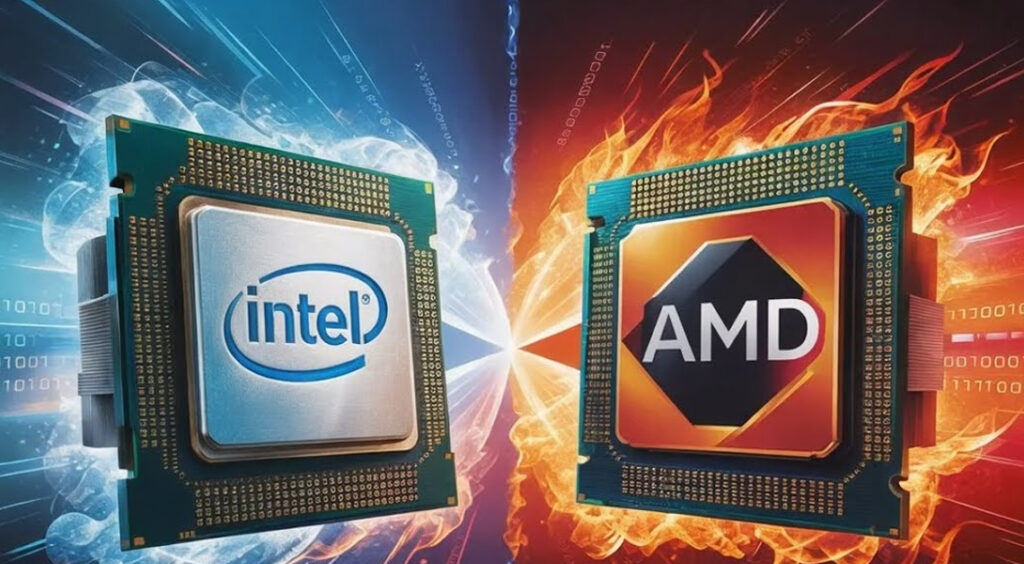
Intel and AMD have notified consumers in China that it may take up to six months to ship some of their processors because of new U.S. export controls. The alerts were dispatched at the beginning of February 2026, impacting Chinese customers who use the American chips in server and computer infrastructure. The delays are seen as increased U. S. oversight on semiconductor exports due to the current technology tension between Washington and Beijing.
Export Rules Trigger Longer Delivery Timelines
Intel and AMD informed clients that some processor deliveries will be affected by long lead times, and the delays might extend to six months. These are delays that will arise due to the introduction of new export licensing by the United States government.
The news was reported by Reuters first.
These two companies distribute popular processors, such as server and enterprise chips. These products form part of the key support of cloud computing, data centres, and business operations in the technology sector of China.
The delays can be attributed to the tightening of the U.S. export policies that aim at regulating the export of advanced semiconductor technologies. These regulations force some companies to license their shipment of some of the high-performance processors to China.
The process of export licensing may take weeks or months based on the product and the end-user. This has brought confusion to the delivery time and distortion in the usual supply lines.
Although the limitations do not cover all processors, the exposed chips are frequently deployed in critical infrastructure, including artificial intelligence systems, cloud systems, and enterprise servers.
Chinese Firms Face Uncertainty in Supply Planning
Intel and AMD processors are used by Chinese technology companies on a large scale in computing infrastructure. The increased wait times may present a challenge to the expansion initiatives, particularly those of cloud vendors and data centre operators.
The delays can also compel some companies to consider other suppliers or change the project's schedule. Yet, the substitution of American chips is not necessarily easy because of compatibility and performance conditions.
The case also demonstrates that China still relies on the technology of foreign firms to produce semiconductors, despite the massive investment in semiconductor production in China.
The processor delays portray larger tension in the United States and China with regard to access to future technology. To curb the access of high-performance chips by China, Washington has rolled out a number of export controls.
The U.S officials have indicated that the restrictions are meant to deal with national security issues. China has condemned such actions, declaring that this interferes with supply chains in the world and damages trade cooperation.
To chip manufacturers such as Intel and AMD, adhering to the export regulations is a growing aspect of international business.
Key Highlights
- Intel and AMD warned Chinese customers of CPU delivery delays up to six months
- Delays are linked to stricter U.S. export licensing requirements
- Affected chips include processors used in servers and enterprise systems
Follow Inspirepreneur Magazine for the latest sports breaking news.

Pooja Malik is a business journalist with over six years of experience covering startups, entrepreneurship, and emerging trends. She has previously worked with leading media platforms such as YourStory Media and BW BusinessWorld, where she reported on business, policy, and market developments. Currently, she serves as Editor at The Inspirepreneur Magazine, where she writes and edits stories across business, lifestyle, and travel, with a focus on clarity, accuracy, and reader relevance.
You Might Also Like

Redesign, Don’t Replace: Inside Australian CEOs’ Playbook for Blending Human and AI Work

Amazon Plans $15 Billion Bond Sale in the US for AI