


How Jacine Greenwood’s Roccoco Botanicals Grew Into a Multimillion-Dollar Beauty Brand
Synopsis
After losing $120,000 on her first beauty business, Jacine Greenwood changed her approach. Here’s how she built Roccoco Botanicals into a multimillion-dollar beauty brand—and what she did differently the second time around.
Eclogite, Jacine Greenwood’s first business, did not work out. Her second business, Roccoco Botanicals, did. Built by the same founder and in the same industry, Roccoco went on to report $4.2 million in annual product sales and gain international recognition as one of Australia’s fastest-growing beauty companies. This case study looks at how the business was built, what changed from the first attempt, and the numbers behind its growth.
The Business Roccoco Was Built On
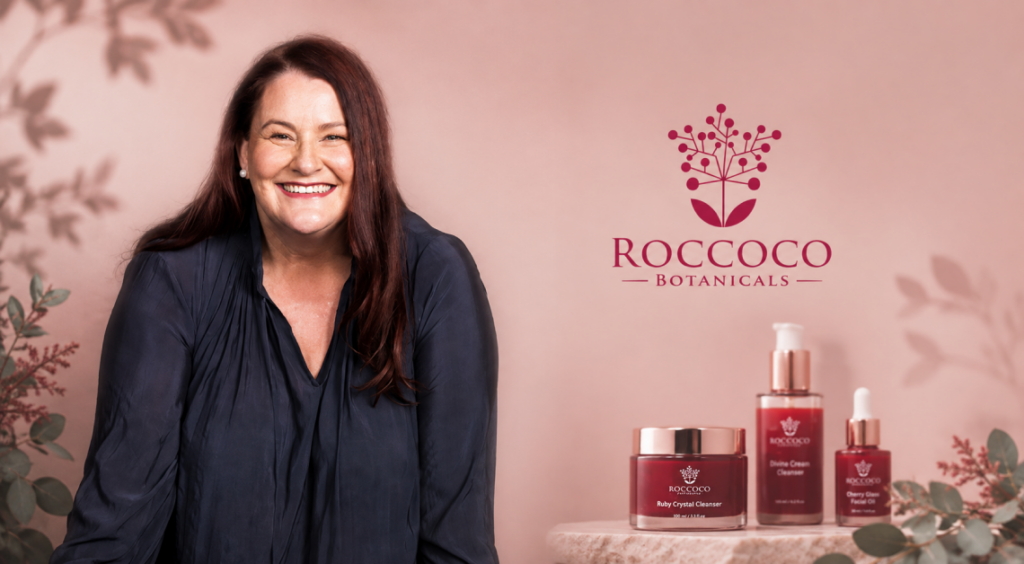
Roccoco Botanicals launched in 2013 from Greenwood’s kitchen bench in Queensland. The products came directly from her training as a cosmetic chemist and focused on skin conditions such as acne, rosacea and eczema, the same problems she had spent years treating professionally and dealing with herself.
Unlike many beauty startups, Roccoco was not built on outside investment. Public accounts describe the business as self-funded from the beginning, with no external investors putting money into it. That meant the early products were made, packaged and sold using money generated by the business itself rather than a pool of investor capital.
For the first several years, production remained small and hands-on. Public reporting says that until January 2021, the products were made by hand, often with a basic stick blender, before the company invested in larger manufacturing equipment. It was a business that took its time to grow, testing its products and pricing before increasing production.
How the Business Scaled Its Production
Early 2021 became a major turning point for Roccoco. That year, the company moved from handmade, small-batch production to larger-scale manufacturing equipment, specifically to keep up with growing demand. The change meant the business could produce much larger quantities without relying on Greenwood to be involved in every batch.
That same year, Roccoco ranked 66th on the Australian Financial Review Fast 100 list, which ranks some of the country’s fastest-growing companies. The timing is notable: the manufacturing upgrade came just as demand for the products was accelerating.
Moving from handmade production to manufacturing at scale is a major step for a small brand, and it can also be a dangerous one. Scaling too early can put pressure on cash flow, while scaling too late can leave a business unable to meet demand. Roccoco’s reported growth in the years that followed suggests the move was made in response to genuine demand rather than simply trying to grow ahead of the market.
The Revenue Behind the Growth
By 2022, Roccoco Botanicals was reporting $4.2 million in annual product sales, according to Greenwood’s own account published in SmartCompany. The same account said the business had doubled its turnover over the previous two years, pointing to continued growth rather than one unusually strong year.
Greenwood has also said that she invested more than $500,000 over ten years in improving her skills in marketing, copywriting and business strategy. That investment is important because it directly addressed some of the weaknesses that had contributed to Eclogite’s failure, particularly the gaps around pricing, positioning and business knowledge.
Roccoco’s growth, therefore, wasn’t simply a product story. A significant amount of the investment behind the company went into developing commercial skills rather than only improving formulas or creating new products. Those were precisely the areas that had been missing from Greenwood’s first business.
Where the Business Sells
A significant share of Roccoco’s customers are outside Australia. Public interviews describe more than 80 per cent of its customers as being based in the United States, while the SmartCompany account also identifies New Zealand as an important market.
That is notable for a Queensland-based brand that has had relatively limited recognition in its home market. Greenwood has also said the business grew internationally without relying on paid advertising. She later used this approach as the title of a book about her business growth strategy.
Growing without paid advertising generally places more emphasis on word of mouth, professional referrals, relationships with beauty therapists, awards and media exposure.
Roccoco’s pattern, an Australian brand with a relatively small domestic profile but a substantial US customer base, suggests it found growth through channels beyond traditional local advertising, including relationships with beauty professionals and international recognition.
Recognition and Industry Awards
Roccoco Botanicals has received a number of significant recognitions since appearing on the 2021 AFR Fast 100 list. The company was included on the Financial Times Asia-Pacific High Growth Companies list in both 2022 and 2023, and it was also named among Australia’s 50 fastest-growing exporters in 2023.
The brand has received recognition for its products as well. In 2022, its Ruby Crystal Cleanser won an Allē Award from Cosmetics & Toiletries. Greenwood has described that recognition as a personal pinnacle of her career as a chemist.
In 2023, she was named one of the Most Influential Women at the Australian Women’s Small Business Champion Awards. Roccoco also received a Best Beauty Brand award, which Greenwood has separately described as a career highlight as an entrepreneur.
The recognition covers both technical and commercial areas: product innovation on one side, and business growth and export performance on the other. That distinction is important. It suggests Roccoco wasn’t succeeding simply because Greenwood knew how to formulate skincare. Unlike Eclogite, where strong product knowledge existed without comparable commercial results, the second business developed strength on both sides.
From One Business to the Next
Roccoco Botanicals was built by the same person who ran Eclogite, using the same industry experience, in the same country and selling to a similar type of customer. The biggest difference between the two businesses wasn’t necessarily the product. It was the commercial structure built around it.
Roccoco grew its production in line with demand. Greenwood deliberately invested in marketing and business skills. The brand also built a body of industry recognition that gave it credibility in an increasingly competitive international market.
Eclogite closed without ever becoming profitable. Roughly a decade later, Roccoco Botanicals had grown into a business reporting several million dollars in annual sales and gaining recognition across international markets.
The two businesses had the same founder, operated in the same industry and were separated by only a few years. What changed was how Greenwood approached the business around the product.

At Inspirepreneurs Magazine, covering entrepreneurship, business failures, and the human stories behind the world's most ambitious founders. She writes at the intersection of strategy and storytelling.
You Might Also Like

ASIC Drops Case Against Tasmania’s Only Manganese Smelter

Krypto’s Appearance in Gunn’s Superman Leads to 454 Dog Adoptions
