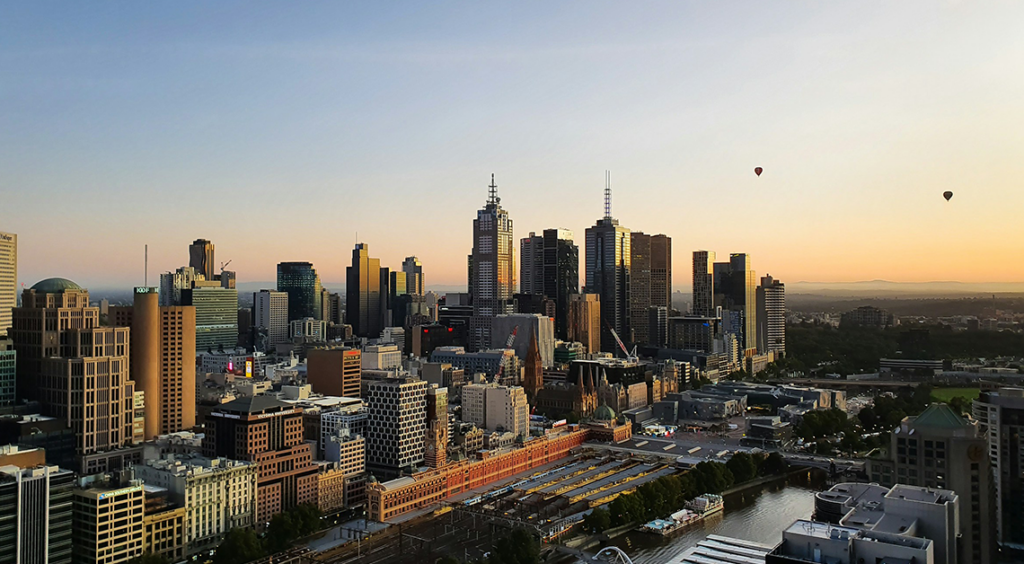
Melbourne Named the Friendliest City in the World, Ahead of Seoul, Amsterdam and Lisbon
Melbourne scored 98.52 in the Conde Nast Traveler awards, narrowly beating Porto. Perth came sixth, and Sydney missed the list.


Recommended Articles
Ventia has secured a $110 million extension to its Western Australian Government contract, covering court security and custodial…
The ACCC is calling on Canberra to consider EU-style rules, including a blacklist of unfair business practices, to…
Recommended Articles
Skydance completes its $110 billion Warner Bros Discovery takeover, giving David Ellison control of studios, CNN and CBS…
Tesla has started Semi electric truck deliveries to its first customers, marking a major step for the long-delayed…
Recommended Articles
SpaceX wants $40 billion in bank loans and borrowed money, led by Apollo, to buy Nvidia AI chips,…
ANZ is urging Australian businesses to stay alert as AI makes scams and fraud harder to detect.
Recommended Bloopers
Legal Dispute
Clear Grain looked like a promising grain-trading business when NZX bought it for about A$7 million in 2009. But ambitious growth targets were missed,…
A$14M — Earn-Out Lost
SKINS · SPORTSWEAR · 2019
Jaimie Fuller rebuilt SKINS into a global sportswear brand over 17 years, only to watch one private equity deal and its debt bury the…
$8M → $2M
startup · payments · Australia
Greg Taylor’s bar-tab app Clip had everything a startup is supposed to need: big-name pub groups, hundreds of venues, and millions in institutional backing.…
JUST $5K LEFT
Recommended Articles
NAB outage disrupted mobile, internet and phone banking across Australia, affecting several additional platforms. NAB reported $2.75 billion…
Atlas Arteria has declared a 20c H1 2026 distribution, with payment due in October. Here are the key…
Recommended Articles
Victoria has secured hosting rights for three of the next four Australian Open golf championships, including the 2027…
Turkey are set to play their first FIFA World Cup match in 24 years when they take on…
Recommended Articles
Chinese beauty exports to US markets rose 12.4% in the first half of 2026, with hair products reaching…
The Queensland government has cut annual incentives funding for Screen Queensland by at least $13 million for the…
Recommended Articles
Property investor Centuria Capital has acquired a 50% stake in two A-grade Sydney CBD office assets from a…
House prices in Australia’s two largest cities fell sharply in June, marking the biggest downturn since 2022 and…
Recommended Case Studies
Over the Wire grew from a Brisbane startup into a $112 million telecommunications and IT business by combining connectivity, cloud, voice and…
From a Melbourne-based startup founded by a doctor and a technology specialist to a global healthcare technology company, the Pro Medicus story…
Computershare’s journey from a Melbourne technology startup to a global financial services powerhouse highlights how strategic acquisitions, technology and long-term client relationships…

Melbourne scored 98.52 in the Conde Nast Traveler awards, narrowly beating Porto. Perth came sixth, and Sydney missed the list.
Key Highlights Sydney property developer Bathla entered voluntary administration last month, leaving creditors with around $3.2 billion in unpaid debt. The group was made up of hundreds of companies, which helps explain the sharp rise in Australia’s insolvency figures. Thousands…
By Shivangi 8h ago

Skydance completes its $110 billion Warner Bros Discovery takeover, giving David Ellison control of studios, CNN and CBS while planning $6 billion in savings.
By Shivangi 11h ago