


Australia’s Property Market and Budget Ease Pressure on RBA
Synopsis
Australia's property market slowdown and recent fixed mortgage rate cuts by Macquarie and ANZ are easing pressure on the Reserve Bank of Australia. While some economists believe the rate-hiking cycle has ended, others still expect further increases. The federal budget's property tax changes have also cooled housing demand, helping reduce inflation pressures. However, uncertainty remains due to rising oil prices and global economic risks linked to Middle East tensions. As the RBA prepares for its next meeting, policymakers may have more room to pause and assess the economy.
Banks Signal Its Peak in Interest Rates as Home Loan Rates Get Lower
Investors have refocused on the Australian interest rate outlook following fixed-rate mortgage cuts from Macquarie Group and ANZ. Macquarie has lowered rates on its three-year fixed home loan by 0.5% points, and ANZ has lowered rates on its two-year fixed rate by 0.5% points.
The change is a big one since banks typically cut fixed rates when they expect borrowing costs to come down the track. That also represents a rare change after dozens of lenders hiked rates following a string of RBA rate rises earlier this year.
Interest Rate Forecast by Major Australian Banks
There is little consensus on what the Reserve Bank of Australia may do next. Commonwealth Bank, which is likely the best-known bank in Australia, with services beyond just lending money, declared that the RBA rate-hiking cycle has finished and sees two interest rate cuts next year. ANZ also sees the Reserve Bank holding at this stage.
In contrast, Westpac expects two more rate rises and NAB predicts one final rise. That emphasises the still-tight range of forecasts, as inflation and economic growth remain sources of uncertainty.
Australian Property Market Slowdown Eases Inflation Pressure
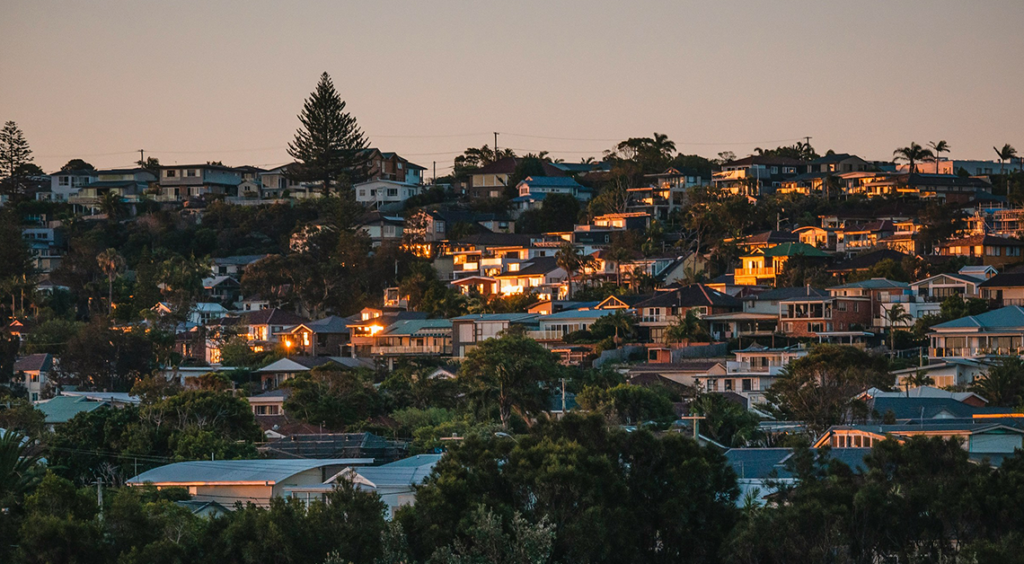
The loss of momentum in the Australian property market has been apparent for some time, with Sydney and Melbourne seeing slowing price growth while Perth and Brisbane have also lost steam. The housing activity was already softening before the federal budget, which altered property investment tax advantages.
When property prices are no longer rising, homeowners start to curb spending, and that is how it grinds through consumer spending in a slowing housing market. This alleviates inflation pressures, which may alleviate the RBA pressure to raise further interest rate increase.
Global inflation risks
Global risks have not slipped off our policymakers' radars, despite the Australian economy continuing to slow. Middle East tensions could lead to higher oil prices, adding to living costs and keeping inflation elevated for longer.
The RBA is more flexible compared with the central banks in the US and Europe. With unemployment increasing and the housing market slowing, many analysts believe the Reserve Bank can gauge the state of the economy before making a further move on interest rates.
Follow Inspirepreneur Magazine for daily global business news.

At Inspirepreneurs Magazine, covering entrepreneurship, business failures, and the human stories behind the world's most ambitious founders. She writes at the intersection of strategy and storytelling.


