


Exclusive: Meet the Australian Femtech Founder Taking on the Gender Health Gap with AI
Synopsis
Discover how Australian femtech founder Dr. Ariella Heffernan-Marks is using AI through Ovum AI to address the gender health gap, improve women's healthcare, attract investors, and build one of Australia's fastest-growing health-tech startups.
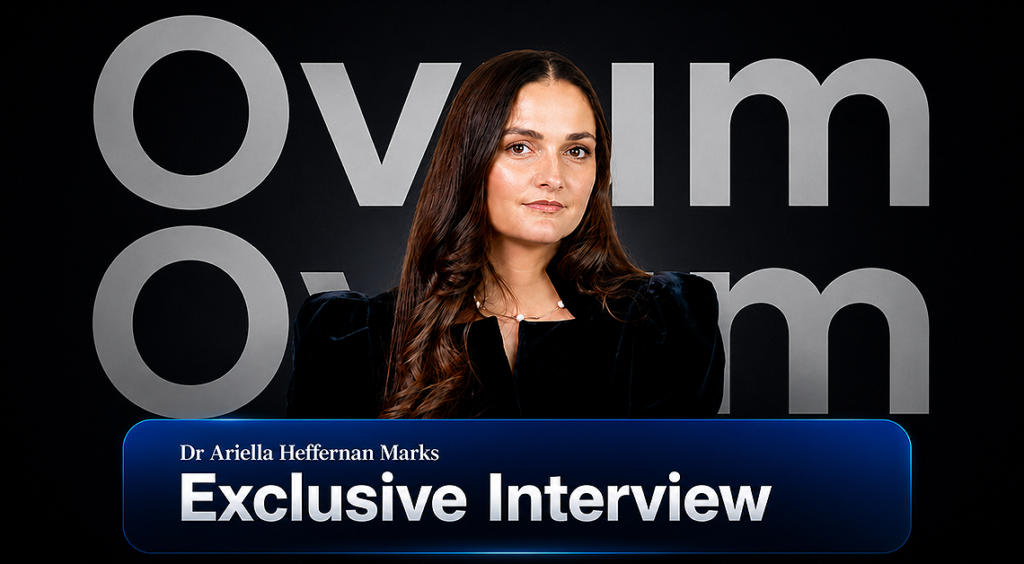
Australia's femtech sector is entering a new era, and Dr. Ariella Heffernan-Marks is at the forefront of it. As the founder and CEO of Ovum AI, the doctor-turned-entrepreneur is tackling one of healthcare's biggest blind spots—the gender health gap—through an AI-powered platform designed specifically for women.
Fresh off a funding round that tripled Ovum AI's valuation to AU$18 million, Heffernan-Marks is building far more than a health app; she's creating a data-driven ecosystem aimed at improving women's health outcomes across every stage of life.
In this exclusive conversation with Inspirepreneur, she shares how her own health journey inspired the venture, why investors are finally embracing femtech, the importance of trust and privacy in healthcare AI, and the lessons she's learned while building one of Australia's most promising health-tech startups.
Question: You've trained as a doctor before becoming a founder. What gap in women's healthcare convinced you that technology could solve problems that traditional healthcare wasn't addressing?
Dr. Ariella Heffernan-Marks: About four years ago, during my third year of medical school, I developed vestibular migraines. I experienced chronic dizziness, facial pain and photophobia. I couldn't look at lecture screens or stand through clinical placements. I found myself begging doctors for medication, even though I didn't want to rely on it. I simply couldn't function at work, and I was struggling to show up for my patients.
At the same time, it was COVID, and I was rotating through regional, remote and metropolitan healthcare settings, including emergency departments, primary care and hospital wards.
During that period, I began to notice that women were consistently disempowered within the healthcare system, regardless of their socioeconomic background. I was seeing healthcare through two perspectives: as a doctor in training and as a patient myself.
I knew something had to change, but I wanted to understand why this was happening. At the time, the Gender Health Gap Report hadn't been published, and there was very little research on taking a lifespan approach to women's healthcare.
As I reflected on my own experience and those of other women, I realised there were three major issues. First, women were frequently being dismissed or gaslit in clinical settings. That discouraged them from seeking medical care and instead pushed them towards social media or advice from family and friends, resulting in lower health literacy and an increasing burden of chronic disease. In Australia, 56% of women over the age of 15 already live with at least one chronic health condition, and by age 65, that rises to 87%.
Second, my background before medicine was in law and science, where I majored in reproductive biology. I understood that women's bodies are cyclical and interconnected. Yet our healthcare system is fragmented and siloed. I felt we were missing important diagnostic patterns because we weren't looking at women's health holistically. When I saw how long it takes to diagnose conditions such as endometriosis, I was shocked. Third, I discovered the enormous data gap in women's health. Women have historically been underrepresented in clinical trials. Even as a medical student, I wasn't aware of the extent of that gap, and I was surprised that I wasn't being trained to recognise and treat women's bodies appropriately-including my own.
One day, while driving to a medical placement, I had what I can only describe as a lightbulb moment. We have books that track a child's development over time, so why don't we have something similar for women? Something that integrates health information across an entire lifetime, improves health literacy, helps women advocate for themselves during medical appointments, and allows them to anonymously contribute their data to research if they choose.
That was the moment I knew this was what I wanted to dedicate my life to. From the initial idea to pivoting towards AI took around 18 months, but that journey confirmed we were building the right solution.
Question: How is Ovum AI addressing the gaps you identified, and how are you leveraging technology to do that?
Dr. Ariella Heffernan-Marks: When you look at the gender health gap, there are three key problem areas: interpersonal barriers, systemic barriers and research or data barriers.
Early on, we conducted an internal impact report to measure whether we were already making progress across these three areas.
The results were encouraging.
Women using Ovum were four times more likely to take positive action regarding their health, showing stronger preventative health behaviours. They were also twice as likely to feel heard by their clinicians, which reflects improved confidence and self-advocacy.
On the systemic side, women consistently told us that bringing all of their medical information into one place helped them recognise patterns in their health. Whether it was mood changes linked to PMDD or managing multiple chronic conditions, they found the experience far less overwhelming. Many described the app as calming and intuitive.
On the research side, we've seen remarkable engagement. Around 83% of users choose to anonymously contribute their health data because they genuinely want to help improve women's health research.
That level of participation reflects trust. We don't collect personally identifiable information, we're SOC 2 and GDPR compliant, and we're transparent about what data is collected, how it's protected and where it's stored. In just ten months, we've generated more than 78,000 health insights and over 128,000 conversations. What's particularly exciting is the diversity of women using the platform. Our users range from 15 to 84 years old. Some are focused on general wellness, while others are managing reproductive health, chronic illness or neurodivergent conditions such as ADHD and autism. We also support women living with fibromyalgia, thyroid disorders and metabolic conditions.
Technology is the foundation that enables all of this.
It's not just about AI. It's about every part of the experience, from thoughtful design to clinical safety.
On the backend, we've built rigorous clinical evaluation processes. Alongside my PhD research, we've completed human ethics approvals through two leading women's hospitals, ensuring that the technology is both clinically accurate and safe.
So while AI is an important part of Ovum, the real innovation lies in the complete ecosystem we've built specifically for women's health across every stage of life.
Question: Why do you think investors are finally paying closer attention to femtech?
Dr. Ariella Heffernan-Marks: Culturally, women's health has become a much bigger topic of conversation, particularly alongside the rapid advancement of AI. At the same time, there's growing recognition of the economic impact of the gender health gap. People are beginning to understand that this isn't simply a women's issue, it's a global economic issue.
Women make up more than half the world's population, and when they're unable to participate fully in education, work or society because of health challenges, the economic consequences are enormous. That has made investors realise there's both a significant social impact and a compelling commercial opportunity.
If you've seen our cap table, many of our investors are impact-focused and healthcare-focused. They recognise both the scale of the problem and the opportunity to create meaningful change.
We're also seeing strong validation from the market. Companies like Flo have demonstrated the commercial potential of femtech, proving there is substantial demand.
What makes Ovum different is that we're building a women-specific AI platform across the entire lifespan. We're integrating both quantitative and qualitative health data while building AI infrastructure that is clinically safe, with a doctor leading the company.
There are several reasons investors believed in what we're building, but more broadly, the femtech sector is growing rapidly. What's particularly exciting is seeing innovation expand beyond reproductive health into much broader aspects of women's healthcare.
Question: How do you balance personalised AI, data collection and research while ensuring women remain empowered and their information stays secure?
Dr. Ariella Heffernan-Marks: It starts with consent. True consent means people understand exactly what they're agreeing to. Women need to know what information is being collected, where it's stored, how it's protected and why it's being used.
As we expand into different markets, we'll ensure data is stored within those regions and complies with local regulations.
Importantly, we don't collect personally identifiable information. We're SOC 2 and GDPR compliant, and we've designed our policies so they're straightforward and easy for women to understand.
Beyond compliance, trust is also personal.
Women want to know who's behind the company. I've always shared my own health journey openly because I believe that transparency matters. We've involved women throughout the product's development—from the earliest concepts through to ongoing improvements—and that collaboration has been essential in building trust.
Equally important is giving women complete control over their data.
Contributing anonymised data to help close the gender health gap is entirely optional. Women make that decision before entering any information into the app.
That choice matters.
The foundation is informed consent, transparency and clear communication. Our responsibility is to do everything possible to minimise risk and protect women.
Health technology, femtech and AI all carry legitimate concerns around privacy, and we take those concerns seriously. We've invested heavily in security, often earlier than companies at our stage typically would.
I think the results speak for themselves.
If women didn't trust us, they wouldn't choose to use the platform, and they certainly wouldn't voluntarily contribute their health data to research. The fact that so many do tells us we're earning that trust.
Question: Can we talk about the partnerships that have been an important part of Ovum's growth journey so far?
Dr. Ariella Heffernan-Marks: One of our earliest partnerships was with Medibank, one of Australia's largest health insurers. They came on board before the product had even officially launched, which was an incredible vote of confidence.
We've also partnered with Fernwood Fitness, allowing us to support their members, and we have a benefits partnership with Sweat, giving our users access to three months of the platform.
On the research side, I'm undertaking my PhD through the George Institute and UNSW. Those academic partnerships have been invaluable because they've enabled us to conduct clinical trials and continue validating the platform scientifically.
We're also preparing to launch a pilot with Lifeblood, one of Australia's largest healthcare organisations. They employ around 3,000 women, making them an ideal partner for evaluating workplace health outcomes. They're also recognised as a leading employer when it comes to supporting women's health, so there's a strong alignment between our organisations.
We've also partnered with Menopause Friendly Australia, where they provide workplace education and support while Ovum serves as the digital companion for women's ongoing health management.
What's been particularly rewarding is seeing support come from every part of the ecosystem—major corporates, healthcare providers, academic institutions and employers—all working towards the same mission of improving women's health.
Question: Ovum's latest funding round tripled the company's valuation to AU$18 million. What do you think gave investors the confidence to back the business?
Dr. Ariella Heffernan-Marks: I think the biggest factor was execution.
When we raised our first round, I made a series of commitments about what we would achieve with that capital, and we delivered on those commitments. We built the product, launched it successfully and acquired paying customers across both B2C and B2B markets.
Many startups choose to focus on one customer segment first. I deliberately chose to build both simultaneously because I believed they would reinforce each other.
If you partner with a company employing thousands of women, those employees naturally introduce the product to women in their own networks. Likewise, we've had individual users champion Ovum within their workplaces, creating opportunities for enterprise partnerships.
That dual strategy became a powerful growth engine.
Investors also saw strong engagement metrics. User retention from month one through month six remained exceptionally high, which is particularly difficult for consumer applications. We weren't simply retaining users, we were educating an entirely new market while doing it.
For many investors, confidence also came from the strength of the founding team.
Initially, I was a solo founder. Today we're growing into a team of around twelve people. Investors could see we were attracting outstanding talent capable of scaling the business.
The broader market validation also helped. Our previous funding announcement generated significant media coverage, not just in Australia but internationally. That demonstrated there was genuine demand for what we were building.
The scale of the opportunity also mattered.
This is a massive global problem with an equally significant commercial opportunity. Combined with the academic credibility provided through my PhD and the support we've received from the clinical community, investors saw both scientific rigour and commercial potential.
Question: What advice would you give Australian founders who are raising capital today?
Dr. Ariella Heffernan-Marks: The first thing I'd say is that fundraising is difficult, particularly in the current market. Give yourself enough time. Start preparing early. Know your numbers thoroughly and have absolute clarity about where you're taking the business and how you intend to get there.
The second piece of advice is something I always come back to, trust your intuition.
You've become the founder of your company because you understand the problem better than almost anyone else. Stay true to that understanding.
You'll receive advice from countless investors, mentors and founders. Not everyone will believe in your vision, and that's okay. If you allow every opinion to change your direction, you'll lose sight of why you started the company in the first place.
Fundraising can be emotionally challenging. You'll hear "no" far more often than "yes." You have to develop resilience and not let rejection shake your confidence.
One lesson from my own journey is to be creative with your commercial strategy.
I was repeatedly told to focus on either B2B or B2C. Instead, I intentionally built both from day one because I believed they strengthened each other. That decision ultimately became one of the reasons investors backed us.
Another lesson is to continue building your expertise.
When I first started pitching an AI company, I was often asked, "What do you know about AI? How can a doctor build an AI company?"
Rather than seeing that as a limitation, I decided to deepen my expertise by undertaking a PhD focused on AI in women's health.
That didn't just strengthen my credibility-it directly benefited the business because my research validates the product itself.
Founders should never stop learning. You can continually strengthen your expertise while building your company, and if you do it strategically, both grow together.
Question: Building a health-tech company comes with unique challenges because it's such a highly regulated industry. Looking back at your journey so far, what have been your biggest lessons as an entrepreneur? And what advice would you give founders building companies?
Dr. Ariella Heffernan-Marks: My biggest piece of advice is simple: don't ignore regulation. Don't tell yourself it's too expensive or that you'll deal with it later. Delaying it usually ends up costing much more-whether that's through losing customer trust, slowing down fundraising or missing partnership opportunities.
Investors understand that healthcare is a highly regulated industry. They expect founders to recognise those risks and show that they're actively managing them.
We have invested significantly in achieving SOC 2 and GDPR compliance. While it required meaningful investment early on, the return has been enormous.
Those certifications have enabled us to partner with major organisations. Large insurers, enterprise customers and corporate partners simply won't work with companies that don't have the right compliance frameworks in place.
Another advantage is that we built this infrastructure from the beginning instead of trying to retrofit it later.
Many compliance frameworks require specific architectural decisions from the earliest stages of development. By building with regulation in mind from day one, we avoided having to rebuild systems later.
If you're building a company that handles sensitive personal information, investing in regulation early will ultimately save you time, reduce stress and strengthen trust with both customers and investors.
Question: Looking ahead five years, what would convince you that Ovum has genuinely changed the way women manage their health-not just in Australia, but globally?
Dr. Ariella Heffernan-Marks: For me, success will always begin with the stories women share. Whether we have helped one woman, thousands of women or millions of women, it's those individual stories that matter most.
As we expand internationally, I am excited to see how women from different cultures, backgrounds and healthcare systems use Ovum. I want to understand what patterns emerge from the data and what entirely new insights become possible because of the qualitative nature of the information we're collecting.
I would love to see Ovum become increasingly predictive-helping women identify health patterns earlier and equipping them with better information before they even walk into a medical appointment.
Of course, we will continue growing the company, raising future rounds of investment and expanding the platform. But beyond that, I also hope our journey encourages more founders to enter this space.
I hope Ovum becomes an example that impactful companies can also be commercially successful.
The two aren't mutually exclusive.
You can build a mission-driven business that creates measurable impact while also building a sustainable company. But doing that requires trust, strong governance, ethical decision-making and a relentless focus on solving a real problem.
Five years from now, I would love to see every one of our current metrics grow dramatically-but more importantly, I would like to know we have genuinely improved women's lives.
Coordinated by Meghna Aggarwal

At Inspirepreneurs Magazine, covering entrepreneurship, business failures, and the human stories behind the world's most ambitious founders. She writes at the intersection of strategy and storytelling.


