


How Interest Rates Affect Startup Funding in Australia
Synopsis
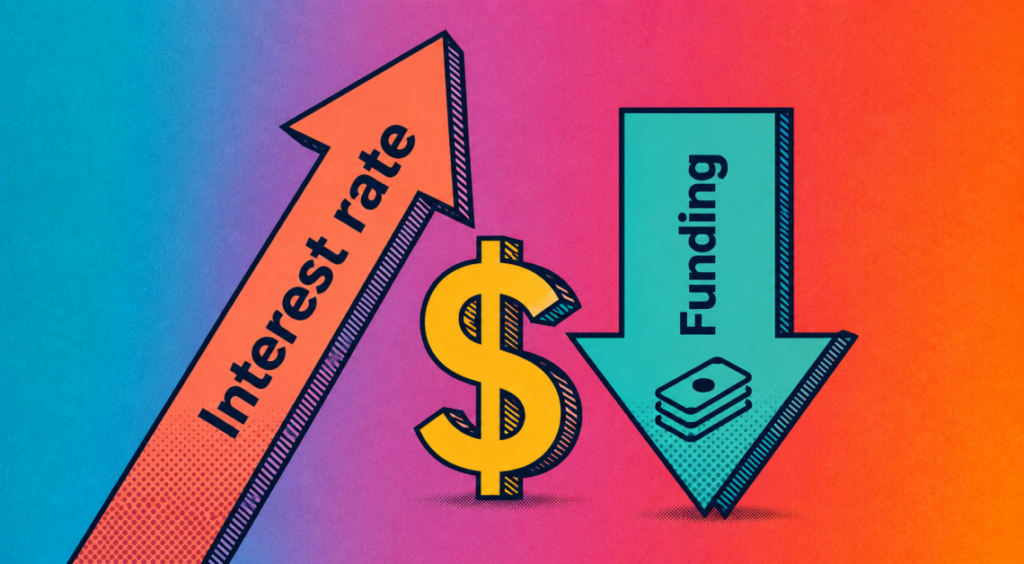
Interest rates play a major role in determining how much capital is available to startups. When the RBA raises rates, venture investors become more cautious, startup valuations often decline, and debt financing becomes more expensive. This guide explains how interest rates influence startup funding in Australia and what founders can do to adapt.
The startup ecosystem in Australia is not an isolated phenomenon. Although founders usually focus on the development of their product, obtaining customers, and raising funds, there exist other economic factors that have a huge role in raising capital. Among the most notable of such factors are interest rates.
Once the Reserve Bank of Australia (RBA) alters the cash rate, it consequently has a spillover effect on the entire economy. The cost of borrowing changes, the behavior of investors undergoes changes, and the venture capital market adapts accordingly. Hence, a good understanding of these relations can help startup founders formulate more efficient and realistic fundraising strategies.
Understanding the RBA Cash Rate
The cash rate, which is set by RBA, serves as the main interest rate for financial operations carried out in Australia. This cash rate basically determines the amount of money that Australian banks would charge businesses and individuals for credit.
By raising the interest rate, the RBA is making borrowing expensive, whereas by lowering it, it makes borrowing easy and cheap. There will be changes in business operations, investment decision-making, and movement of funds in the market.
Although startups do not borrow cash directly according to the cash rate, the cash rate still affects the conditions of financing, venture capital, etc.
Why Higher Interest Rates Reduce Venture Capital Activity
In nature, venture capital includes taking high-level risks.
Whenever the economy is impacted by low interest rates, many investors adopt the strategy of diversifying their portfolios through venturing into markets such as private equity, venture capital, and startup investing markets.
However, this changes once interest rates rise since investors will find that they may earn a relatively higher return on investment with little or no risk by investing their savings in government bonds, governmental securities, etc.
As such, many investors stay away from the venture capital market, opting for investments with lower risks instead.
- This trend is displayed in three distinct ways:
- Longer periods of capital raising
- Longer periods of investments deployment
- More focused approach toward selecting investment decisions
The Impact on Startup Valuations
Perhaps the most straightforward outcomes of increased interest rates are decreased valuations for startups.
Investors value startups based primarily on their chances of future growth. With increased interest rates, investors apply more stringent discount rates for future earnings.
That is, future profits become less meaningful when counted in today's dollars.
There are a number of consequences of this:
- decreased valuation multiples
- driving growth becomes less appealing
- profitability receives more attention
- unit economics become extremely focused upon
Startups that once received high revenue multiples may see lower valuations when showing similar growth rates.
Why Investors Prioritize Profitability During High-Rate Periods
The low-interest-rate situation usually promotes aggressive growth.
Investors may be inclined to support startups that focus on gaining market share over profits due to the supply of capital and the significance of future growth.
The high-interest-rate situation changes priorities.
Investors start looking for:
- Sustainable profitability
- High gross profit margins
- Concrete plans for profitability
- Efficient customer acquisition
- Effective cash management
As a consequence, founders have to show financial discipline sooner than they would in a low-interest-rate environment.
Debt Financing Becomes More Expensive
Interest rates impact borrowing for new ventures as well.
Numerous Australian new firms utilize:
- Business loans
- Venture financing
- Income-based financing
- Equipment financing
When rates go up, borrowing prices increase to correspond to higher costs of financing.
This causes problems such as:
- Increased monthly payments
- Reduced borrowing ability
- Increased cash flow strain
- Strict lending requirements
In spite of the fact that borrowing can be beneficial, entrepreneurs should think carefully about whether the costs of borrowing are worth the growth that borrowing will generate.
How Interest Rates Affect Early-Stage vs Late-Stage Startups
Some startups do not face the same consequences.
Early-Stage Startups
Pre-seed and seed companies frequently have to deal with:
- Reduced size of funding rounds
- Higher scrutiny of investors
- More emphasis on quality of founders
- Increased examination of business models
Nevertheless, if early-stage startups have a great long-term potential, they would still attract funding.
Growth-Stage Startups
Later-stage startups may encounter:
- Greater market corrections
- Longer fundraising cycles
- Less participation from crossover investors
- Increased pressure to be profitable
Businesses intending to attract a large funding round feel the impact of high-interest rates and market conditions more than others.
The Australian Venture Capital Perspective
Venture capital firms of Australia analyze start-ups in accordance with domestic and international market conditions.
With the rise of interest rates, a considerable number of institutional investors cut down their portfolios of risky assets, which in turn affects the funds available in venture capital funds.
To counter this situation, Australian VCs take the following actions:
- Focusing on sectors that have established their viability.
- Providing support to existing portfolio companies.
- Favoring those start-ups that have better fundamentals.
- Lengthening the process of due diligence.
- Although capital is still available, the level of competition grows.
Strategies for Founders During High Interest Rate Periods
While founders may not be able to implement monetary policies, they certainly can adjust their activities.
Extend Runway
Have plenty of cash to ensure they can survive lengthy fundraising periods.
Focus on Revenue
Be able to show that there is a continued demand for the product and that revenues are growing.
Improve Unit Economics
The founders will have to convince investors that growth can be achieved.
Reduce Burn Rate
Control costs without interfering with business objectives.
Diversify Funding Sources
They may look into other financing sources, including grants, strategic alliances, or venture debt.
Strengthen Investor Communication
During uncertain times, investors want to receive all necessary information.
What Founders Should Watch Beyond the RBA Cash Rate
While the Reserve Bank of Australia's cash rate is relevant, startup operators must ensure not to rely on it alone since the funding climate runs deeper. The market and economic variables impact the funding conditions at large. This means that the level of venture capital activity, inflation trends, as well as investor’s outlook hold sway in the fundraising landscape.
For instance, the fact that interest rates may go down does not mean that investors will not be cautious due to weak economic growth or geopolitical situation disturbing the markets. Founders must also keep their eyes on venture capital utilization trends, startup exit activity, and trends within industry sectors. For instance, some spheres such as AI, finance tech, and climate technologies may continue to attract investments as interest rates fluctuate. Understanding those broader signals will allow founders make better decisions concerning fundraising timing and business expansion strategies.
Looking Ahead
Interest rates are an essential macroeconomic factor in startup funding in Australia. When it comes to startup funding in Australia, one of the deciding factors is interest rates. High interest rates tend to decrease risk appetite, decrease valuations, and increase borrowing costs. In contrast, low interest rates tend to make financing cheaper and more attractive.
However, the lesson for entrepreneurs is that fundraising cannot only be determined by the performance of their businesses. At the same time, macroeconomic factors influence investors.
Those startups that succeed through the shifting interest rates are typically the ones that have sound economic fundamentals, disciplined financial management, and clear growth strategies in place.
FAQs
How do interest rates affect startup funding in Australia?
Higher interest may generally lead to low risk appetite that makes the venture capital funding difficult to get and lowers the valuations of startups.
Why do VCs become more cautious when rates rise?
Investors would get higher returns when utilizing bonds and term deposits. Therefore, these investments are more appealing than the high-risk startup investments for investors.
Do higher interest rates reduce startup valuations?
Definitely! Higher interest rates mean that future cash flow would lose its present value, which means lower valuations for startups.
Are business loans a good alternative when rates are high?
They can be, but again the costs of borrowing would rise with increase of interests. The founders should carefully evaluate the payment obligations and cash flow stability.

At Inspirepreneurs Magazine, covering entrepreneurship, business failures, and the human stories behind the world's most ambitious founders. She writes at the intersection of strategy and storytelling.


