


What Is the World AI Cooperation Organization (WAICO)?

Synopsis
The World AI Cooperation Organization (WAICO) is China’s new global AI governance body. Discover what WAICO is, which countries joined, why Shanghai hosts its headquarters, and how it differs from the UN’s AI governance efforts.
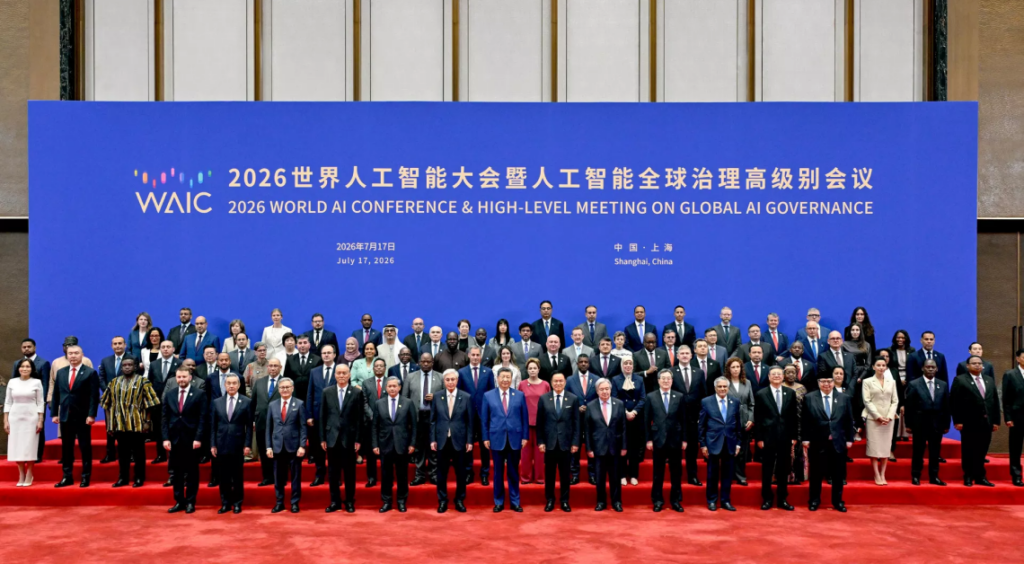
The global conversation about who decides the rules around artificial intelligence has a new contender. On July 16, 2026 China prepared to host a summit in Shanghai to celebrate the signing of a charter establishing the World AI Cooperation Organization by 29 countries which has been building since it was first proposed by Beijing back in 2025. Its launch attracted the UN Secretary-General to come to Shanghai and almost immediately became one of the hottest topics in global AI policy this year. So, get to know what exactly it is, who the players are, and why it should be of interest.
What Is The World AI Cooperation Organization?
WAICO, which stands for the World AI Cooperation Organization is a new intergovernmental organization dedicated entirely to artificial intelligence. This formally emerged on July 16, 2026 when representatives from 29 countries signed the founding agreement in Shanghai, on the eve of the city’s annual World Artificial Intelligence Conference. The group is based in Shanghai, and will function independently rather than sitting inside another institution like the United Nations.
WAICO says that its aim is to encourage international dialogue on AI so that it remains safe, fair and beneficial for all, language reminiscent of the wording in the UN Charter. The day after WAICO became a legal entity, Chinese President Xi Jinping, in his remarks at the opening of the World AI Conference, portrayed the new foreign NGO as ensuring that AI development becomes a symphony of international cooperation instead of taking place under the leadership of one country. He also promised 5,000 opportunities over five years for training and seminars in AI for developing countries as part of the launch.
What Is WAICO: How It Originated
The plan for a global AI cooperation body was first floated by Chinese Premier Li Qiang in 2025 and reiterated by Xi Jinping at the Asia-Pacific Economic Cooperation summit. When the 2026 World AI Conference rolled around, China had transformed that proposal into a signed document at which Chinese Foreign Minister Wang Yi signed on Beijing’s behalf.
It was not by accident that the timing and background were chosen. The day before the first World AI Conference opened, the agreement was signed in a ceremony attended by United Nations Secretary-General António Guterres, giving the new body international visibility that would have been far more difficult for a purely domestic Chinese initiative to attain. Other attending higher officials included deputy prime ministers from Kazakhstan, Laos and Pakistan, underscoring that this was being treated as a genuine multilateral moment, not just an announcement of a Chinese policy.
WAICO Member Countries?
WAICO was founded by twenty-nine member countries. Among the confirmed signatories were China, Russia, Pakistan and Kazakhstan, among others, along with Indonesia, Laos, Brazil and South Africa as well ASEAN countries; Malaysia Myanmar, Cambodia Senegal and Algeria.
What is notable about the list is who is not present. No G7 economy signed the founding agreement and neither the United States nor a single member state of the European Union joined as a founding member. With the roster rather heavily weighted toward the Global South and many countries already in China’s existing diplomatic and trade networks, it also fits with how WAICO has been described since its inception: a mechanism intended for developing nations specifically, rather than an organization meant to encompass every major economy on the first day.
Regionally, the founding members cover almost a dozen Asian countries, more than 10 African nations, four Latin American countries and a few from Europe (in contrast to its lack of any Western economies), giving WAICO an ocean of geographic diversity. At least in theory, membership remains open to any government that desires to join; thus this founding list is likely not the final one and it will be interesting to observe whether additional states sign on as the organization becomes operational.
Why China Chose Shanghai As WAICO’s Headquarters
WAICO was based out of Shanghai for a reason, and it wasn’t random. The city has hosted the World AI Conference every year since its inception in 2018, jointly run by various Chinese national ministries and the Shanghai municipal government, forming one of China’s major centers for AI firms, research and investment. Having it located there, in part, keeps the new global AI governance body linked to the event and ecosystem that gave birth to it in the first place.
It likewise communicates a symbolic message. This decision to host WAICO in Shanghai as opposed to a more neutral place in the international community proper tells us of some direction: China does not want to be one among equals; it wants clearly to act as the convener and the host of this new governance tent. It was intentional in contrast to how most western-led AI and tech initiatives are organized (across multiple countries, or under existing institutions like the UN or OECD).
Is The United States Part Of WAICO?
No. At the point when WAICO was marked on July 16, 2026, the United States and also Liberal social states like copies Canada just as every one of the individuals from a similar Union had never forced their affiliation into any sort of centerpiece. There were however separate reports of US-led efforts to co-ordinate allies such as Japan, the UK, Australia and India around AI supply chains, semiconductors and rare-earth elements as being dubbed Pax Silica rather than anything Washington has been linked with.
In his opening address of the WAIC, Xi Jinping took aim at this dynamic, enjoining nations to “jointly oppose overstretching the national security concept” in AI (a phrase that is widely interpreted as referencing US semiconductor export controls that have curtailed access by Chinese AI firms to advanced chips). One of the most closely watched open questions surrounding WAICO is whether Western economies will wind up interacting with it to some degree, rather than completely standing outside of it.
How WAICO Differs From The UN’s Global AI Governance Efforts
The United Nations has its own ongoing work on AI governance, generally aimed at building consensus across all member states through existing UN structures and dialogue processes. WAICO takes a different approach. Its own agreement, headquarters and founding membership stand apart from an existing global body: a directly-run intergovernmental organization that China continues to host and lead separate from the UN system.
That doesn’t mean WAICO would take an adversarial stance in relation to the UN. Guterres’ presence at the signing ceremony, and WAICO’s own language regarding being in line with the UN Charter, imply that China wants a new organization to be perceived as an extension of rather than as an adversary to UN endeavors. Nonetheless, the fact that a second international body focused on AI governance will run independently and not through the UN format marks an important change: this means global rules on AI are being formulated via more than one competing mechanism instead of converging towards a single United Nations-led process.
What will WAICO really be doing next?
WAICO is still in its infancy, and much of what it actually does will remain to be seen. It is tasked with setting down technical and ethical guidelines for AI, coordinating cooperation between member countries, and assisting on AI capacity building in the Global South. Xi also announced the opening of international technology cooperation centres and collaborative projects with BRICS, ASEAN, and the African Union in addition to offering AI-based weather prediction systems for approximately 30 countries to assist with early warning systems for extreme weather as part of CookstoveWeek.
Membership is likely to stay open to any government that wants in and may well expand far beyond the notional 29 initial signatories. What’s less certain is just how much real power WAICO will wield in practice, and whether and how it will interface with the existing UN AI governance work as both proceed in parallel.
The Bottom Line
WAICO is perhaps the strongest statement China has made to date on how it believes AI governance should take shape in a way that focuses on the Global South and appears genuinely diplomatic, with a UN Secretary-General present in person. The existence of a second global AI governance platform in addition to the UN’s own global mechanisms, and next to competing Western-led initiatives like reported Pax Silica is evidence that at least two different blocks, not one single process, are defining what the future for global ‘AI rules’ looks like.
It remains to be seen whether WAICO will become a truly powerful rule-maker or mainly a paper tiger serving nation-states already aligned with Beijing, depending on what exactly its early guidelines and cooperative programs produce and whether any Western economies ultimately seek to join it instead of remaining outside it.
At Inspirepreneurs Magazine, covering entrepreneurship, business failures, and the human stories behind the world's most ambitious founders. She writes at the intersection of strategy and storytelling.
You Might Also Like

Stripe Signals Interest in Possible PayPal Acquisition

War of the Worlds To Get Surprise Release on Prime After 5 Years
