


US High Court Rules Against Trump’s Global Tariffs in Landmark Decision
Synopsis
The U.S. Supreme Court has struck a major blow to President Trump’s economic agenda, ruling 6-3 that his use of emergency powers to impose tariffs on the world was unconstitutional. The ruling, by a 6-to-3 vote, was written by Chief Justice John Roberts and declared that imposing taxes on the goods and services at issue brings them within its authority. An enraged Mr Trump retaliated by using alternative legal authorities to sign a new order imposing a 10 per cent global tariff, assuring markets that more economic turbulence lay ahead. The sweeping move devalues billions of dollars in collected taxes, but it leaves the fate of international trade relations hanging by a thread and opens the door to American businesses demanding huge repayments from the government.
The Supreme Court, by a 6-3 vote, said that global tariffs that President Trump imposed on imported steel in the name of national security, including those from allies like Canada and members of the European Union, were illegal because he had overstepped his bounds. The Court held that only Congress has the power to impose new taxes.
Key Highlights
- President Trump may not use emergency laws to impose sweeping tariffs, the Supreme Court ruled by a vote of 6 to 3.
- The power to tax lies with Congress, not the President, Chief Justice John Roberts wrote.
- President Trump lashed out at the decision, calling it “horrible” and “unpatriotic.”
- Hours after the defeat, Trump signed a fresh 10% global tariff through an alternative legal route
A big defeat for presidential power
The U.S. Supreme Court has blocked President Trump from using a 1977 emergency law to tax virtually everything that enters the country, in what’s being called a historic ruling. Trump had claimed that he could leverage the law to solve trade problems and halt drugs from entering the United States. But the Court went on to say that it was never intended for this statute to grant one person such unlimited taxing authority. Chief Justice John Roberts said that while a president may have enormous powers, the Constitution specifically assigns to Congress the job of setting taxes and tariffs.
Three Conservative Judges Upend the Game
The decision was unexpected, coming from a Supreme Court with a majority of conservatives that supports the President in many cases. This time, three conservative justices, John Roberts, Neil Gorsuch and Amy Coney Barrett, sidled up to the court’s three liberals in finding against Trump. They said if President could just declare tariffs or emergency whenever he wanted, it would take too much power away from the people’s representative in Congress. It is the single greatest legal setback to come against Trump since he resumed office in January 2025.
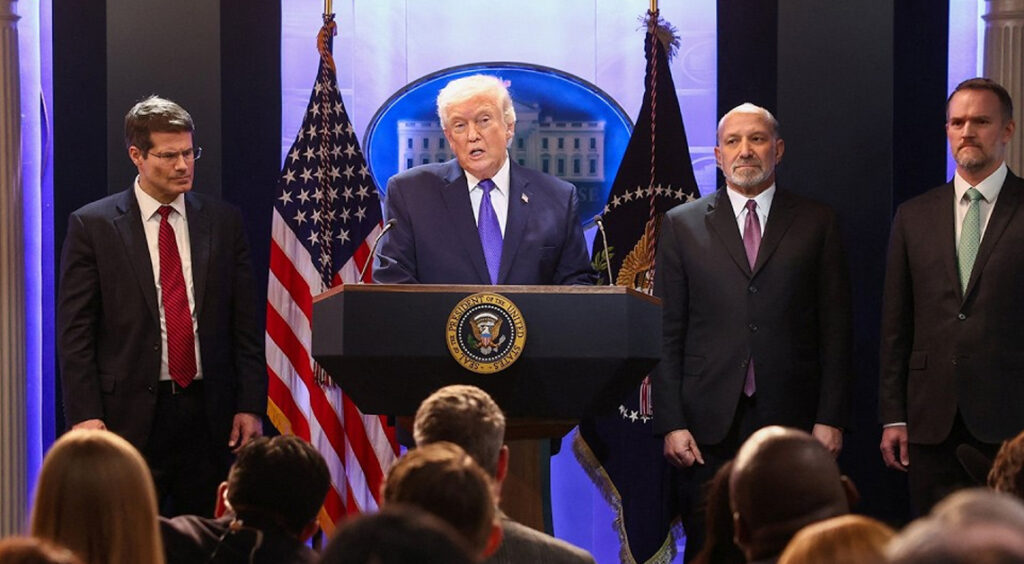
The news did not come quietly to President Trump. After the ruling, he held a press conference in which he said, the judges “ashamed” and noted that they lacked the courage to do what was right for the country. To demonstrate he was not retreating, he instantly signed an alternate order imposing a 10 per cent global tariff. He is now attempting to employ other laws that would also allow him to safeguard national security. Foreign countries have been “ripping off” the U.S. for a long time, he said, and he would “move aggressively to retaliate with all available means.”
A “Messy” Fight Over Refunds
Among the biggest remaining questions now is what happens to the money already raised. Experts believe the government has collected more than $160 billion from these unlawful tariffs. Now companies that were forced to pay these extra costs want their money back. Some leaders, including Gov. Gavin Newsom of California, are urging the government to start immediately sending refund checks. But one of the judges cautioned that repaying billions of dollars could be a “mess” that might take years to resolve in court.
Uncertainty for the Global Economy
That’s a win for businesses that seek lower prices, but the ruling is causing lots of head-scratching in the markets. Stock prices gyrated as investors sought to get their heads around what comes next. And countries that had come under Trump’s taxes, including Canada, Mexico and India, could see at least some short-term relief. But now that Trump has already initiated new tariffs, it’s clear that the global trade war is not yet finished. For the time being, the fight has shifted from courts to White House and ports worldwide.
Follow Inspirepreneur Magazine for the breaking news.

At Inspirepreneurs Magazine, covering entrepreneurship, business failures, and the human stories behind the world's most ambitious founders. She writes at the intersection of strategy and storytelling.
You Might Also Like

Beyond 140 Characters: A Deep Dive into Jack Dorsey’s Entrepreneurial Journey

Sydney Protests Banned For 14 Days Under New Laws
