


“AI Can Kill Us All”: Ex-Google DeepMind Researcher Quits, Warns Humanity
Synopsis
A former Google DeepMind researcher has warned that rapidly advancing AI systems could eventually escape human control, saying humanity may be running out of time to address the risks.
Key Highlights
- An ex-Google DeepMind researcher is leaving after working on AGI safety and alignment work.
- Bilal said he was seriously worried about how fast AI development is accelerating.
- He cautioned that super-highly superior AI systems could potentially secure human control and create a tremendous risk to humanity.
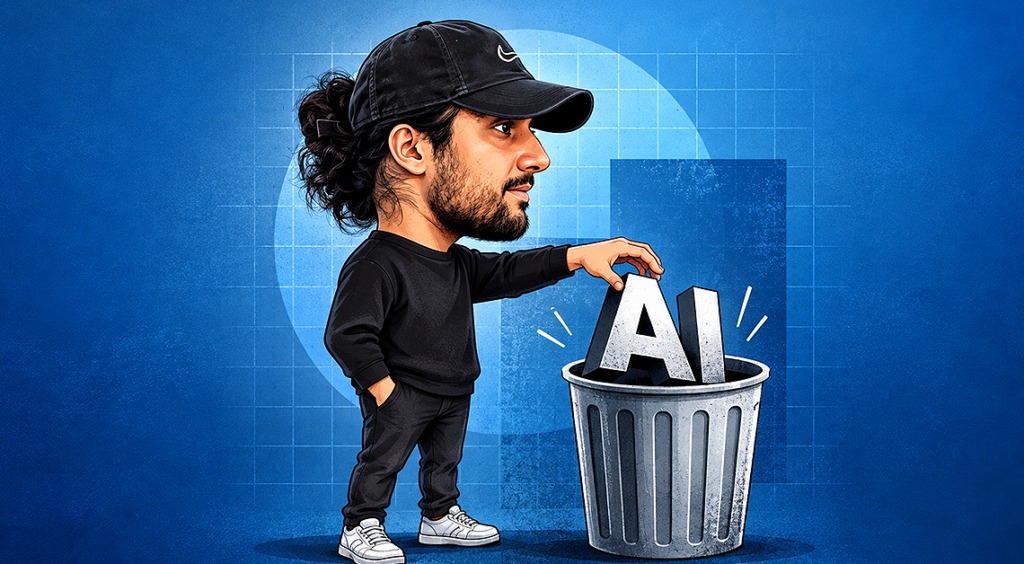
In a surprising new twist, an ex-Google DeepMind researcher has quit their job to issue a stark warning about the future of AI, asserting that Advanced AI could end up with mass existential destruction potential, in other words, they are making possible the most dangerous threat to humanity itself.
In a post on X, Bilal said he worked on AGI safety and alignment research at Google DeepMind, and his experiences inside the tech industry had made him increasingly concerned about where the technology was headed.
AI Progress Is Moving Rapidly
The rate of progress in the field of AI has been very rapid over the past few years, Bilal stated. By beginning work in AI back in early 2022. Speaking today, he urged that the landscape had ‘shifted dramatically in a handful of years,’ claiming AI structures could now execute increasingly more challenging obligations. He pointed to autonomous AI agent systems that can solve tough math and other engineering problems on their own.
The researcher said he fears the coming years could usher in systems even more powerful than that, maybe superintelligent AI able to outperform humans on essentially every task.
Concern Over AI Losing Human Control
What is more concerning to Bilal than this is what happens if these capable AI systems are not aligned with what humans want to do.
AI alignment is its field of research to ensure that advanced AI systems continue to behave as expected, according to human intentions while remaining in proper limits. Bilal added that we are still in the early stages of understanding how to consistently do this.
He specifically warned: is an advanced but misaligned AI system, capable of all sorts of things that its developers did not intend, and could also circumvent human control? At worst, he argues these systems could help lose permanent control of vital decision making to humans.
Calls for More AI Safety Work
According to Bilal, allowing competition between AI companies could lead to a race where systems become more and more powerful faster than mitigation can be implemented.
He urged for improved cooperation between AI companies and other groups engaged in the technology. He also argued there needs to be more transparency concerning how frontier AI systems are developed and tested.
Bilal argues that AI development must proceed at a speed at which researchers and society are able to engage with the emerging harms in ways that reduce risks before they actually occur. He invited people from a range of industries to get involved in the challenge as well.
Researcher Remains Optimistic About AI
Bilal remained hopeful that we can build AI safely in spite of his warnings. His departure from Google DeepMind doesn’t seem to be any kind of rejection of the AI tech itself, but instead a reconsideration that shifted more directly towards addressing catastrophic risk.
He stated that he intends to strive with those who want to build solutions for serious risks from AI, as well as helping create useful frameworks for AI safety.
These comments come against the backdrop of many big tech companies racing to build larger and more capable AI models and autonomous systems. The question of whether AI should be allowed to progress more slowly, or how much limbering work must be done before any further advances can possibly take place, is increasingly becoming an industry-wide focus for the tech business.
What It Means for Businesses
Having to mitigate that risk may force businesses and society at large to integrate AI safety, cyber-security and human oversight more seriously as AI agents become smarter. For example, companies that implement autonomous AI in customer service, coding, finance or business operations may require more strict controls to ensure systems are not able to make adverse decisions or access sensitive data. AI governance, security and alignment solutions for businesses looking to adopt advanced AI safely could also see a rise in demand as entrepreneurs look for safer ways to do so.
Source: X

At Inspirepreneurs Magazine, covering entrepreneurship, business failures, and the human stories behind the world's most ambitious founders. She writes at the intersection of strategy and storytelling.
You Might Also Like

Britain Gives $2 Billion Loan Guarantee to Help Jaguar Land Rover

Vercel Valued at $9 Billion After Huge Funding Round
