


Pentagon Declares Anthropic a Supply Chain Risk
Synopsis
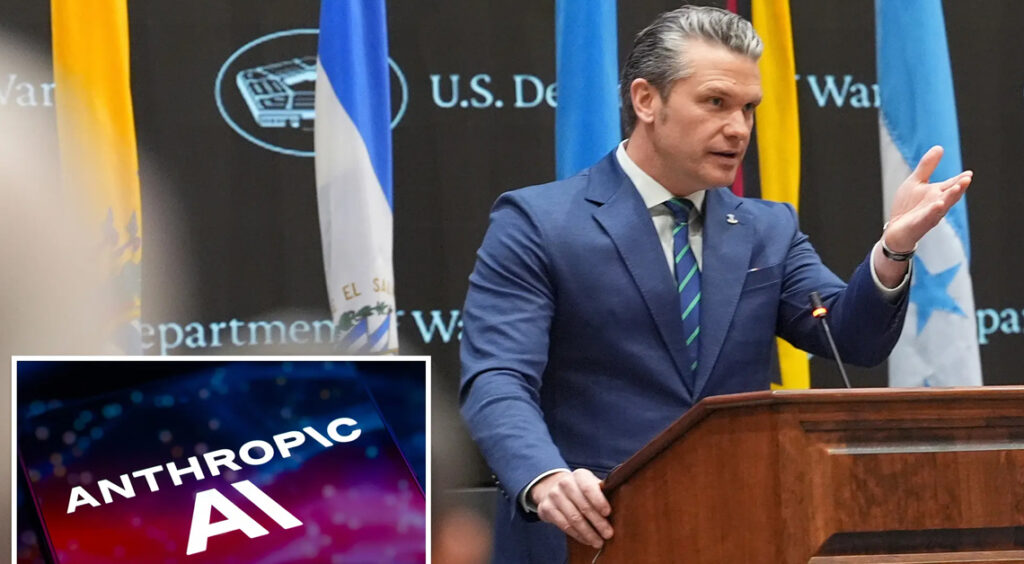
The Pentagon has formally told Anthropic it is now considered a supply chain risk, effective immediately. The dispute started when Anthropic refused to let the military use its Claude AI for fully autonomous weapons or mass surveillance of Americans. Talks broke down, and President Trump then ordered all federal agencies to stop using Anthropic’s technology. This makes Anthropic the first American company ever to receive this label, which was previously only used against foreign countries and their companies.
The Pentagon has formally designated Anthropic as a supply chain risk, the first time any American company has received such a designation. The fallout stems from a months-long battle over whether the military could be allowed to use Anthropic’s Claude AI for autonomous weapons and surveillance without restrictions.
Key Highlights
- Emerging social engineering for AI agencies Pentagon formally designates Anthropic as a supply chain risk.
- Anthropic barred the military from using Claude for picking targets.
- It is the first time it has ever been applied to an American company, historically, it was used only against foreign adversaries.
- President Trump directed all federal agencies to terminate the use of Anthropic’s technology.
The Pentagon Has Stopped Doing Business With Anthropic
The US military has now formally notified Anthropic that it has declared the company and its products a supply chain risk. The announcement, made on Thursday, is effective immediately. Any company or agency doing business with the Pentagon is now required to provide written assurance that it is not using Anthropic’s A.I. tools. It is a serious designation, and one that has never been applied to an American company before.
Anthropic is the maker of Claude, the AI model that was the only one approved for use on the Pentagon’s classified networks. Now that the relationship is torn asunder after weeks of failed talks.
What the Two Sides Were Divided Over
The disagreement boiled down to a single question, how far was the military allowed to go when using Claude? Anthropic wanted clear written rules that would prevent the military from deploying Claude to spy on American citizens or to operate weapons that can fire without any human making the final decision. These were two hard lines the company said it would not cross.
The Pentagon pushed back hard. Officials contended the military should be able to use Claude for any legal purpose, and not have a private company impose additional restrictions. The things Anthropic was concerned about, they had said, were already illegal under the existing law. Neither side was willing to compromise, and negotiations ultimately broke down.
Trump Gets Involved, and It Went Badly Fast
The Pentagon had a deadline when talks collapsed on Feb. 27. By the cutoff time, Anthropic did not assent to the new terms. President Trump then ordered all federal agencies to immediately cease use of any technology from Anthropic. Some agencies had six months to complete the switch.
Trump was not particularly subtle. He said in an interview with Politico that he had fired Anthropic and was not happy that the company refused to provide full access. Pete Hegseth, the defence secretary, followed up by saying that no military contractor would be able to do business with Anthropic, either. The General Services Administration also took Anthropic off the government’s official list of approved A.I. tools.
The Weird Part, The Military Is Still Using Claude Today
Here is where things get weird. Despite all this, the US military has still been using Claude in its operations against Iran. Claude was being used during US strikes on Iran that began last weekend, two sources told CBS News. The AI had not exactly been integrated into the system, but it was still running inside Palantir’s military software used by troops in the Middle East.
This means that, publicly, the government severed from the company while continuing to depend on its technology in an active military context. Critics pointed this out immediately. The move risks upending years of trust between the tech companies in Silicon Valley and the US defence sector, some analysts said, and could even push capable AI tools away from the military at precisely the wrong time.
Anthropic Says It Will Defend Itself in Court
The company believes the government’s action is not legally justifiable, Anthropic’s chief executive, Dario Amodei, said. Anthropic has no option but to fight it in court, he said. He had been talking to investors days before he formally gave notice, saying the sides had more in common than they did differences and that he was still working on a way to cool things down.
Amodei also said in a memo to staff that the administration’s antagonism toward Anthropic stemmed from not donating money to Trump or publicly praising him, unlike some other tech executives. At the same time, OpenAI has entered into its own agreement with the Pentagon to provide military access to its A.I. for all lawful purposes. That vague phrasing has alarmed some OpenAI employees about what it could mean in practice.
FAQs
1. What does that mean for the supply chain risk of Anthropic?
Now, every company or agency collaborating with the Pentagon will have to certify that they do not utilise Anthropic’s products. It denies Anthropic access to government-related contracts.
2. Why did Anthropic reject the Pentagon’s terms?
Anthropic wanted the written rules to prohibit using Claude for mass surveillance of Americans and for weapons that fire without human decision-making. The Pentagon refused those limits.
3. Has any American company ever received this label?
No. Such a label was only ever used against foreign countries and companies considered to threaten US national security.
4. What is the US military still using Claude despite the ban?
Yes. Even after the designation was announced, Claude was reportedly still being deployed in US military operations against Iran.
5. What happens next for Anthropic?
The company plans to contest the decision in court, it said. It also needs to replace its government contracts while its competitors, such as OpenAI, swoop in to take their place
Follow Inspirepreneur Magazine for the business news.

At Inspirepreneurs Magazine, covering entrepreneurship, business failures, and the human stories behind the world's most ambitious founders. She writes at the intersection of strategy and storytelling.
You Might Also Like

Aligning Sustainability with Profitability: Balancing Financial and Social Goals

Addressing Worker Dissatisfaction Could Unlock $30 Billion for Australian Economy
