


The Fed Hiked Rates for the First Time in 3 Years. What Does it Mean for ASX Investors?
Synopsis
The US Fed has raised interest rates for the first time in three years. Here’s what it means for the ASX, Australian investors, the RBA and the Aussie dollar.
The US Federal Reserve boosted interest rates for the first time since July 2023 in a new signal that it is not yet out of the woods on inflation. So what does the move mean for Australian markets, the ASX, AUD and RBA?
Key Takeaways
- The US Federal Reserve’s monetary policy committee raised interest rates by 25 basis points to a range between 3.75% and 4%;
- First rate hike since July 2023 from the Fed.
- Most Fed policymakers expect at least one more rate hike before the end of 2026.
- The US dollar strengthened after the decision, while the Australian dollar remained around US71 cents.
- The Fed’s decision might pile pressure on the RBA ahead of its interest-rate meeting on September 29.
What Happened?
The US Federal Reserve raised interest rates for the first time in more than 3 years, increasing its benchmark rate by 25bps at the target range of 3.75% to 4%. The decision itself was fully priced, but many investors were focusing on what the Fed had to say about the months ahead.
As per the Fed, the US economy remains strong, inflation is still above the 2% target, consumer spending was strong, productivity had been solid and unemployment had changed little. That combination has allowed the central bank to remain further on hold for longer as it aims to push down inflation.
But what surprised markets more were prospects of yet another hike this year, before year-end. The latest Fed median forecast has the federal funds rate around 4.1% in 2026, hardly a sign that policymakers are ready to call victory on inflation.
Many took the message badly on Wall Street. The Dow Jones Industrial Average decreased by 1.21% and the S&P 500 by 0.45%. The Nasdaq was flat, closing down only 0.01%. The ASX 200 rebounded after futures had pointed to a weaker open, eventually finishing 0.28% higher at 8,696 points. The ASX 200 final ended at 8,696 points or +0.28%.
Why the Fed Hiked Interest Rates
The main reason is inflation. Inflation, of course, should return to the Fed’s long-term goal of 2%, but price pressures have proven stubbornly above where the central bank wants it.
Simultaneously, the US economy has managed to grow. Consumer spending and business investment have remained strong, which means demand has not yet slowed sufficiently to bring inflation down rapidly. This has put the Fed in a difficult position as leaving rates low for too long may keep inflation elevated.
High interest rates increase the cost of borrowing. That can dissuade consumers from borrowing and companies from undertaking certain investments. Slower demand in turn can help keep prices from rising as quickly.
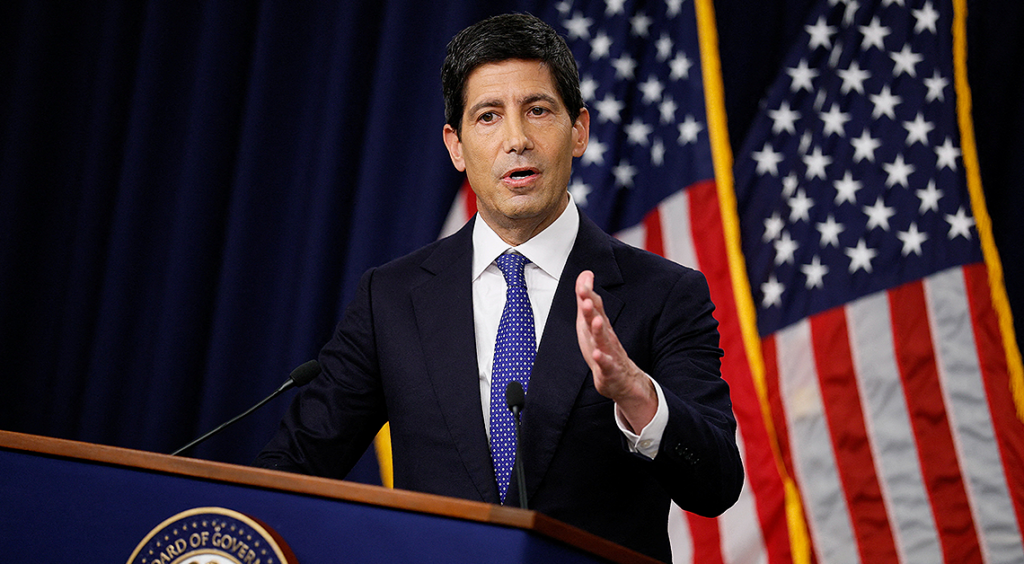
After the decision, Fed Chair Kevin Warsh said that inflation still was too high and had persisted for too long. This latest action was thus meant to demonstrate that the central bank is still serious about returning inflation to target.
Why Did Wall Street Fall?
While higher rates were the catalyst, it was not due to selling US shares itself. The 25-basis-point hike had been largely expected by the markets.
The larger worry was that investors were now betting interest rates would stay higher for longer than they expected. Rising rates allow investors to receive more from safer assets like government bonds. It can render some shares, especially those of fast-growing companies, unattractive.
The higher interest rates lead to elevated enterprise borrowing costs as well. Debt-dependent companies can face rising interest costs, while businesses forecast to make most of their profits many years away can see valuations come under threat.
US Treasury yields rose after the decision from the Federal Reserve. Moreover, the10-year Treasury yield was back above 5%, placing another foot in financial markets. The US dollar gained as investors interpreted the Fed’s message as hawkish, while the Australian dollar remained around US71 cents.
What the Fed Rate Hike Mean for ASX Investors
The most important thing to Australian investors is that a US rate rise does not equal an ASX fall.
The ASX and Wall Street are connected, but they do not always move in the same direction. Commodity prices, the Australian dollar, local economic data, company earnings and RBA decisions can also impact Australian shares.
This was evident on Thursday as the market moved higher. The ASX 200 was tipped to decline after a lower overnight finish for Wall Street, but gained ground and ended the session higher.
But it was still important, with US interest rates affecting overall borrowing costs and the mood of investors worldwide. This means that Australian financial conditions can also tighten if US rates stay high. That might impact how investors price stocks or the interest that corporations must pay to borrow funds.
Why this could be a bigger problem for Australians than the RBA
This is especially significant for Australians, as the RBA is responding to stubborn inflation too.
Unlike the Federal Reserve, the RBA therefore has a reason of its own to set interest rates. Nevertheless, global interest rate movements can affect Australian bond yields, the Aussie dollar and financial conditions.
Markets price a strong chance of an RBA rate hike at its next meeting on 29 Sep. The markets were pricing an 87% chance of a 25-basis-point hike on September 17, according to Reuters. Last week, the International Monetary Fund also flagged that if inflation proves exceptionally sticky, the RBA would need to increase rates more aggressively.
Even more hiking means higher borrowing costs for Australian households. For investors, it could mean more pressure on rate-sensitive parts of the economy.
What This Means for ASX Growth and Tech Stocks
Higher interest rates can especially play a huge role in growth and tech companies. For instance, a large number of growth corporations are priced in part on the earnings that traders hope they can reap in the future. In this situation, if you are basically receiving an expected future stream of profits then as interest rates rise those future profits will be worth less in present value.
That can compress valuations, even if the underlying business of a company has not suddenly changed.
Not every ASX tech stock is going to crash after a rate rise. Responses vary depending on the nature of a company; companies with relatively sound cash positions, minimal debt obligations and high revenue growth will respond differently than those that borrowed heavily to fund or have major expectations for future growth.
What Does It Mean for Banks?
Higher interest rates can also affect Australian banks although the impact is more complex.
Higher rates can increase the amount banks earn from some loans. But higher mortgage repayments can also put pressure on households, particularly borrowers who are already struggling with higher living costs.
Weaker consumer spending ultimately flows through to businesses across the economy if households scale back their expenditure to cope with bigger repayments.
Investors will be analysing not only interest rates, but household spending, mortgage stress, credit growth and bad debts as evidenced by the ASX being down over -0.50% today.
What Does It Mean For The Australian Dollar?
The Australian dollar is also another major section of the story. As US interest rates go up, the US dollar can become more attractive to investors as returns on US assets could increase.
Not every ASX company will be negatively impacted by a weaker Australian dollar. Companies that derive a substantial portion of their revenue from foreign markets should be helped when those earnings are translated into Australian dollars.
But a weaker currency will also make imports, along with equipment and other products used, more costly. So the impact is industry-specific, reliant on where an individual company does its production and where it spends its money.
What ASX Investors Should Watch Next
For Australian investors, the next major catalyst will be the RBA interest-rate decision on September 29. Markets are pricing in another eventual rate hike, but they will be eager to see what the bank actually says about future moves.
There will also be US inflation and employment data which investors will watch. For if inflation stays high, the Fed might face a dilemma over whether to keep rates higher for longer or hike them again. The path of expectations regarding future rate hikes could also change if inflation accelerates or falls faster as well.
Bond yields and the Aussie dollar will also weigh heavily. Bond yields pressuring share valuations and currency swings damaging the fortunes of companies with big overseas operations were also factors.
Of course, the most important thing is that investors need to focus on company-specifics. Interest rates are not the only factor driving share prices. News on earnings, debt, top-line growth, commodity prices and specific company news can always play a major role.
Could the Fed Raise Rates Again?
The Fed has not promised anything regarding a further increase but projections announced on Wednesday indicated that most policymakers foresee at least one more hike before 2026. So does that mean the interest-rate story is not going away from global markets any time soon?
Investors could price in more hikes if inflation remains elevated. Conversely, expectations may change if inflation falls and the economy weakens. Such uncertainty behind this is one reason markets respond violently to utterances from central bankers. Investors are reacting not just to what the Fed does today but also, always, trying to figure out what it will do next.
The Bottom Line
Although the first Federal Reserve rate hike since 2023 is a global macro signal to investors, it does not mean Australian investors should expect a major ASX plunge. Despite the weaker session on Wall St, the ASX 200 gained on September 17.
The larger problem is what happens next. If US interest rates are kept higher for longer, global borrowing costs would stay elevated and some share valuations would come under pressure.
But for Australians, the RBA may matter even more by Reuters Markets are already betting heavily on another hike from the Reserve Bank of Australia at its Sept. 29 meeting. So for ASX investors, the eyes will be on the RBA and inflation, bond yields, the Australian dollar & company earnings.
The Fed’s call has not set the course for the ASX going forward. However, one thing is clear: interest rates have once again become an issue for investors all over the world

At Inspirepreneurs Magazine, covering entrepreneurship, business failures, and the human stories behind the world's most ambitious founders. She writes at the intersection of strategy and storytelling.


