


Australia’s Economic Strain Amid Rail Unions’ Strike Demands
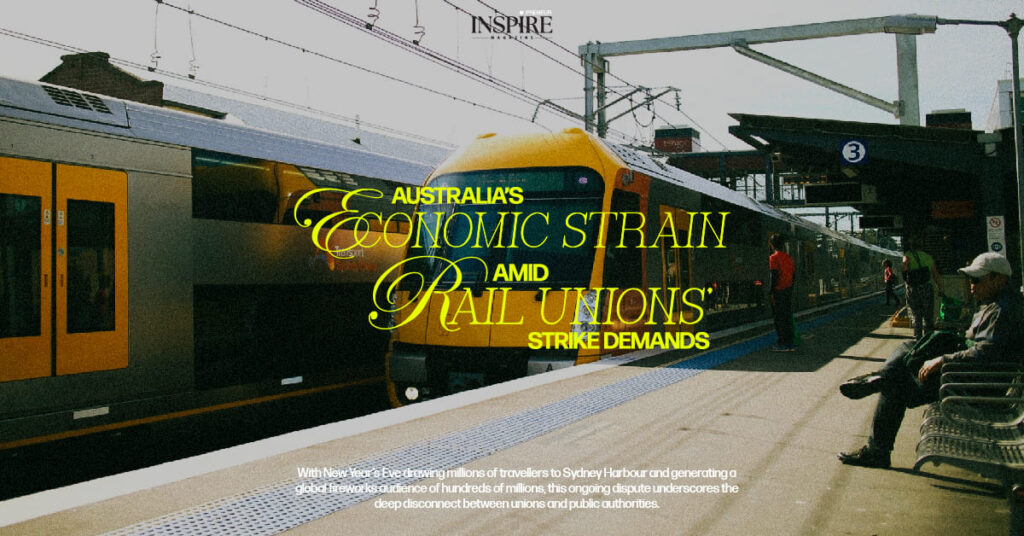
The looming train strikes during New Year’s Eve—a time synonymous with bustling entertainment and booming hospitality—have businesses concerned over potentially disastrous financial consequences. Rail workers have proposed a highly costly compromise to pause the industrial action temporarily, asking for free travel across public transport in New South Wales (NSW). However, the demand, carrying an estimated £66 million monthly price tag, has been firmly refused by the NSW Government, leaving many stakeholders in limbo.
With New Year’s Eve drawing millions of travellers to Sydney Harbour and generating a global fireworks audience of hundreds of millions, this ongoing dispute underscores the deep disconnect between unions and public authorities.
A Pricey Proposal From the Unions
On Sunday, the Combined Rail Unions announced a striking offer to withdraw industrial action threatening to derail New Year’s celebrations. The group proposed to halt strikes until 7 January, provided their request for free public transport for commuters was granted. Rail, Tram, and Bus Union NSW Secretary Toby Warnes emphasised the workers' commitment to minimising disruption, stating:
“We’ve always been committed to finding a way forward... We’re hopeful common sense will prevail and the NSW Government will agree to providing free public transport.”
The unions argue that their fight is not with commuters but with a state government they view as undermining fair pay and conditions for rail workers. Still, their demand for public transport fare-free for over a million daily riders has raised eyebrows, given that it is expected to cost £66 million per month if implemented.
A Firm "No" From the Government
The NSW Government swiftly rejected the unions’ demand on Monday. A spokesperson made their stance clear:
“The unions have demanded free travel twice before… the unions went straight back to striking. This would cost millions of dollars that we don’t have. It’s just not affordable."
The Government has shown little interest in negotiating under such financial conditions, noting concerns from taxpayers and businesses alike. Officials argue that even partial fare-free travel places an undue burden on public resources.
Additionally, the government has taken a proactive step, filing a case with the Fair Work Commission to challenge the strikes. This legal intervention is scheduled to be heard on Christmas Eve, with the Government aiming for suspension or termination of the industrial action altogether.
Business Communities Rally Against the Disruption
The rail strikes have already drawn ire from the broader business community, particularly in hospitality and entertainment industries expecting a bustling season. Heavyweights such as Laundy Hotels, Merivale, Ryan’s Hotel Group, and Luna Park have submitted requests to the Fair Work Commission advocating against the strikes. They argue that disrupted train services will severely impact New Year’s revenue, tarnishing the most profitable period of the year for many establishments.
With a 50% reduction in scheduled train services during the festive peak, businesses worry they cannot accommodate footfall without functional public transport. These concerns extend beyond the hospitality sector to event organisers, whose livelihoods hinge on the celebration’s success.
Balancing Worker Advocacy and a Stretched Public Purse
Workers like Toby Warnes assert that the strikes hinge on systemic governance issues and inadequate compensation frameworks. He maintained that:
"Rail workers never want to take protected industrial action… but we can’t just sit back and allow the government to run down our transport system."
However, balancing fair worker conditions with financial feasibility remains an ongoing challenge. Decision-makers are navigating a precarious path between addressing employee grievances and justifying the utilisation of taxpayers' money in a time when budgets are tightly constrained.
The unions face sharp criticism for their prior strike actions, even after receiving concessions such as fare-free travel. This track record has led sceptics to question whether yet another multimillion-pound demand is sustainable—or reliable—over time.
New Year’s Travel on the Brink
As New Year’s Eve celebrations near, public tensions continue to rise. An astounding 1 million people are expected at Sydney Harbour, and transport authorities have committed to increasing train services by 1,000. Yet, ongoing industrial action threatens to render half of those services inoperative, creating chaos for hospitality, transportation, and tourism sectors.
The impasse between the NSW Government and railway unions highlights the complex intersection of consumer demand, worker fairness, and fiscal responsibility. Meanwhile, the Fair Work Commission hearing will ultimately determine how this dispute unfolds and whether New Year’s Eve chaos can be avoided.
What’s at Stake for Businesses?
The rail strike isn’t just about labour issues; it’s a critical touchpoint for the New South Wales economy during a vital growth period. With tourism, hospitality, and entertainment industries all relying on seamless transport access, businesses face mounting losses if the strikes persist.
Source
Explore more entrepreneurial insights and success stories at Inspirepreneur, your go-to magazine for business innovation and leadership.

At Inspirepreneurs Magazine, covering entrepreneurship, business failures, and the human stories behind the world's most ambitious founders. She writes at the intersection of strategy and storytelling.


