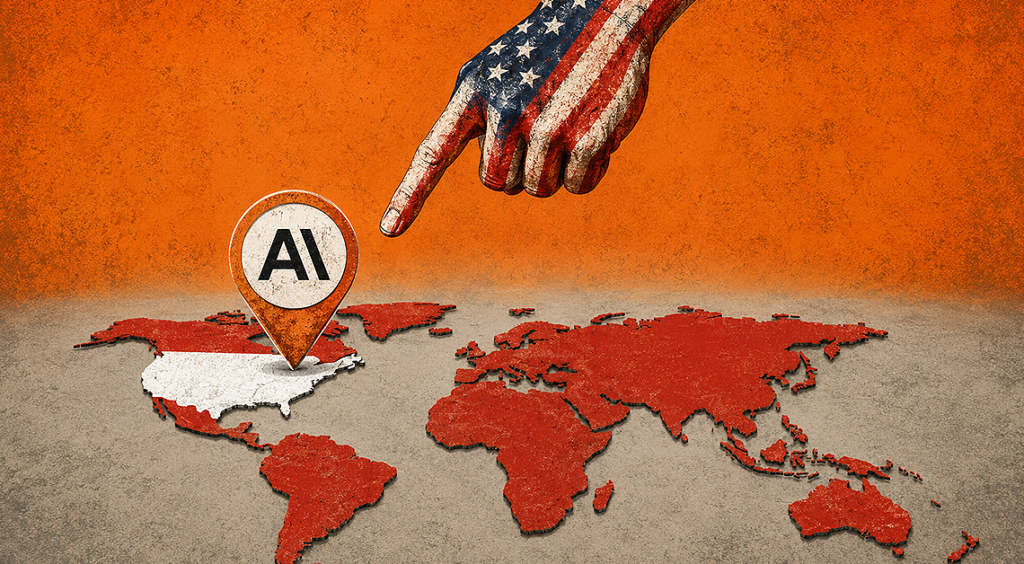
24 US States Challenge Trump Global Tariffs in Trade Court

Synopsis
A coalition of 24 U.S. states has filed a lawsuit challenging President Donald Trump’s new global tariffs imposed on most imports. The case argues the administration lacks authority to introduce the duties under Section 122 of the Trade Act of 1974. The policy applies to imports from major trading partners including China, Canada and the European Union and follows a Supreme Court ruling that struck down earlier tariffs imposed under emergency powers.
Twenty-four U.S. states have filed a lawsuit challenging President Donald Trump’s global tariffs introduced under the Trade Act of 1974. The policy imposes a 10% duty on most imports from major trading partners. The case follows a Supreme Court ruling invalidating earlier tariffs and adds to broader legal disputes over U.S. trade duties.
Key Highlights
- 24 US states filed lawsuit challenging Trump global tariffs imposed on most imported goods.
- Tariffs introduced under Section 122 of the Trade Act of 1974.
- Policy applies to imports from China, EU, Canada, Mexico, India, Japan and South Korea.
- Courts also reviewing nearly 2,000 lawsuits seeking refunds for earlier tariff collections.
A group of 24 U.S. states has filed a lawsuit seeking to block President Donald Trump’s latest global tariffs, arguing the administration lacks authority to impose the duties under federal trade law.
The legal challenge was filed on March 5 in the U.S. Court of International Trade by attorneys general from several states, including California, New York, Oregon and Arizona. The states are asking the court to halt a 10% tariff on most imported goods, introduced by the administration after a recent Supreme Court ruling that invalidated earlier tariffs imposed under a different law.
The lawsuit argues the administration improperly relied on Section 122 of the Trade Act of 1974, which allows the president to impose tariffs of up to 15% for a maximum of 150 days in response to balance-of-payments problems.
Tariffs were introduced after the court ruling
The dispute follows a February 20 Supreme Court decision that found tariffs imposed under the International Emergency Economic Powers Act (IEEPA) exceeded presidential authority.
After the ruling, the administration introduced a new tariff policy using Section 122 of the Trade Act. State officials say the provision was intended for short-term currency or payment emergencies rather than broad tariffs covering most imports.
The states are seeking a court order declaring the policy unlawful and preventing the government from collecting the duties.
Major trading partners within the tariff scope
The Trump global tariffs apply broadly to imports from key U.S. trading partners, including China, the European Union, Canada, Mexico, India, Japan and South Korea. These economies account for a large share of U.S. imports across sectors such as industrial machinery, automotive products, consumer electronics and manufactured goods.
According to U.S. trade data, the country imports trillions of dollars worth of goods annually from these markets, with consumer goods, vehicles, industrial materials and electronics among the largest categories.
Economists tracking tariff policies estimate that a 10% universal tariff could raise the average U.S. tariff rate by several percentage points and generate billions of dollars in additional federal revenue.
Wider legal disputes over tariffs
The lawsuit adds to a broader legal battle over U.S. tariff policy. Courts are currently reviewing roughly 2,000 lawsuits filed by companies seeking refunds for tariffs collected under previous policies that were later ruled unlawful.
Claims tied to those cases could exceed $130 billion, making the dispute one of the largest legal challenges related to U.S. trade duties.
State officials leading the case say the tariffs could increase costs for businesses that rely on imported goods. The administration has defended the policy, saying the tariffs are intended to address trade imbalances and protect domestic industries.
The U.S. Court of International Trade will decide whether the tariffs can remain in effect while the case proceeds.
Quick FAQs
Q1. Why are US states suing over Trump global tariffs?
States argue the administration exceeded its authority by imposing tariffs under Section 122 of the Trade Act.
Q2. What tariff rate did the Trump administration introduce?
The administration imposed a 10% tariff on most imports, which can rise to 15% temporarily.
Q3. Which countries are affected by the Trump global tariffs?
Major trading partners including China, Canada, Mexico, the European Union, India, Japan and South Korea are affected.
Follow Inspirepreneur Magazine for the business news.

Pooja Malik is a business journalist with over six years of experience covering startups, entrepreneurship, and emerging trends. She has previously worked with leading media platforms such as YourStory Media and BW BusinessWorld, where she reported on business, policy, and market developments. Currently, she serves as Editor at The Inspirepreneur Magazine, where she writes and edits stories across business, lifestyle, and travel, with a focus on clarity, accuracy, and reader relevance.
You Might Also Like

Elon Musk’s Legal Victory Over Dogecoin Claims

How Leading Analysts See the Stock Market Evolving by 2025