


How Jake McKeon Built a Global Business From Coconut Waste: The Coconut Bowls Story
Synopsis
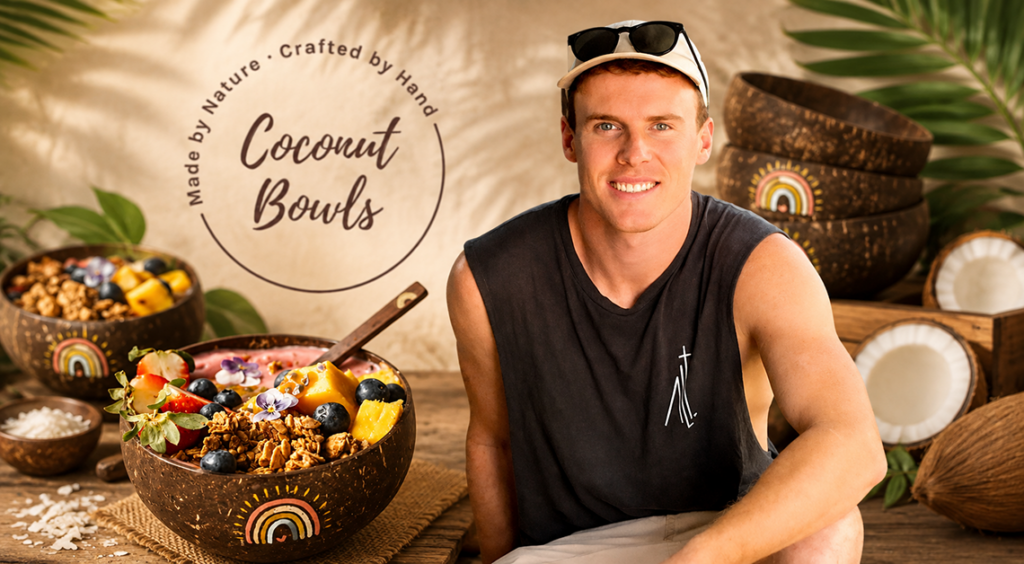
Jake McKeon started Coconut Bowls with just 100 coconut shells. Within a few years, the business grew to more than A$3 million in annual turnover, selling hundreds of thousands of products across more than 150 countries.
Jake McKeon did not give up on entrepreneurship after his first business failed. He tried a superfoods venture, later built a small marketing agency, and picked up lessons along the way that would prove valuable with his next startup.
That next venture was Coconut Bowls. What began with a simple souvenir McKeon discovered during a trip to Bali eventually became a business selling more than a million products and generating millions of dollars in annual revenue. The story is a useful example of how a simple product, organic marketing and steady revenue growth can turn a small idea into a substantial consumer brand.
Jake McKeon and the Origins of Coconut Bowls
In late 2015, McKeon embarked on a long surfing trip through Central America and Europe before eventually reaching Bali.
At a local market, he came across coconut shells that had been carved into decorative candle holders and sold as souvenirs, according to the NZ Herald. He noticed that the shells already had the natural shape of a bowl and began thinking about how they could be used to serve food, particularly smoothies.
McKeon was already running a small superfoods business at the time, and many of his customers were making smoothie bowls at home, he told Onya Magazine. That connection between his existing customers and the shape of the coconut shells turned what could have remained a holiday souvenir into a potential business opportunity.
The Business Model Behind Coconut Bowls
The concept was straightforward: take coconut shells that would otherwise be discarded or burned and turn them into reusable bowls. McKeon explained the idea on Shark Tank by pointing to the enormous number of coconut shells discarded every year. Coconut Bowls would collect those shells and give them a second life as products customers could actually use.
The bowls sold for between A$12.95 and A$14.95 each, according to the NZ Herald. They were positioned not just as kitchen products but also as lifestyle products associated with sustainability.
The shells were sourced from farms in Vietnam and processed by local artisans. This meant the business could create an additional income stream for small producers rather than relying entirely on conventional mass manufacturing.
Starting With Very Little Capital
McKeon did not need a large amount of money to test the idea. After discovering the shells in Bali, he asked a local craftsman to make some without the usual painted finish. He then returned home with roughly 100 shells packed into his suitcase, according to the NZ Herald. There was no large factory order and no outside investment at this stage. The initial test was relatively simple: see whether people actually wanted to buy the product.
McKeon began posting photographs of smoothie bowls served in the coconut shells on Instagram. The response was quick. Inspirepreneur Magazine reported that he sold out his initial stock within a month. That early demand encouraged him to return to Bali to source more shells and develop relationships with the artisans producing them.
Early Growth and First-Year Revenue
McKeon began selling Coconut Bowls in January 2016. By the end of its first year, the company had generated A$200,000 in turnover, a figure McKeon later shared on Shark Tank and confirmed to the NZ Herald. For a business that started with a suitcase containing around 100 shells and no outside funding, it was a strong first-year result.
A major advantage was that the company did not have to rely heavily on paid advertising to create awareness. Customers were photographing their food in the bowls and sharing those images on social media, effectively creating marketing content for the brand themselves.
Explosive Growth in the Second Year
The second year brought a dramatic jump in revenue. According to figures McKeon shared on Shark Tank and which were reported by the NZ Herald, annual revenue increased by more than 500 per cent, rising from A$200,000 to almost A$1.2 million.
By then, the company had also sold more than 100,000 products. McKeon attributed much of the growth to customer-generated content. He told Mamamia that hundreds of customers were posting photographs of themselves using Coconut Bowls every day.
That organic exposure helped the company grow without having to spend heavily on paid advertising. By 2018, Mamamia reported that Coconut Bowls’ Instagram account had almost 300,000 followers, while Onya Magazine reported that the brand’s total social media audience had grown to more than one million people.
The Shark Tank Pitch
Coconut Bowls appeared on the season four premiere of the Australian version of Shark Tank in March 2019. The episode had actually been filmed roughly a year earlier, in February, according to the NZ Herald. McKeon valued the company at A$3 million and sought investment to help hire additional staff and support the next stage of growth.
The investors initially appeared sceptical. The product was simple, and the idea of building a substantial business around coconut shells was not immediately obvious to everyone on the panel.
That changed when McKeon revealed the company’s revenue figures. Andrew Banks and Janine Allis, the founder of Boost Juice, jointly offered A$300,000 for an 18 per cent stake in the business. McKeon accepted the offer on the show, according to the NZ Herald and Shark Tank Australia’s official records.
Why McKeon Turned Down the Investment
Despite accepting the deal on camera, the investment was never completed. McKeon later explained, through news.com.au reporting cited by the NZ Herald, that the financial figures presented during the episode were from the previous calendar year. The episode had been filmed in February but did not air until more than a year later.
By the time the programme was broadcast, Coconut Bowls had grown substantially. McKeon decided that he no longer needed the investment and chose to continue running the company without the outside capital. The decision highlighted just how quickly the business was changing. An investment that appeared attractive when the episode was filmed had become less necessary by the time viewers saw it on television.
Continued Growth After Shark Tank
Even without taking the Shark Tank investment, appearing on the programme provided the company with significant exposure. McKeon told the NZ Herald that revenue tripled after the episode aired and that he expected turnover of up to A$5 million for the 2020 financial year. He also credited the programme with increasing the brand’s credibility and visibility.
The growth continued beyond the television appearance. In an interview with My Brand Journey published in late 2020, McKeon said Coconut Bowls had reached more than A$5 million in annual revenue, sold more than one million products worldwide and built an Instagram following of more than 700,000.
Coconut Bowls’ Financial Growth
The reported figures show a substantial increase in the company’s scale over just a few years. Coconut Bowls began with a small batch of shells and no outside funding. Its first year generated approximately A$200,000 in turnover. In its second year, revenue jumped more than 500 per cent to almost A$1.2 million.
From there, the company continued expanding, with turnover later forecast to exceed A$3 million and eventually reaching more than A$5 million in annual revenue, according to the NZ Herald and My Brand Journey. By November 2020, McKeon said the company had sold more than one million products worldwide. That represented a remarkable progression from the roughly 100 coconut shells he initially carried home from Bali.
Conclusion
Coconut Bowls succeeded where Moodswing ultimately failed, and the difference can be seen in the way the businesses developed. Coconut Bowls started small and was largely self-funded. There was no immediate pressure from outside investors demanding rapid growth before the product had proved itself. More importantly, the company generated real revenue relatively early.
Customer-generated content also played a major role. Instead of depending heavily on an expensive advertising campaign, the company benefited from customers sharing photographs of the product online. That helped create a cycle in which more visibility generated more sales, which in turn created more customer content.
By the time a major investment offer arrived on Shark Tank, Coconut Bowls had grown enough that McKeon could afford to walk away from the deal.
The result was a business that went from a suitcase of coconut shells to a multi-million-dollar brand selling more than a million products worldwide, driven largely by organic growth, customer advocacy and a simple product idea. As McKeon later suggested, the opportunity was so straightforward that he was surprised someone had not thought of it first.

At Inspirepreneurs Magazine, covering entrepreneurship, business failures, and the human stories behind the world's most ambitious founders. She writes at the intersection of strategy and storytelling.
You Might Also Like

Australia’s Gina Rinehart puts $133M into defence and rare earth stocks

Druzhba pipeline to resume by April end, says Zelenskiy
