


Do I Need Insurance If I Have an ABN?
Synopsis
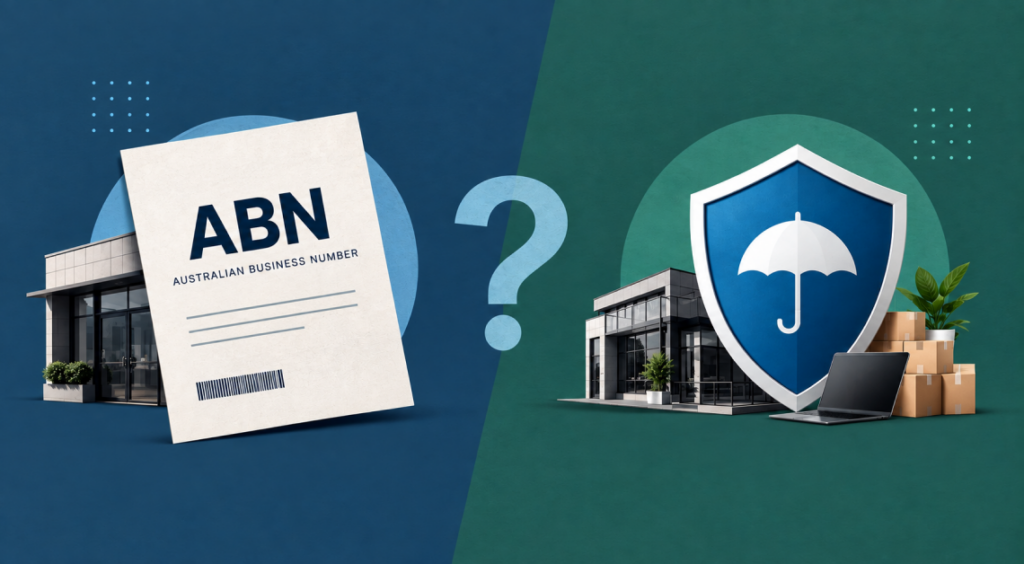
Having an ABN does not automatically require insurance in Australia, but workers’ compensation and some contracts or industries can create insurance requirements.
Short answer: no, having an ABN doesn't automatically require you to take out insurance. The ABN is just a tax identifier; it doesn't trigger any mandatory insurance obligation on its own.
But that's not really the end of the question. Not all ABN holders are legally required to have insurance, but holding an ABN likely means you're operating a business and all businesses carry some level of risk. Whether you're a photographer, cleaner, IT contractor, or dog walker, operating without insurance could expose you to unexpected financial liabilities.
So let's go through what actually applies to your situation.
Is Business Insurance Mandatory for Sole Traders?
Most types of business insurance in Australia are optional. There is no blanket law saying that sole traders or ABN holders must hold public liability, professional indemnity, or income protection insurance.
That said, there are two situations where insurance becomes either legally required or effectively non-negotiable:
Workers' compensation : If you employ others under your ABN, workers' compensation insurance is required by law. This applies in every state and territory, and the rules differ slightly depending on where you operate. If you hire staff, even casually, check the requirements for your state before you take anyone on.
Industry or contract requirements : Many clients, head contractors and industry bodies require proof of insurance before you can work with them. A builder won't let a subcontractor on site without public liability cover. A government contract will almost always require professional indemnity. Your ABN doesn't create this obligation the contract or industry does. But in practice, if you're working with other businesses, you'll often need it anyway.
Do You Need an ABN to Get Business Insurance?
No. Insurance companies typically do not require an ABN to provide coverage, though some insurers may request it depending on their requirements. Having an ABN helps establish your business as a legitimate entity in the eyes of insurers and allows them to tailor your coverage more accurately.
In short, you can get insured without an ABN, but having one helps the process and means the coverage reflects your actual business activities rather than something more generic.
What Insurance Should ABN Holders Actually Consider?
This comes down to what your business does and what risks that creates. Here's a practical breakdown:
| Insurance Type | What It Covers | Best For |
| Public Liability | Injury to third parties or property damage caused by your business | Tradies, cleaners, photographers, anyone working on client premises |
| Professional Indemnity | Claims arising from advice or professional services you provide | Consultants, IT contractors, accountants, designers |
| Income Protection | Replaces income if you're unable to work due to illness or injury | Any sole trader without sick leave entitlements |
| Workers' Compensation | Covers employees injured at work | Required by law if you have employees |
Public liability is the one most sole traders end up getting first, and for good reason. A Canberra tradie securing $10 million public liability insurance to cover potential property damage during renovations is a standard example, if something goes wrong on a job and someone gets hurt or property gets damaged, without this cover the claim lands entirely on you personally.
Professional indemnity matters more than people realise if your work involves giving advice or producing something a client relies on. A website developer whose code causes a client's site to go down for a week. A consultant whose recommendation leads to a bad outcome. These are the scenarios professional indemnity exists for.
Income protection is the one most sole traders skip and then regret. As a sole trader you don't have anyone to rely on for paid sick leave. If you can't work, you don't get paid. Income protection typically replaces around 70–75% of your income during an illness or injury. It's not cheap, but it's the cover that keeps everything else from falling apart if something goes wrong with your health.
What Happens If You Operate Without Insurance?
Nothing immediate. There's no government body checking whether ABN holders have insurance. But the consequences of not having it show up fast when something goes wrong.
A client slips and injures themselves at your workspace, public liability claim, entirely on you. You give advice that causes a client financial loss, professional indemnity claim, entirely on you. You get sick for three months and can't work, no income, no backup, no cover.
As a sole trader, you also don't have the protection of a company structure. Unlike a limited company, your personal assets, savings, car, home are exposed if someone successfully claims against your business. Insurance is one of the few practical ways to put a wall between your business activities and your personal financial situation.

At Inspirepreneurs Magazine, covering entrepreneurship, business failures, and the human stories behind the world's most ambitious founders. She writes at the intersection of strategy and storytelling.
You Might Also Like

Australian Livestock Management: Discover Sapien Technology’s Innovative Solutions

Instagram Launches Physical Ring Awards While Cutting Creator Payments
