How Greg Taylor Built Step One Into a $70 Million Success Story
Synopsis
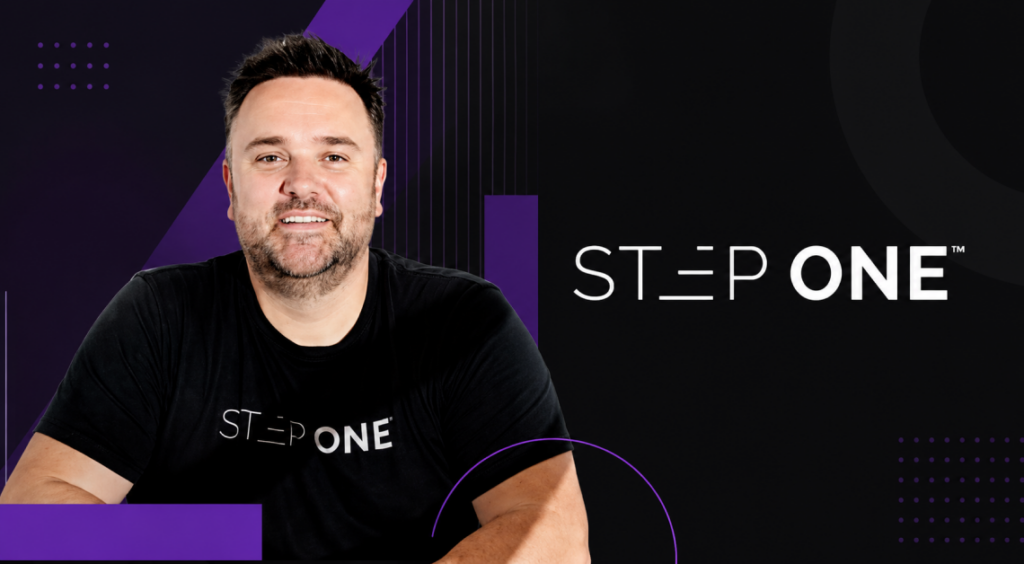
After his last business left him nearly broke, Greg Taylor started over with $15,000 and an idea nobody believed in. That idea became Step One, now a publicly listed company worth tens of millions of dollars. This is the story of how he built it, from a rejected pitch and a factory that almost turned him away to an ASX listing and years of fast growth.
Greg Taylor was broke and sleeping on a friend’s couch when the idea for Step One came to him. His final business, a bar-tab app called Clip, was boosted by millions in investments, but all he had to show for it amounted to just over $5,000. Over the course of twenty years he had tried seven different businesses and most had failed. This is what he built next: an underwear snatched from a pitched stillborn and thus ruined bike shorts, one around which his company, today, would be worth tens of millions.
After Clip
Taylor needed a new plan and he didn’t have one by the time Clip was trailing him. He was sleeping on a friend’s couch, contemplating the merits of moving back in with his parents instead. During this period he met his future wife and they soon embarked on a hike in New Zealand that would alter the course of his life.
The Idea
Taylor, kept bike shorts on under his regular shorts to prevent chafing on the hike. It worked, but the shorts caught the sweat and left him soaked. At some point on that run, a simple idea lodged itself: what if he could just take the piece of the bike shorts that prevented chafing and incorporate it into normal underwear, that’s something worth making.
No one was at first on his side. Predictably, when Taylor sought funders, those who had backed him on the last go-around took a hard pass. He has said that they told him he had gone mad. So he did what he had left to do.
Getting It Made
Taylor plunked down every last buck of his life savings, $15,000, and flew to an enormous trade show in Guangzhou, China, where he hoped to find a factory willing to manufacture his concept. It didn’t go well at first. He requested that manufacturers there produce only 5,000 pairs, a small order by any measure, and most chose not to participate. He was directed to a smaller town well to the north where factories were more amenable to a person starting with nothing. Only with hostels to stay in, fed on noodles while he sought help.
Eventually, one factory agreed. He cut up his own bike shorts and gave the panels to a factory along with a request for them to sew the pieces into a new form of underwear. From the minute he tried on the prototype, he knew it was a success.
He also had to solve a second, less discussed challenge: fit. Each guy has a different shape and one style is not going to work for everyone. Taylor tested a handful of pouch styles and ultimately landed on a straightforward strip of elastic sewn around the front panel to support your junk without having to go through multiple sizes. And this was where Step One built its whole product around: the anti-chafe panel and that detail.
The First Batch
Taylor used the money he had left over to order those 5,000 pairs. He bought half of them extra large, in his own size, because he reasoned if the business went bust at least he’d have underwear for life. He had $1,500 left over. He shot a ragtag launch video in a panda suit, uploaded it to Facebook and waited. The pairs sold out fast. That felt like a small victory, but was evidence that the concept had legs and offered Taylor something he could build from.
Early Growth
This growth followed a similar trajectory for the next few years – each one bigger than the last. The company and its affiliates generated about $4m of revenue in 2018, its first full year of trading. In 2019, it reached $14 million and then in 2020 jumped to $35 million, fueled by more shoppers buying clothes online during the pandemic. Those early years saw Taylor running the whole business literally from his bedroom doing everything himself- from taking product photos anywhere he could find to taking customer emails until he was able to bring in a small team.
The ASX Listing
Step One was big enough by 2021, that it started considering a listing on the stock market. After tracking the successful entry into the ASX for another internet trader, Adore Beauty, Taylor and his advisors believed it was time to shoot their shot. Step One unveiled its plans in October that year to raise $81.3 million from the sale of shares at a price of $1.53 each, giving it an implied valuation of nearly $288 million. Taylor sold down his nearly wholly-owned stake to 66.4 per cent, retaining about two thirds of the company for himself.
The float was a hit. The stock surged about 80 per cent in the first day of trading, and then within weeks the price peaked near $3, which briefly put a paper value of more than $300 million on Taylor’s remaining shares. It was quite a turnaround for a company that had begun four years earlier with $15,000 and a pair of spliced bike shorts.
The Peak and the Wobble
However, it did not remain smooth for a long time. Almost immediately after listing, a potential GST-credit overclaim was uncovered that spooked investors and started bringing the share price down from its highs. Step One kept growing anyway. By the 2022 financial year, it had revenue of $72m and a gross margin greater than 80 per cent, in other words, more than 80 cents in every dollar of sales was retained after accounting for the cost of the product itself.
By then it had over a million customers and, by some measures, was selling a pair of underwear every eight seconds. Even as total retail spending became more challenging around Australia, however, the signs of profitability improved too and growth kept building through into 2023 and 2024. The company remained debt-free, growing its business without taking on any debt from outside sources (or using borrowed fuel) throughout.
Recent Performance
This has been more difficult in the most recent year. Step One’s revenue in the year to June 2026 dropped by over a quarter, falling to $63.7 million, as subdued consumer spending coincided with the company intentionally scaling back the extensive discounting it historically relied on to increase sales. The company had an annual loss, and its share price was well below $3 where it previously peaked. Taylor has been forthright in styling the vanquish as disappointing.
Nonetheless, Step One remains an established underwear brand, its products are still sold across Australia, the UK and US, and it remains debt-free with cash in the bank. It is instructive that Taylor’s own explanation for the drop-off has been a relatively simple one: consumers pulled back and, rather than pursue ever more aggressive sales with deeper discounts, it opted to “stay true to the brand” even if it meant having an awful year on paper.
The Bigger Picture
Glancing back between Clip and Step One, the contrast is stark. Clip had customers, it had funding but a pricing model that was never able to generate enough revenue from each transaction for it not to die. At the outset, it had essentially nothing to back it up, just $15K capital, an unmet need (it got pitched and rejected several times), and a prototype made from a ruined pair of shorts, but it addressed the pain well enough that people continued buying it, telling people about it, and returning for more.
That difference is what transformed a guy who was crashing on the couch of a friend into the founder of a tens-of-millions-of-dollars sustainable business, often more than any single decision Taylor made in that time.

At Inspirepreneurs Magazine, covering entrepreneurship, business failures, and the human stories behind the world's most ambitious founders. She writes at the intersection of strategy and storytelling.
You Might Also Like

Australian Tech Firm Nanoveu Expands With Singapore Drone Deal

Cyber Security Isn’t Just IT’s Job: Simple Habits That Keep You and Your Family Safe Online