Secured vs Unsecured Startup Finance: Collateral and Personal Guarantees
Synopsis
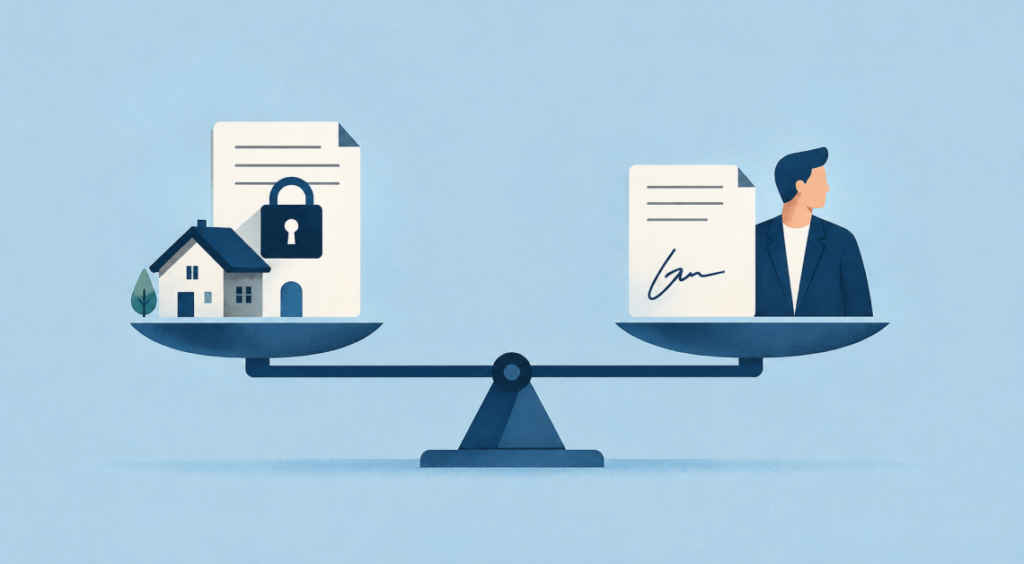
Choosing between secured and unsecured startup finance depends on funding needs, borrowing costs, available assets, cash flow, repayment terms and personal liability, helping founders balance access to capital with financial risk.
When founders compare secured vs unsecured startup finance, the decision involves more than simply whether collateral is required. The right funding structure can affect borrowing costs, the amount a startup can access, repayment flexibility and the level of risk taken on by the business and its founders.
Secured finance is backed by an asset that provides the lender with additional security if the business defaults. Unsecured finance does not require traditional business collateral, which can make it an option for startups with few assets. However, unsecured borrowing does not automatically mean that founders have no personal liability. Depending on the lender and loan agreement, directors or founders may still be asked to provide a personal guarantee.
For startups, the decision should therefore be based on the complete funding arrangement, including the amount required, available assets, cash flow, total cost and potential personal exposure.
How Security Affects Startup Finance
Security can influence how a lender assesses the risk of providing finance and the terms it is willing to offer.
For a startup with valuable business assets, offering security may strengthen the lending proposal. The lender has an asset it can potentially rely on if the borrower defaults, subject to the terms of the agreement and applicable law. This can affect the amount the lender is prepared to provide, the repayment period or the pricing of the facility.
For an asset-light startup, the calculation can be different. If the business has limited equipment, property or other suitable assets, an unsecured facility may be more practical. The lender may instead place greater emphasis on factors such as revenue, cash flow, credit history, time in business and the company's ability to meet repayments.
The key consideration for founders is therefore not simply whether an asset can be offered as security. It is whether providing that security creates enough financial benefit to justify putting the asset at risk.
Interest Rates and Borrowing Costs
Cost is an important part of any financing decision. Secured facilities can sometimes have lower interest rates because the lender has additional protection, while unsecured finance can carry higher rates because the lender has less traditional security. However, the rate a startup receives depends on the lender, borrower, loan amount, financial position and facility structure.
The figures published by Lumi illustrate the difference in pricing that can appear between the two structures. Lumi's comparison gives an indicative secured business loan rate range of approximately 2.5% to 13%, compared with approximately 7% to 30% for unsecured business loans. These are Lumi's published figures, not general Australian market benchmarks, and individual offers can differ.
Founders should also look beyond the headline interest rate. Establishment fees, ongoing charges, repayment frequency, loan term and early repayment costs can all change the overall cost of borrowing.
A loan with a lower advertised rate is not necessarily cheaper if it involves higher fees or a repayment structure that places greater pressure on the startup's cash flow.
When Business Assets Can Support a Larger Facility
For some startups, the main advantage of offering security may be access to a larger amount of funding rather than simply a lower interest rate.
Equipment, vehicles, property, inventory or accounts receivable may potentially be used as security, depending on the lender and the facility. Not every asset will qualify, and lenders may apply their own valuation and eligibility requirements.
This is particularly relevant when a startup is seeking finance for a substantial investment such as new equipment, expansion or another asset purchase. If the business already owns suitable assets and has predictable cash flow, using those assets as security may help support the required level of borrowing.
However, founders should consider the strategic importance of any asset before pledging it. If the asset is essential to day-to-day operations, losing access to it following a default could create a much larger business problem than the original financing decision.
Choosing Finance Based on the Funding Need
The purpose and size of the funding can be more useful starting points than a simple preference for secured or unsecured finance.
A startup seeking a substantial amount for expansion, equipment or another long-term investment may consider secured finance where suitable assets are available and repayments can be supported by reliable cash flow. A longer repayment period may also make a large investment easier to manage, depending on the lender and facility.
A startup with limited assets may instead consider unsecured finance for working capital, short-term expenses or other immediate funding needs. This can allow the business to avoid pledging a specific asset, although the trade-off may be higher borrowing costs or different eligibility requirements.
Cash flow should remain central to the decision. Founders should assess whether repayments will remain manageable alongside payroll, suppliers, operating expenses and expected changes in revenue.
What Lumi's Published Figures Show
Lumi's published comparison provides specific examples of how secured and unsecured business finance can differ in terms of borrowing amounts, repayment periods and approval times. These figures should be understood as Lumi's own published ranges and examples rather than standard Australian market limits.
For secured finance, Lumi cites loan amounts ranging from approximately $1 million to $50 million, while its comparison gives unsecured loan amounts as generally below $50,000, with some products reaching up to $1 million.
Lumi also cites repayment periods of 12 months to up to 30 years for secured finance, compared with approximately 3 to 18 months for unsecured finance.
Approval times can differ as well. Lumi cites approximately 3–4 weeks for secured finance and approval in as little as 24 hours for some unsecured finance products.
These figures can help illustrate the potential differences between the two structures, but they should not be treated as universal Australian lending benchmarks. Actual loan amounts, rates, terms and approval times depend on the lender, product and individual borrower's circumstances.
Personal Guarantees and Founder Liability
One of the most important considerations for founders is that unsecured business finance does not necessarily remove personal financial exposure.
A personal guarantee is a commitment by an individual, such as a director or founder, to meet specified obligations if the company does not do so. Whether a guarantee is required depends on the lender, the business, the loan product and the terms of the agreement.
ASIC notes that lenders may ask directors for personal guarantees or security over personal assets. Where a director provides a personal guarantee, they may become personally liable for company borrowing if the relevant conditions of the guarantee are triggered.
This means founders should read the guarantee separately from the main loan agreement and understand exactly what obligations they are accepting.
A guarantee may cover more than the original amount borrowed depending on its terms, potentially including interest, fees or enforcement costs. The precise scope should therefore be checked before signing.
Secured vs Unsecured Startup Finance: Key Differences
| Feature | Secured Finance | Unsecured Finance |
| Collateral | Requires an asset as security, such as property, machinery, equipment or vehicles | No traditional business collateral is required |
| Interest Rates | Often lower because the lender has additional security | Often higher because the lender takes on greater risk |
| Lumi Rate Range | Lumi publishes 2.5%–13%. | Lumi publishes 7%–30%. |
| Loan Amounts | Lumi cites $1 million–$50 million in its comparison. | Lumi cites amounts below $50,000, with some loans reaching $1 million. |
| Repayment Terms | Lumi cites 12 months to up to 30 years. | Lumi cites around 3–18 months. |
| Approval Time | Lumi cites approximately 3–4 weeks. | Lumi cites approval in as little as 24 hours |
| Lender Assessment | May include asset value, credit history, cash flow and financial position | May include turnover, credit history, time in business, loan amount, purpose and lender criteria |
| Default Risk | The lender may have rights over the secured asset under the agreement and applicable law | No pledged collateral, although other contractual remedies and guarantee obligations may apply |
| Funding Suitability | Can be considered for larger investments, expansion and asset purchases | Can be considered by asset-light businesses and for shorter-term funding needs |
| Key Founder Consideration | Potentially lower borrowing costs, but pledged assets are exposed | Preserves specific business assets, but may involve higher costs and personal guarantees |
The Lumi figures in this table are drawn from Lumi's published comparison and are included for illustration. They should not be interpreted as fixed Australian market benchmarks.
How Founders Should Make the Decision
The right financing structure depends on the startup's circumstances rather than a universal preference for secured or unsecured borrowing.
A founder should first establish how much funding the business actually needs and what the money will be used for. The next consideration is whether the business has assets that could support the facility and whether those assets are important to ongoing operations.
Cash flow is equally important. A lower interest rate does not necessarily make a loan suitable if the repayment schedule creates excessive pressure on the business.
Founders should also consider how long they expect to need the money. A longer-term investment may be better suited to a facility with a longer repayment period, while a short-term working-capital requirement may call for a different structure.
Finally, the founder should understand the personal exposure involved. If a lender requires a personal guarantee, the decision is no longer solely about the company's assets. The founder may also be taking on personal liability.
Can a Startup Get Finance Without Owning Property?
Yes. Some lenders offer unsecured business finance without requiring property or other traditional collateral.
However, the absence of property does not automatically mean that finance will be unavailable. Lenders may assess other aspects of the business, including revenue, cash flow, credit history, time in business and the proposed use of the funds.
A startup without property should therefore focus on the full range of eligibility requirements rather than assuming that a lack of real estate prevents it from accessing business finance.
Can a Founder Be Personally Liable for an Unsecured Business Loan?
Yes. An unsecured business loan can still involve a personal guarantee.
If a founder or director signs a guarantee, they may become personally liable for specified company obligations if the conditions of the guarantee are triggered. The exact extent of that liability depends on the wording of the guarantee and the underlying loan agreement.
Founders should therefore confirm whether a personal guarantee is required and understand what assets or obligations could be affected before accepting the facility.
What Happens If a Secured Loan Defaults?
If a borrower defaults, the lender may have rights over the asset provided as security, depending on the financing agreement and applicable law.
The exact enforcement process depends on the type of security, the agreement and the circumstances of the default. Founders should understand these consequences before using an important business asset as collateral.
Does an Unsecured Loan Always Cost More?
Not necessarily in every individual case.
Unsecured finance often carries higher interest rates because the lender does not have traditional collateral, but the actual cost depends on the lender, borrower and facility.
The most useful comparison is therefore the total cost of the proposed financing rather than the secured or unsecured label alone.
Business Outlook
The decision between secured and unsecured startup finance requires founders to assess the business as a whole. Funding needs, purpose, cash flow, available assets, borrowing costs and personal liability can all influence the appropriate financing structure.
A startup with suitable collateral and reliable cash flow may consider secured finance, particularly when seeking a larger facility or financing a significant investment. An asset-light startup may prefer unsecured funding to avoid pledging business assets, provided the costs and repayments remain manageable.
The most important consideration is whether the financing supports the startup's plans without creating an unacceptable level of financial risk for either the company or its founders.

At Inspirepreneurs Magazine, covering entrepreneurship, business failures, and the human stories behind the world's most ambitious founders. She writes at the intersection of strategy and storytelling.
You Might Also Like

Leadership Demystified: A Look at What It Truly Entails

Australia Braces for Inflation Spike as Fuel Costs Offset Dip