


How to Get a Business Loan in Australia in 2026

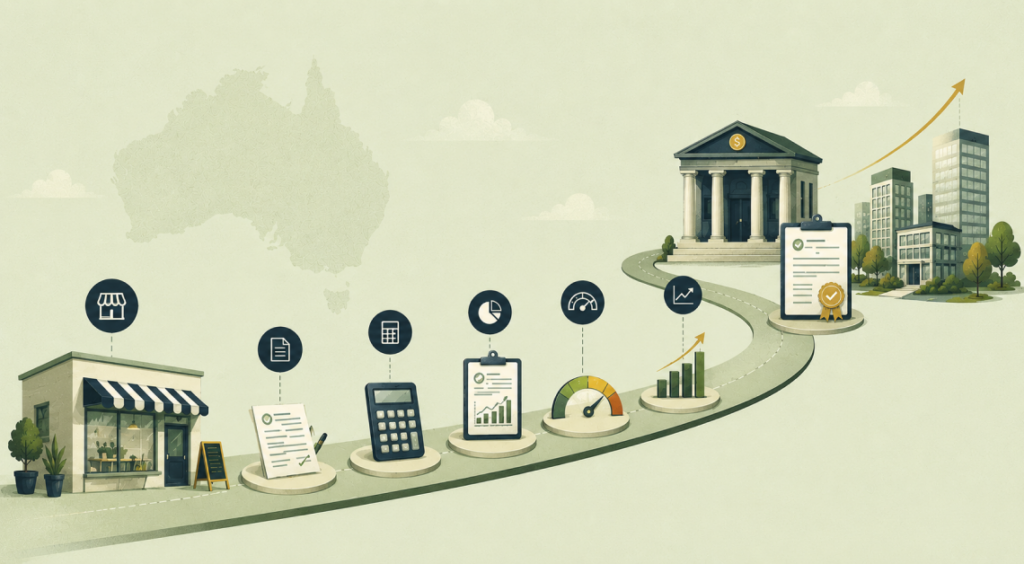
Synopsis
Getting a business loan in Australia in 2026 is faster but requires careful planning. This guide explains loan types, eligibility, documents and lender options to help you secure the right funding without costly mistakes.
Securing a business loan in Australia has become faster and more accessible than it was just a few years ago, but obtaining finance still requires more than completing an online application.
While the big four banks continue to dominate business lending, they are no longer the only option. A growing number of non-bank lenders and fintechs are competing for small business customers with faster approvals, more flexible eligibility criteria and loan products tailored to businesses that may not meet traditional bank requirements.
The challenge isn't finding a lender-it's finding the right one. Choosing the wrong loan or approaching the wrong lender can delay funding, increase borrowing costs or result in your application being declined altogether.
Start With the Purpose, Not the Loan
Before comparing lenders or interest rates, be clear about why you need the finance. The purpose of the loan will determine the type of funding that's most suitable, how much you should borrow and which lenders are most likely to approve your application.
If you're buying a vehicle or equipment, a secured loan (sometimes called a chattel mortgage) uses the asset itself as collateral. Lower rates, straightforward process. If you need cash to cover a gap, fund growth or hire staff, you're looking at a term loan or line of credit, either secured against property or equipment, or unsecured if you don't have assets to put up.
Unsecured loans are faster but more expensive. Secured loans take a bit longer but come with lower rates from around 5% for well-qualified applicants. Know which category you're in before you start comparing.
Do You Actually Qualify?
Check this before you apply anywhere. A declined application goes on your business credit record and makes the next application harder. Most lenders have minimum requirements that look roughly like this:
| Requirement | Banks | Non-Bank / Fintech Lenders |
|---|---|---|
| ABN Registration | Active ABN; many prefer 12+ months registered | Active ABN; often accept 6+ months (some 12+) |
| Trading History | Typically 2+ years | Commonly 12–18 months; some accept 6 months |
| Minimum Annual Turnover | Around $100,000+ | Around $50,000+ (varies by lender) |
| Minimum Monthly Revenue | Often $10,000+ (or equivalent cash flow) | Often $10,000+ (some are more flexible) |
| Credit History | Generally clean, no recent defaults | More flexible, assessed case-by-case |
| Residency | Usually Australian citizen / permanent resident | Some accept certain temporary visa holders |
If you're a newer business, the big four banks are probably not your first call. Online lenders and fintechs work with businesses that are six to twelve months old and have lower turnover thresholds. The trade-off is a cost: their rates are higher.
What Documents You'll Need
Getting your paperwork together before you apply makes the whole process faster and reduces back-and-forth with lenders. Most will want:
- ABN and GST registration details
- Last two BAS statements
- Three to six months of business bank statements
- Business and personal tax returns
- Financial statements: profit and loss, balance sheet, cash flow
- Proof of ID: passport or driver's licence
- A basic outline of what the funds will be used for
- Collateral details if applying for a secured loan
If you're a newer business without two years of financials, cash flow projections become important. Lenders want to understand how you'll make repayments even if you can't show years of history.
The Personal Guarantee Question
If you don't have assets to use as collateral, most lenders will ask for a personal guarantee instead. This is a legally binding commitment that makes you personally liable for the debt if the business can't repay. It's common, but it's worth understanding what you're signing. If the business goes under and there's still debt outstanding, the lender can come after your personal assets.
Some lenders also accept third-party guarantees, where someone else, a family member or business partner, backs the loan using an asset they own.
Banks vs Non-Bank Lenders vs Fintechs
This is where a lot of business owners get confused, so here's the plain version:
Banks — lowest rates, toughest criteria, slowest approvals. Best for established businesses with strong financials who aren't in a hurry.
Non-bank lenders — sit between banks and fintechs. More flexible criteria than banks, faster than banks, rates somewhere in between. Good for businesses that don't quite meet bank requirements.
Fintechs and online lenders — fastest approvals (sometimes 24–48 hours), most flexible on eligibility, highest rates. Good for businesses that need money quickly or can't access traditional finance yet.
Using a broker who works across multiple lenders, some platforms connect businesses to 50+ lenders at once, usually getting you a better result than approaching banks one at a time. They can match your profile to the most suitable lender without multiple credit inquiries hitting your record.
The Application Process
Once you know what you need and which type of lender suits you, the actual process follows the same basic steps everywhere:
- Check eligibility: most lenders have a quick online check with no credit impact.
- Prepare your documents
- Submit your application
- Lenders assess revenue, credit history and risk.
- Approval and offer: review the rate, term, fees and repayment structure carefully.
- Funding: non-bank lenders often release funds within 24–48 hours; banks take longer
Read the full cost of the loan, not just the interest rate. Establishment fees, monthly fees and early repayment penalties all add to the total cost and don't always show up prominently in the headline rate.
If You Get Declined
It happens, and it's not the end. The important thing is to understand why before applying anywhere else. Sometimes it's just trading history; waiting another six months and reapplying solves it. Sometimes it's a credit issue that needs to be addressed first.
A broker can help here too. They can tell you which lenders are likely to approve your profile and what you'd need to fix to improve your chances, without you burning through credit inquiries finding out the hard way.
FAQs
Q1. How much can I borrow for a business loan in Australia?
Business loans in Australia typically range from $5,000 to $5 million depending on the lender, your trading history and revenue. Most small businesses access between $20,000 and $500,000.
Q2. How long does approval take?
Fintech and online lenders can approve and fund within 24–48 hours. Non-bank lenders typically take a few days to a week. Banks can take several weeks depending on the loan size and complexity.
Q3. Do I need collateral to get a business loan?
Not always. Unsecured loans don't require collateral but come with higher interest rates. If you don't have assets to secure the loan, most lenders will ask for a personal guarantee instead.
Q4. Will applying for a business loan affect my credit score?
Yes. A declined application can impact your business credit score. Use an eligibility checker or broker first to assess your chances before formally applying.
Q5. What's the difference between a secured and unsecured business loan?
A secured loan uses an asset, property, vehicle or equipment as collateral. Lower rates, but the lender can repossess the asset if you default. An unsecured loan requires no collateral but comes with higher rates and stricter income requirements.
Pooja Malik is a business journalist with over six years of experience covering startups, entrepreneurship, and emerging trends. She has previously worked with leading media platforms such as YourStory Media and BW BusinessWorld, where she reported on business, policy, and market developments. Currently, she serves as Editor at The Inspirepreneur Magazine, where she writes and edits stories across business, lifestyle, and travel, with a focus on clarity, accuracy, and reader relevance.


