


How Australia’s Favourite Chocolate Shop Went Bankrupt: The Darrell Lea Collapse
Synopsis
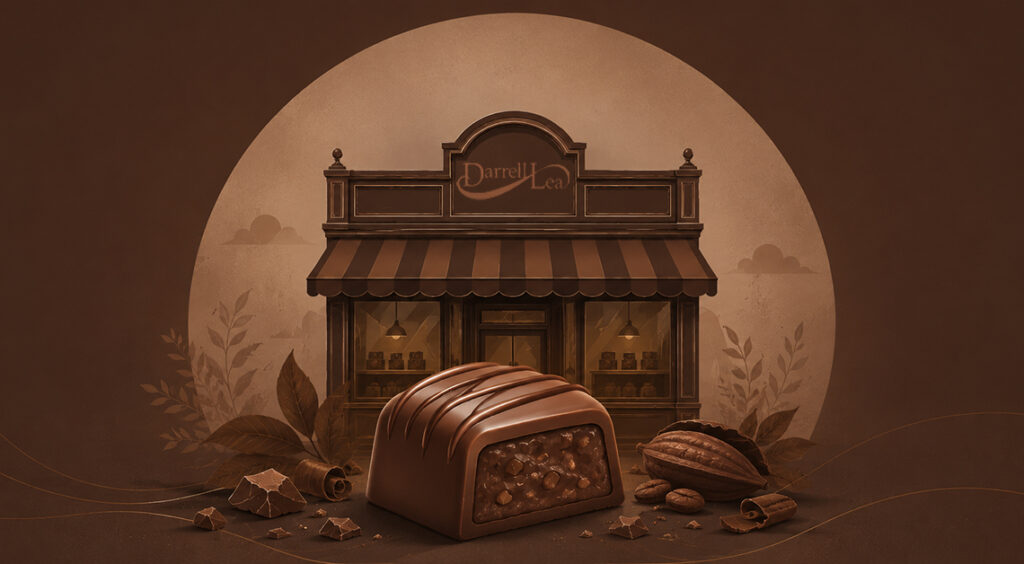
Darrell Lea was once a beloved Australian confectionery brand with decades of history, but by 2012 it faced a dramatic collapse. Losing $200,000 a week and carrying over $56 million in debt, the company was forced to shut down all its stores. This case study explores what went wrong behind the scenes, from rising costs and retail challenges to strategic missteps. It also highlights how even well-known brands can struggle without adapting, offering key lessons on sustainability, financial management, and surviving in a competitive retail environment.
On 10 July 2012 Darrell Lea was put into voluntary administration when its directors determined the company could no longer pay its debts as and when they fell due. It was said to be losing $200,000 a week at the time. It was a stunning fall for a brand that had been around for 85 years. The bust was a surprise to many Australians, yet the signs of trouble had been there for nearly a decade.
This isn’t a story of bad luck. It's a story about a family that created something wonderful, and then slowly stopped paying attention as the world changed around them.
The Founder: Harry Lea
Harry Lea was born in Spitalfields, London, in 1876. He emigrated to Western Australia as a boy and spent his early years across various occupations. Nothing in his background pointed toward building a national brand. But Harry had been trained in confectionery making.
He and his wife Esther moved to Sydney and opened a fruit and vegetable shop on the Corso in Manly, where Harry started making toffees and hard candies to boost the business. The homemade sweets quickly outsold the fruit, so the couple abandoned produce entirely and opened a milk bar and confectionery store at 69 George Street in Sydney’s Haymarket, calling it the King of Sweets. While competitors were selling chocolate for two or three shillings a half-pound, Harry sold his for one shilling.
That pricing decision during the Great Depression was the foundation of everything that followed. The Lea family worked fourteen-hour days, seven days a week to keep shelves full and prices low. Customers who could barely afford anything could afford Darrell Lea, and they came back because of it. In less than ten years they had opened eleven more stores across Sydney, and by 1940 had expanded into Melbourne. Harry Lea died in 1957, having built the foundation of what would become a national institution.
What the Business Looked Like at Its Peak
By the time the Lea family had passed the business across two full generations, Darrell Lea was a significant operation by any measure.
Harry had invented many of the products that would define the brand for decades, such as Soft Eating Liquorice, Rocklea Road and Bulgarian Rock. The nougat Easter egg, complete with fluffy chick, became a range fixture from the 1930s. The number of regular product lines grew to more than 800. The portfolio was sold across 69 franchise stores and 1,800 retail outlets spanning Australia, New Zealand and the United States. The brand was not just an Australian story, it was an international one.
By 1990, as other Australian confectionery manufacturers were acquired by foreign companies, Darrell Lea had become the largest Australian-owned player in the market. By the 1970s, the brand had more than 500 retail stores across Australia, with products also reaching pharmacy and petrol station shelves. At its commercial height, this was a well-known, well-distributed and deeply loved brand with a reach most Australian businesses never come close to.
When the Family Became the Problem
The Lea family ran the business for 85 years across four generations. That continuity built the brand. It also, eventually, threatened it.
When Jason Lea Senior took over as CEO, his drive to bring in external managers and reduce family involvement in day-to-day operations led to a breakdown in internal relationships. His son, Jason Junior, became the last generation of the Lea family to work in the business before stepping away entirely. In a company where culture and identity had always been inseparable from family loyalty, the fracturing of those relationships left a leadership vacuum that outside hires could not fill.
The company was also dogged by infighting between siblings over the family empire. Boardroom conflict of that kind does not stay in the boardroom. It slows down decisions, creates competing agendas and pulls focus from the operational and strategic work that needs to be done. At precisely that moment Darrell Lea needed clean thinking and quick action, its leadership was consumed with itself.
Then came the Cadbury legal fight. In 2003, Cadbury launched a legal battle over Darrell Lea’s use of the colour purple on its packaging. The case ran for five years before Darrell Lea won in 2008. Revenue fell 13% over the four years following the closing of the lawsuit. Five years of litigation against a multinational competitor is expensive in every sense, legal fees, management distraction, and the opportunity cost of five years spent defending a colour rather than building a business.
The Market Moved. Darrell Lea Did Not.
While the family was distracted, the confectionery market was undergoing a fundamental shift, and Darrell Lea was not keeping up with it.
Premium chocolate makers like Max Brenner, Haigh’s and Lindt had moved into the niche Darrell Lea was losing. Haigh’s has transformed much of its range to fair trade and organic. Darrell Lea failed to make that shift because the family remained fixed on the way things had always been done, unwilling to accept that the market had moved on. Consumers who wanted a premium experience had new options. Darrell Lea, sitting in standalone stores at mid-range prices, was being squeezed from both ends.
The most consequential error was the refusal to sell through major supermarkets. The Lea family had always believed that the stores were the brand, the displays, the smell, the experience. Putting Rocklea Road next to Cadbury on a Woolworths shelf felt like it would undermine everything the brand stood for. So, they held that line, year after year, as Australian shopping habits moved decisively toward supermarkets and foot traffic in specialty retail declined along with it.
At the time of its collapse, Darrell Lea held just 1.6% of the USD $4 billion Australian confectionery market, dominated by Mars and Kraft-owned Cadbury. A brand that had once been the largest Australian-owned player in the market had been reduced to a marginal share. The stores were expensive to run, the product range was enormous, and the revenue to support both of them was shrinking every year.
The Numbers That Told the Story
The financial deterioration at Darrell Lea did not arrive without warning. The numbers had been signalling the same thing for years before the administration was called.
Sales had fallen 20% over the five years leading up to the collapse. In 2011 alone, the company posted a bottom-line loss of $3.3 million after writing down obsolete stock and booking restructuring charges. A 20% revenue decline over five years is not a one-off correction. It is a sustained downward trend that compounds, and each year of delayed action makes the eventual response more expensive and more difficult.
The company was carrying a product range of over 800 lines before its collapse, including chocolate boxes, sugar-free products and fundraising items, with 60 additional items produced seasonally for Easter and Christmas. With revenue falling, the cost of maintaining that range was consuming capital that the business could no longer afford to spend.
By the time administrators were called in, the company owed a total of $56.5 million. Unsecured creditors faced losses of up to $12.7 million, and administrators PPB Advisory advised that the return to unsecured creditors was likely to be zero cents in the dollar. Suppliers who had done business with Darrell Lea for decades, some of them small family businesses themselves, were left with nothing.
The Collapse: July to September 2012
On 10 July 2012, Darrell Lea’s directors placed the company into voluntary administration after a review raised serious concerns about its ability to meet its ongoing financial obligations. Half of its company-run stores were closed immediately, with nearly 200 jobs lost on the same day.
Administrators PPB Advisory ran a formal sale process for what remained of the retail network. They received no meaningful offers for the company-owned stores. The remaining 27 branded retail locations closed in September 2012, resulting in 418 redundancies.
After further restructuring, 172 casual and 246 permanent employees lost their positions, leaving just 83 Darrell Lea staff remaining. A company employing 700 Australians was reduced to 83 people in less than two months. The displays went dark. The smell left the shopping strips. And 85 years of family ownership ended without ceremony on a September afternoon in 2012.
What This Business Failure Really Cost
The financial cost of the Darrell Lea collapse extended well beyond the company itself.
The total debt at the time of administration stood at $56.5 million. Administrator fees for the PPB Advisory process were expected to exceed $2.5 million on their own. Suppliers that had printed Darrell Lea packaging, supplied ingredients or warehoused stock were left chasing debts they would never recover. One packaging supplier alone faced exposure of up to $200,000, with $110,000 in unsecured debt and a further $88,000 worth of branded stock sitting in its warehouse. The damage radiated outward across an entire supply chain.
When the news of the administration broke publicly, sales actually spiked by 400% in the first week, with seven weeks’ worth of Rocklea Road selling in days. Public figures including the Prime Minister and Hugh Jackman made public statements of support.
The most defining aspect of this collapse is what caused it. There was no recession, no product failure, no single catastrophic event. Darrell Lea had dominated the Australian chocolate world for so long that it simply did not see the market shifting beneath it. That confidence, left unchecked across too many years, became the very thing that ended.
But even after the collapse and administration, Darell Lea became a successful brand. Read to know how.
Follow Inspirepreneur Magazine for more business failure stories.

At Inspirepreneurs Magazine, covering entrepreneurship, business failures, and the human stories behind the world's most ambitious founders. She writes at the intersection of strategy and storytelling.
You Might Also Like

Waymo Recalls Nearly 3,900 Robotaxis Over Construction Zone Safety Issue

Trump Medicine Hits Hard as Asia’s Stocks Slide
