How Ron Mueck: Encounter Reinvents Hyperrealism in Australia
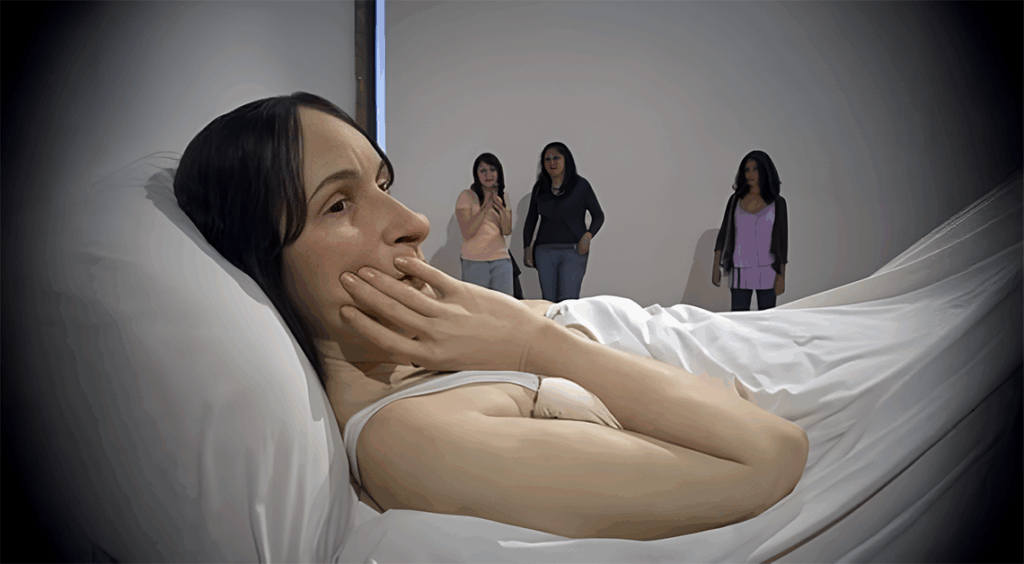
Ron Mueck has returned to Australian shores with his groundbreaking exhibition Encounter at the Art Gallery of New South Wales, marking a transformative moment in contemporary sculpture and hyperrealism. Running from 6 December 2025 to 12 April 2026, this Sydney-exclusive exhibition represents the largest showcase of Mueck's work ever presented in Australia, featuring nearly one-third of his total career output alongside a stunning new immersive installation created specifically for Sydney audiences.
Understanding Ron Mueck's Revolutionary Artistic Journey
Born in Melbourne in 1958, Ron Mueck represents a unique intersection of art and craft that few contemporary sculptors have achieved. His journey from working in film and television, notably on Jim Henson's Labyrinth and The Muppets, to becoming one of the world's most celebrated hyperrealist sculptors reveals an artist whose technical mastery matches his emotional depth. The turning point arrived in 1997 when his sculpture Dead Dad debuted at the legendary Sensation: Young British Artists exhibition at London's Royal Academy, capturing international attention and establishing him as a defining figure in contemporary figurative sculpture.
Mueck's work transcends mere technical virtuosity. His sculptures probe the profound complexities of human existence through moments of vulnerability, intimacy, and mortality. Each piece invites viewers into deeply personal encounters with the human condition, exploring themes including birth and death, connection and isolation, and the quiet struggles of everyday life. What distinguishes Mueck from other sculptors is his ability to create works that appear photorealistic yet resonate emotionally in ways that traditional representation cannot achieve.
Hyperrealism Redefined: The Mueck Technique
Hyperrealism emerged as an art movement in the early 1970s, developing from photorealism by advancing both technical methods and conceptual depth. Ron Mueck has become the foremost sculptor working within this tradition, fundamentally reshaping how contemporary audiences understand and engage with the hyperrealist aesthetic. Unlike photorealism, which focuses primarily on visual accuracy, hyperrealism incorporates psychological complexity, emotional depth, and conceptual significance that transform mere representation into a profound artistic statement.
Mueck's creative process demonstrates meticulous attention to detail. Beginning with small clay models and drawings, he determines the figure's pose, scale, and emotional resonance before embarking on the full-scale sculpture. The artist employs both traditional clay modelling and digital 3D modelling for larger pieces, ensuring anatomical precision while maintaining the ability to capture nuanced human expression. Each sculpture receives hand finishing that extends to individual strands of hair and skin pores.
The technical execution involves sophisticated casting techniques utilising silicone, fibreglass, and resin. For smaller works, silicone allows individual hairs to be inserted more authentically, while larger sculptures employ fibreglass combined with silicone for facial features. Mueck personally oversees the production phase, controlling every step from mould creation to final painting. He applies layers of pigmented silicone or fibreglass into moulds until achieving the required density, then hand-paints finer details, including veins and blemishes. The eyes, sculpted by Mueck himself, serve as the final touch, bringing his creations to life.
The Encounter Exhibition: Australia's Largest Hyperrealist Showcase
The Encounter exhibition at the Art Gallery of New South Wales represents a watershed moment for hyperrealism in Australia. This unprecedented gathering of Mueck's sculptures draws works from public and private collections across the globe, including pieces from Canada, France, New Zealand, the Netherlands, Taiwan, the United Kingdom, and the United States. Many works have never been exhibited in Australia, offering local audiences their first opportunity to engage with key pieces from the artist's distinguished career.
Featured works include the observant Woman with Shopping (2013), which captures the mundane yet poignant moment of everyday domestic labour with disturbing intimacy. The haunting Dark Place (2018) presents viewers with psychological complexity, while the monumental Couple Under an Umbrella (2013) plays with scale and perspective to explore human connection. These works demonstrate Mueck's sustained engagement with universal human experiences, rendered through hyperrealistic representation that challenges initial perception.
At the exhibition's heart stands Havoc (2025), a new immersive installation created exclusively for Sydney. This monumental work depicts two packs of monstrously scaled dogs caught at the brink of violent confrontation, with bared teeth and bristling hackles towering above viewers. The sculpture creates palpable tension, reflecting contemporary anxieties about social climate and human conflict. Curator Jackie Dunn notes that Mueck's symbolic exploration of dogs, a subject he has pursued for several years, erupts in Havoc with startling force, presenting an ominous space that generates profound psychological unease.
Scale as a Psychological Tool in Hyperrealist Sculpture
Ron Mueck's revolutionary approach to scale fundamentally distinguishes his hyperrealism from other contemporary sculptors. Rather than presenting figures at life size, he manipulates scale dramatically to create psychological disruption and emotional intensity. His monumental Boy reaches 4.5 metres in height, while Dead Dad exists at half scale, creating intimate, cradle-able proportions that intensify emotional resonance.
This strategic manipulation of scale serves multiple functions. Monumentalising ordinary human forms prompts a profound re-evaluation of their significance, generating feelings of awe, intimidation, and striking intimacy simultaneously. The deviation from expected proportions removes figures into their own realm, separating them from everyday reality while intensifying their apparent authenticity. This paradox constitutes the core psychological power of Mueck's hyperrealism, creating what theorists describe as uncanny experiences that destabilise comfortable viewing positions and demand deeper emotional engagement.
Emotional Depth and Contemporary Relevance
Hyperrealism, through artists like Mueck, transcends technical achievement to address profound existential questions. Research demonstrates that engagement with artworks addressing deeply emotional and human themes promotes empathetic responses, reduces anxiety, and fosters compassionate understanding. Mueck's sculptures, with their obsessive fidelity to anatomical detail combined with carefully selected emotional contexts, facilitate this emotional immersion.
The artist explores human vulnerability without sentimentality, presenting bodies and faces with unflinching honesty. Whether depicting moments of birth, death, shopping, or intimate connection, Mueck's work refuses to aestheticise or heroicise human experience. Instead, his sculptures affirm the profound significance of ordinary moments and common human experiences. This approach resonates powerfully in contemporary contexts characterised by technological mediation and social fragmentation, offering viewers moments of genuine human connection through artistic encounter.
The Evolution of Hyperrealism in Australian Contemporary Art
The Encounter exhibition represents a significant development in Australian contemporary art discourse. Hyperrealism has historically received less theoretical attention than other contemporary movements, yet its popularity with gallery audiences demonstrates widespread recognition of its cultural significance. Ron Mueck's return to Australia after more than a decade signals growing acceptance of hyperrealist sculpture as essential to contemporary artistic practice.
The exhibition contextualises Mueck's work within broader conversations about representation, authenticity, and human experience in the twenty-first century. Australian audiences will encounter hyperrealism not as a stylistic novelty but as a serious artistic engagement with existential questions that transcend national boundaries. The sculptures draw viewers into heightened awareness of their own place in the world, facilitating profound reflection on shared humanity and individual vulnerability.
Technical Innovation and Artistic Vision
Mueck's continued experimentation with materials and techniques demonstrates that hyperrealism remains a dynamic, evolving movement rather than a static repetition of established methods. His ongoing exploration of how materials interact with scale, light, and viewer proximity generates new possibilities for sculptural practice. The artist's willingness to commission collaborative production while maintaining rigorous personal oversight exemplifies how traditional craft combines with contemporary innovation.
The creation of Havoc, with its complex internal structures incorporating thousands of expandable glass beads to ensure anatomical accuracy, showcases Mueck's commitment to pushing technical boundaries. These innovations ensure that hyperrealist sculpture continues advancing, resisting charges of aesthetic stagnation or conceptual exhaustion that sometimes accompany technique-driven practices.
Australian Hyperrealism and Global Art Discourse
By hosting Encounter, the Art Gallery of New South Wales positions Australian audiences at the centre of contemporary global art discourse. The exhibition is presented as part of the Sydney International Art Series 2025-26, an initiative bringing outstanding international artists exclusively to Sydney. This context elevates Ron Mueck's work within international networks while affirming Australia's significance as a destination for world-class artistic experiences.
The artist's birthplace in Melbourne adds particular resonance to this Australian homecoming. Mueck's trajectory from Australian origins to international renown represents a narrative of artistic ambition and technical mastery that resonates with Australian audiences. The exhibition creates an opportunity for renewed engagement with local artistic heritage while celebrating contemporary achievement.
Frequently Asked Questions
What is the main focus of Ron Mueck's Encounter exhibition at the Art Gallery of New South Wales?
The Encounter exhibition showcases nearly one-third of Ron Mueck's total career output, featuring major works gathered from global collections alongside a new immersive sculpture titled Havoc (2025), created specifically for Sydney. The exhibition explores themes of human vulnerability, mortality, connection, and isolation through hyperrealistic figurative sculpture, representing the artist's largest exhibition ever presented in Australia.
How does Ron Mueck create his hyperrealistic sculptures, and what materials does he use?
Mueck begins with small clay models and drawings before sculpting full-scale figures with meticulous attention to anatomical detail. He employs silicone, fibreglass, and resin as primary materials, casting detailed moulds that capture skin texture and facial expression. Individual hairs are hand-inserted, and the artist personally hand-paints fine details, including veins and blemishes. Mueck sculpts each pair of eyes himself, serving as the final touch that brings sculptures to life.
What makes Ron Mueck's approach to scale unique in hyperrealist sculpture?
Mueck manipulates scale dramatically to create psychological disruption and emotional intensity. Rather than presenting figures at life size, he creates miniature works such as Dead Dad at half scale, or monumental pieces such as Boy, reaching 4.5 metres in height. This deviation from expected proportions removes figures into their own psychological realm, intensifying their apparent authenticity while creating unsettling, uncanny experiences that demand deeper viewer engagement.
When and where can audiences view the Ron Mueck: Encounter exhibition?
Ron Mueck: Encounter runs exclusively at the Art Gallery of New South Wales in Sydney from 6 December 2025 to 12 April 2026. Tickets are available online, including discounted 2-for-1 options on Wednesday evenings for Art After Hours. The exhibition is presented as part of the Sydney International Art Series 2025-26, supported by Destination NSW.
What is the significance of Havoc, the new sculpture created for Sydney?
Havoc represents a monumental immersive installation depicting two packs of monstrously scaled dogs caught at the brink of violent confrontation. Created exclusively for the Sydney exhibition, this work exemplifies Mueck's ongoing exploration of dogs as symbolic subjects. The sculpture creates palpable tension reflecting contemporary anxieties, presenting viewers with profoundly unsettling yet exhilarating encounters that challenge comfortable viewing positions.
______________
Discover more compelling stories about contemporary art, cultural innovation, and creative excellence by visiting Inspirepreneur Magazine. Stay updated with thoughtfully curated content celebrating artistic vision and transformative cultural experiences across Australia and globally.

At Inspirepreneurs Magazine, covering entrepreneurship, business failures, and the human stories behind the world's most ambitious founders. She writes at the intersection of strategy and storytelling.
You Might Also Like

Generative AI for SMEs: How Emerging Market Firms Can Reimagine Operations and Build Founder AI Skills

Hipages Energy Service Offers Australians a Way to Save Big On Bills