MCA Show Highlights Rising Contemporary Australian Voices
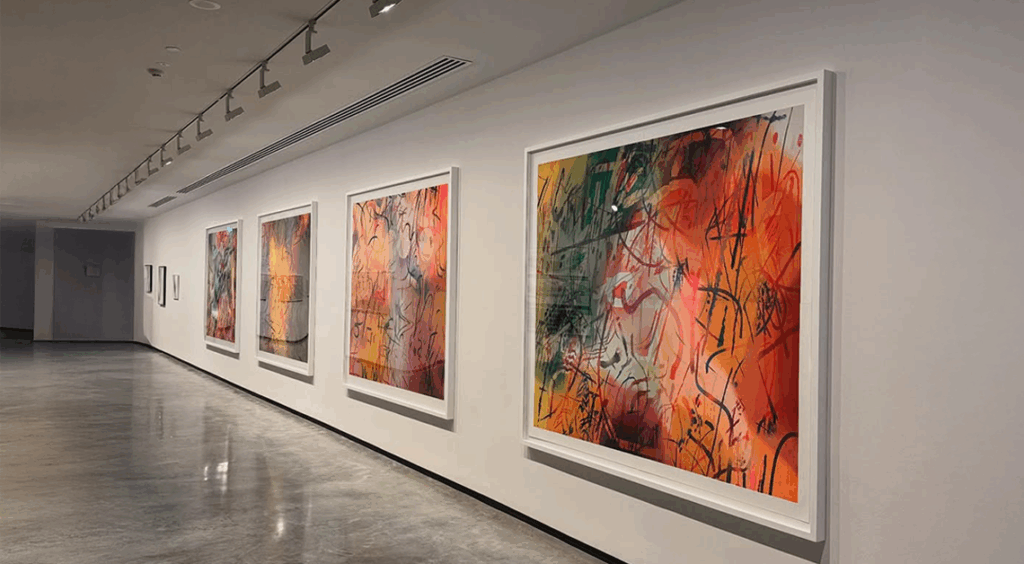
The Museum of Contemporary Art Australia (MCA) stands as the nation's preeminent institution dedicated to showcasing the most compelling work of living artists. Positioned on Sydney's iconic Circular Quay, the MCA has long served as a vital platform for emerging contemporary voices. In September 2025, the museum opened its doors to Primavera 2025: Young Australian Artists, an exhibition that brings together five exceptional early-career artists whose work demonstrates the remarkable vitality and innovation coursing through Australia's contemporary art landscape. This annual showcase continues a 34-year legacy of championing artistic talent and introducing audiences to the creative voices that will define Australia's cultural future.
The Significance of Primavera in Australian Contemporary Art
Primavera has become one of Australia's most influential exhibitions for emerging artists. Now in its 34th year, the annual presentation showcases exclusively the work of Australian artists aged 35 years and under. Since its establishment in 1992 by Dr Edward Jackson AM and Mrs Cynthia Jackson AM as a tribute to their daughter Belinda, a talented jeweller, the exhibition has presented the work of over 250 artists and 30 curators. The impact of this programme has been extraordinary. Former Primavera artists, including Mikala Dwyer, Shaun Gladwell, Danie Mellor, Agatha Gothe-Snape, Taloi Havini, and Abdul Abdullah, have gone on to exhibit nationally and internationally, establishing themselves as major contemporary voices.
For emerging artists navigating the complex landscape of the contemporary art world, securing exhibition space and reaching a broader public remains one of the greatest challenges. Primavera provides precisely this opportunity. The exhibition functions as more than a simple showcase; it represents a crucial stepping stone in the careers of young artists, offering institutional validation, curatorial mentorship, and exposure to collectors, critics, and fellow practitioners. In an increasingly competitive global art market, the platform provided by the MCA through Primavera has proven invaluable for launching and sustaining successful artistic careers.
Primavera 2025: Exploring Technology, Labour, and Contemporary Production
Primavera 2025, curated by Assistant Curator Tim Riley Walsh, brings together five early-career Australian artists whose work reimagines the language of production through a sculptural lens. The exhibition explores powerful narratives of labour, technology, and transformation whilst collectively considering what it means to create art in a distinctly digital and post-industrial era.
The exhibition has been conceived by Riley Walsh as a series of spaces reflecting different industrial contexts: the factory, the mine, and the corporation. Working across diverse mediums ranging from boomerangs and birdcages to bronze, corten steel, video, and enamel paint, the five featured artists engage with ideas of repetition, serialisation, material finishes, and the human and planetary costs of extraction. Equally significant is their shared interrogation of the artist's role within contemporary commodity culture and their exploration of the contested relationship between human creativity and machines.
After conducting close to 50 studio visits across Australia, Riley Walsh identified these five artists as exemplifying the innovative shifts he observed among young practitioners responding to rapidly changing technological and socio-political landscapes. Their work collectively demonstrates the creative vitality and conceptual sophistication characterising emerging contemporary Australian art.
Meeting the Five Featured Artists
Francis Carmody, born in 1998 and based in Naarm/Melbourne, engages in what he describes as a form of speculative storytelling. His practice examines social structures underpinning contemporary reality whilst considering the past and imagining possible futures. For Primavera 2025, Carmody presents two new sculptural pieces titled Canine Trap I and II, both created in 2025. These innovative works combine digital processes like 3D modelling with experimental materials including electroplated graphite and salt crystal crusts. Through these sculptures, Carmody examines histories of ensnarement and trap-making as metaphors for what he sees as the predatory nature of capitalism.
Alexandra Peters, born in 1990 in Warrnambool and based in Naarm/Melbourne, is a multidisciplinary artist working across painting, print, sculpture, and assemblage, frequently in large-scale installation formats. For this exhibition, Peters presents The Infinite Image, a single installation comprising six individual works that challenge conventional expectations of painting and printmaking. By transforming the MCA's galleries into what she describes as a "staging," Peters cuts open the museum's walls and reframes its windows, creating a corporate environment where artistic interventions directly engage with the museum's architecture and spatial qualities.
Augusta Vinall Richardson, born in 1991 in Naarm/Melbourne, creates abstract composite sculptures using sheet and cast metals and employing industrial materials and processes. Her practice is underpinned by an ethics of responsibility for objects and celebrates the visual language of geometric abstraction whilst subtly questioning geometry's associations with permanence and order. For Primavera 2025, Richardson presents Arrangement of Forms (apparition) I and II, her largest work to date, crafted from prized bronze and utilitarian corten steel.
Keemon Williams identifies as Koa, Kuku Yalanji, Meriam Mir, and South Sea Islander. Born in 1999 in Gimuy/Cairns and based in Magandjin/Brisbane, Williams is both an artist and curator whose practice interrogates queer, Indigenous, and Australian experiences as lived in the shadow of colonisation. In previous work, Williams has examined the appropriation of cultural objects such as boomerangs by the tourist industry. For Primavera 2025, Williams expands this inquiry to examine the unsustainable pressures of the art industry placed on cultural practitioners, outsourcing the production of 999 aluminium boomerangs to an offshore manufacturer and displaying them as teetering towers resembling a cityscape.
Emmaline Zanelli, born in 1994 in Tarndanya/Adelaide and based there currently, combines elements of video, photography, sculpture, and performance. Influenced by absurdism and surrealism, Zanelli creates work seeking humour and meaning in the everyday. For this exhibition, she presents two closely related artworks together for the first time: the two-channel video I Take Care of What's Mine (2023-24) and the installation Magic Cave (2024), created in collaboration with young people from Roxby Downs, a regional South Australian town home predominantly to miners working in the neighbouring Olympic Dam mine.
The Broader Landscape of Contemporary Australian Art
The emergence of these five artists represents a broader moment within Australia's contemporary art landscape. Australian institutions and international exhibitions have increasingly recognised the innovative work being produced by the country's emerging practitioners. The art scene now encompasses a rich tapestry of Indigenous, multicultural, and modern influences, with Australian artists gaining widespread international recognition at prestigious venues including the Venice Biennale and major institutional exhibitions globally.
Supporting emerging artists has become recognised as essential to maintaining the vitality of the broader art ecosystem. Art galleries, museums, and cultural institutions play a pivotal role in identifying and nurturing new talent, providing both exhibition platforms and mentorship opportunities. Beyond commercial viability, these institutions contribute to broader cultural dialogue, ensuring that fresh perspectives and innovative techniques continue to challenge societal norms and provoke meaningful thought.
The Museum of Contemporary Art Australia has exemplified this commitment. With its collection containing over 4,000 works by Australian artists, the institution serves as a custodian of stories and a bridge between past and present, significantly contributing to Australia's cultural identity on both national and global stages.
Exploring Contemporary Themes: Technology, Labour, and Human Creativity
At their core, the artworks in Primavera 2025 grapple with fundamental questions confronting contemporary society. The intersection of human creativity and machine intelligence, the pressures on artists within commodity culture, the costs of industrial extraction, and the transformation of labour in digital economies all emerge as significant themes.
These preoccupations resonate with broader global conversations about technology's role in shaping artistic practice and contemporary life. As artificial intelligence, automation, and digital processes increasingly influence creative work, artists find themselves responding to and interrogating these developments. The featured artists do not simply respond passively; instead, they employ sculpture, video, installation, and conceptual strategies to actively investigate and critique these transformations, offering audiences compelling visual and conceptual frameworks through which to understand our changing world.
Frequently Asked Questions
1. What is Primavera, and why is it significant for Australian artists?
Primavera is the Museum of Contemporary Art Australia's annual exhibition showcasing work by Australian artists aged 35 and under. Now in its 34th year, it has become one of Australia's most prestigious platforms for emerging artists, having presented over 250 artists and 30 curators since its establishment in 1992. The exhibition has played a pivotal role in launching the careers of many of Australia's most significant contemporary artists, including Mikala Dwyer, Shaun Gladwell, and Agatha Gothe-Snape.
2. Who is Tim Riley Walsh, and what is his curatorial approach?
Tim Riley Walsh is Assistant Curator at the Museum of Contemporary Art Australia. For Primavera 2025, he conducted nearly 50 studio visits across the country to identify artists whose work reflects innovative shifts in how young practitioners respond to rapidly changing technological landscapes. His curatorial approach emphasises sculptural and installation-based practice, conceptual rigour, and engagement with contemporary social and technological issues.
3. What themes does Primavera 2025 explore?
Primavera 2025 explores the relationship between human creativity and machines, labour and technology, production and transformation, and the pressures on artists within contemporary commodity culture. The exhibition examines what it means to create art in a digital and post-industrial era, addressing questions of repetition, serialisation, material finishes, and the human and planetary costs of extraction.
4. How does the Museum of Contemporary Art Australia support emerging artists?
The MCA serves as Australia's leading institution for contemporary art, providing exhibition platforms, curatorial mentorship, and direct exposure to audiences, collectors, and critics. Through initiatives like Primavera and other programming, the museum creates spaces where emerging artists can develop their careers, build their professional networks, and contribute meaningfully to national and international artistic discourse.
5. What impact has Primavera had on Australian contemporary art?
Since its inception, Primavera has become a defining institution in shaping Australia's contemporary art landscape. The exhibition has played an instrumental role in introducing generations of artists at early stages of their careers to broader audiences, establishing the museum as a launching point for artistic careers and contributing significantly to the evolution and international recognition of Australian contemporary art practice.
Primavera 2025 continues the legacy of the Museum of Contemporary Art Australia as a vital cultural institution championing contemporary voices. Through the work of Francis Carmody, Alexandra Peters, Augusta Vinall Richardson, Keemon Williams, and Emmaline Zanelli, audiences encounter a generation of artists engaged with the most pressing questions of our time.
______________
Discover more compelling stories about contemporary art, culture, and innovation at Inspirepreneur Magazine. Explore our in-depth coverage of emerging artists, cultural institutions, and the creative voices shaping our world.

At Inspirepreneurs Magazine, covering entrepreneurship, business failures, and the human stories behind the world's most ambitious founders. She writes at the intersection of strategy and storytelling.