


Boyd Women Exhibition Rewrites Australian Art History
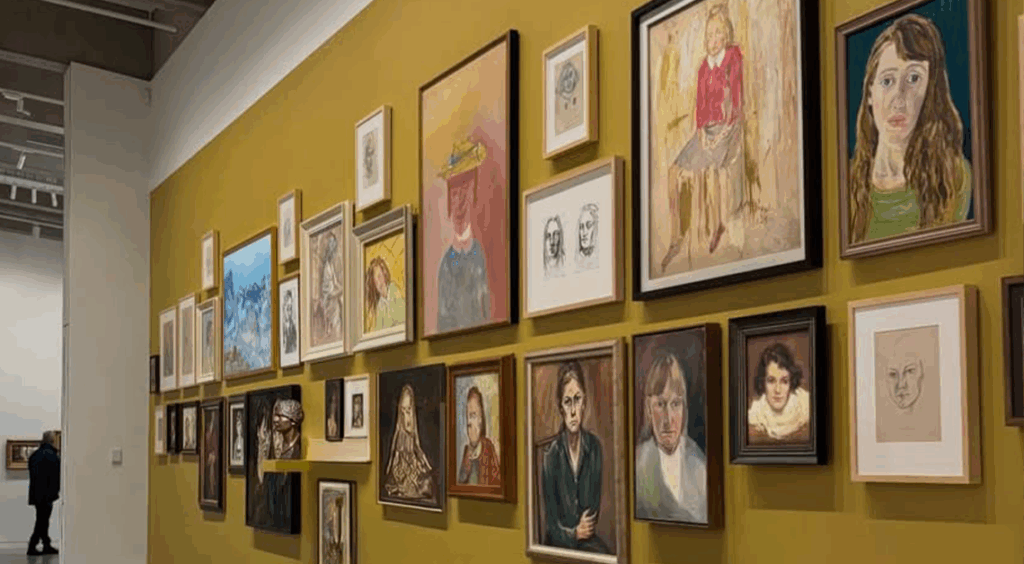
The Hidden Line: Art of the Boyd Women stands as one of Australia's most significant recent cultural events, fundamentally reshaping the nation's understanding of its artistic heritage. Opening at the Bundanon Art Museum on 22 November 2025 and running through 15 February 2026, this landmark exhibition showcases more than 300 diverse works spanning five generations of women from one of Australia's most celebrated artistic dynasties. It represents a crucial turning point in Australian art historiography by challenging decades of male-centred narratives and reclaiming the stories of artists whose contributions have been undervalued and often overlooked.
Understanding the Boyd Artistic Dynasty
The Boyd family's artistic legacy stretches back to 1886, when Emma Minnie à Beckett married Arthur Merric Boyd. Both were already accomplished painters with international recognition. Emma Minnie à Beckett came from a wealthy background as the second daughter of William Arthur à Beckett and the heiress to the John Mills fortune. This financial security allowed her to study art formally at the National Gallery of Victoria School during an era when such opportunities were rarely available to women. Her artistic accomplishments were substantial. She exhibited publicly between 1874 and 1932 at the Victorian Artists Society, the Centennial International Exhibition in Melbourne in 1888, and most notably at the Royal Academy of Arts in London. Her painting "To the Workhouse" was accepted for exhibition at the Royal Academy in 1891, an achievement that established her legitimacy as a serious international artist.
Arthur Merric Boyd complemented Emma Minnie's achievements with his own artistic pursuits. Together, they established the foundation of what would become an extraordinary creative family. Their influence extended far beyond their own practice. They had five children and encouraged them all to pursue artistic careers. This commitment to nurturing creativity across the family set a precedent that defined the Boyd identity for generations.
The second generation, led by William Merric Boyd, transformed pottery in Australia. Known as the father of Australian studio pottery, Merric Boyd married Doris Gough in 1915. Doris was an accomplished artist, having studied under Bernard Hall and Frederick McCubbin at the National Gallery School. Between 1920 and 1930, Doris decorated many of Merric's pottery works, creating pieces featuring Australian flora and fauna that expressed a distinctly local artistic vision. Together, they raised five children: Lucy, Arthur, Guy, David, and Mary. All became artists in their own right, strengthening the family tradition in which artistic practice was not merely personal expression but a core element of family identity.
The Hidden Line Exhibition and Its Curatorial Vision
Curator Sophie O'Brien describes The Hidden Line: Art of the Boyd Women as "an invitation to reconsider the voices whose creative contributions have long informed, guided, and enriched the Boyd story, and to reimagine that legacy for the present." This curatorial approach addresses a major gap in Australian art historical discourse. The title The Hidden Line refers to the subtle and often invisible threads of influence, mentorship, and memory that connect generations of artists, as well as the powerful shared creative lineage that has been obscured from public view.
The exhibition brings together works by Emma Minnie Boyd, Doris Boyd, Lady Mary Nolan, Yvonne Boyd, Lucy Boyd Beck, Hermia Boyd, and their descendants who remain active today. Many of these women have been remembered primarily as subjects in paintings by male family members rather than as creators in their own right. Rachel Kent, CEO of Bundanon, explains the exhibition's purpose: "Too often in art history, women are remembered as subjects rather than makers. This important exhibition re-centres the women of this iconic artistic family as prolific creators whose inheritance resonates today."
Drawn largely from the Bundanon Collection, with significant loans from the National Gallery of Australia, the National Gallery of Victoria, the National Library of Australia, and the Heide Museum of Modern Art, the exhibition encompasses painting, ceramics, sculpture, photography, printmaking, textiles, design, and filmmaking. It also includes several works that have never been exhibited, revealing artistic contributions that have remained hidden in storage for decades.
Individual Artists and Their Contributions
Doris Boyd emerges as a more influential figure than previously acknowledged. A painter and ceramicist, she decorated Merric Boyd's pottery with intricate Australian designs that showcased technical skill and artistic insight. Beyond her decorative contributions, Doris maintained her own artistic practice, creating paintings that reflected domestic themes and her engagement with Christian Science spirituality. Her influence on her five children was profound. Each pursued a significant artistic career that shaped Australian art.
Lucy Boyd Beck represents a remarkable artistic journey. Born in 1916, she established the Altamira Pottery with her husband, Hatton Beck, in 1939. In 1944, they sold the pottery to Lucy's brother Arthur Boyd, John Perceval, and Peter Herbst, after which it became known as Arthur Merric Boyd Pottery. Lucy and Hatton continued their artistic work, later establishing potteries in London and other locations. Her ceramic work combined functional forms with sculptural ideas and contributed significantly to the development of studio pottery in Australia and abroad. Her work is now held in major institutions including the National Gallery of Australia, the National Gallery of Victoria, and the Victoria and Albert Museum in London.
Yvonne Boyd presents a more complex example of artistic contribution. Born Yvonne Harland Lennie in 1920, she was an accomplished painter who studied at what is now the Victorian College of the Arts. Her early works, such as "Melbourne Tram" (1944) and "In Kensington" (c. 1944), reveal her engagement with social realist themes. After marrying Arthur Boyd in 1945, Yvonne's focus shifted. She described herself as working behind the scenes, managing Arthur's career and dealing with galleries. Yet the exhibition shows that her contributions went far beyond support work. She played a central role in conceiving and developing Bundanon as a creative space. Her philanthropic vision, realised in 1993 when she and Arthur gifted the property to the nation, fundamentally shaped Australian cultural life. Yvonne's legacy therefore, encompasses artistic production and cultural leadership.
Lady Mary Nolan, born Mary Elizabeth Boyd in 1926, followed a different artistic path. Although she painted and made ceramics, she is best remembered for her black and white photography documenting family life in Australia, the United Kingdom, Italy, and France. Most of these photographs have never been exhibited. They provide an intimate record of artistic practice and family life, capturing domestic moments with compositional sensitivity.
Hermia Boyd joined the family when she married David Boyd in 1948. An accomplished artist, she established pottery studios with David and produced distinctive ceramics that gained acclaim in England and Australia. Her middle name, Sappho, alludes to the ancient Greek poet and reflects her engagement with classical themes. Hermia's work in ceramics, glass, and drawing demonstrates technical mastery and conceptual depth. David treated her as an equal artistic partner, which was unusual at the time. Their pottery bears marks indicating collaborative authorship, acknowledging her essential contributions.
Rewriting Australian Art History
The exhibition's significance extends far beyond celebrating individual artists. It challenges the historical narratives that have shaped Australian art for decades. In 1971, art historian Linda Nochlin asked the famous question: "Why have there been no great women artists?" Her argument pointed to structural exclusion rather than a lack of talent. Over the past fifty years, curators and scholars have worked to rediscover overlooked women artists, although progress has often been slow.
The Boyd women exhibition forms part of a broader movement in Australian cultural institutions to reclaim women's artistic histories. Initiatives such as the National Gallery of Australia's Know My Name program and exhibitions, including "Dangerously Modern: Australian Women in Europe 1890 to 1940" demonstrate that women artists were not absent but were systematically excluded from institutional narratives. The conservative art establishment of earlier decades favoured nationalist themes produced by male artists, marginalising women and expatriate artists working with international movements.
The Hidden Line exhibition confronts this issue directly. By presenting more than 300 works across generations and media, it shows that women made continuous and central contributions to Australian art. They were not peripheral figures or hobbyists but serious practitioners who exhibited internationally, earned income through their work, mentored others, and influenced artistic directions.
The exhibition also includes commissions from contemporary Australian women artists such as Pat Brassington, Elizabeth Dunn, Diena Georgetti, Helen Johnson, Narelle Jubelin, Camille Laddawan, Tjunkaya Tapaya OAM, and Timna Taylor. These works create a dialogue across time and encourage visitors to rethink historical narratives. The presence of contemporary responses suggests that the work of reclaiming women's artistic contributions remains ongoing.
The Wider Cultural Context
The Hidden Line exhibition appears at a moment when questions of gender equity in the arts are increasingly pressing. Data continues to reveal disparities in the representation of women in museums, galleries, and art history. The Countess Report in Australia and similar international studies highlight these inequalities. The exhibition shows that these gaps are not natural but are the result of institutional decisions and historical framing.
Bundanon is especially significant in this context. Arthur and Yvonne Boyd's 1993 gift of the property and its collection to the nation is one of the most important acts of cultural philanthropy in Australian history. The gift included more than 4,000 artworks valued at over 46 million dollars. Yvonne Boyd played a central role in this vision and in establishing Bundanon as a working arts centre that supports artistic practice. This reinforces the exhibition's central argument that women have shaped not only artistic production but also cultural institutions.
Rachel Kent notes that "Bundanon itself is the outcome of a strong matrilineal succession and is carried forward by new generations of artists from around Australia who come into residence each year." This highlights an important dimension of the Boyd women's legacy: their commitment to mentoring and supporting other artists. Emma Minnie Boyd welcomed artists into her home. Doris Boyd nurtured five artistically talented children. Yvonne Boyd created an institution dedicated to supporting creativity. These acts of cultural stewardship, though less visible than individual artworks, have significantly influenced Australian artistic development.
The Scope and Scale of the Exhibition
The exhibition's scale is remarkable. It spans painting, printmaking, sculpture, pottery, textiles, design, filmmaking, and photography, demonstrating the wide range of creative practice within a single family. This diversity strengthens the argument that women artists engaged with every discipline and were not limited to any particular medium.
The inclusion of previously unseen works is particularly important. Many of these pieces have remained in storage, unseen by the public and largely unknown to scholars. Their exhibition expands Australian art historical knowledge and reveals how incomplete existing narratives have been.
The exhibition publication, featuring essays by Dr Helen Hughes, Jennifer Higgie, Anne Ryan, and Dr Lisa Slade, provides scholarly depth and ensures that the exhibition's insights continue to influence art historical understanding beyond the exhibition period.
The Educational and Social Dimensions
The Hidden Line exhibition also serves a vital educational purpose. Opening weekend programming included panel discussions, artist workshops, a live reading of a letter by Joy Hester to Yvonne Boyd, and a concert by a Norwegian ensemble led by composer-performer Benedicte Maurseth. These activities ensure that the exhibition functions as a space for learning and dialogue. They demonstrate how cultural institutions can actively reinterpret history rather than present it as fixed.
The exhibition also encourages reflection on how art is taught and valued. Traditional art history has often emphasised individual genius, frequently framed in masculine terms. By centring the collective, collaborative, and mentoring aspects of the Boyd women's practice, the exhibition proposes alternative models of artistic significance. This has meaningful implications for how future generations of artists, especially women, understand their own potential and place within the art world.
Implications for Australian Art History
The Hidden Line exhibition is likely to become a landmark moment in Australian art historical discourse. It demonstrates that women have been central to artistic development in Australia. It reveals that gaps in the historical record are the result of neglect rather than a lack of contribution. It shows that some of Australia's most important artistic institutions, including Bundanon, were shaped by the vision and labour of women.
Furthermore, the exhibition makes clear that reclaiming women's artistic history requires more than simply adding forgotten names to established narratives. It demands a rethinking of how art history is structured. The work of Doris Boyd in guiding her children, Yvonne Boyd in creating Bundanon, Lucy Boyd Beck in establishing pottery studios, and the Boyd women in fostering creativity across generations illustrates that artistic contribution extends beyond individual artworks. It includes the creation of conditions that support artistic practice, the transmission of skills and knowledge, and the establishment of cultural spaces where creativity can flourish.
The exhibition opens at a time when cultural institutions are increasingly committed to equity initiatives. The National Gallery of Australia's Know My Name program, similar projects in state galleries, and exhibitions like "Dangerously Modern" highlight the need for a significant revision of Australian art history. The Hidden Line exhibition places itself at the centre of this cultural shift.
Frequently Asked Questions
What is the main focus of The Hidden Line exhibition?
The exhibition repositions the creative practices of five generations of women from the Boyd family. Rather than treating these women as secondary figures in male-dominated narratives, it centres them as prolific creators and important figures in Australian art. With more than 300 works across many media, the exhibition demonstrates how women's contributions were undervalued despite their central role in the family's artistic legacy and Australian cultural development.
Where is the exhibition held and when is it open?
The Hidden Line: Art of the Boyd Women is presented at Bundanon Art Museum on the Shoalhaven River near Nowra on the south coast of New South Wales. It runs from 22 November 2025 to 15 February 2026. Bundanon operates as an art museum and a living arts centre that supports artists through residencies, education programs, exhibitions, and performances.
Which Boyd women artists are featured?
The exhibition features works by Emma Minnie Boyd, Doris Boyd, Lady Mary Nolan, Yvonne Boyd, Lucy Boyd Beck, Hermia Boyd, and their descendants, including Lucy Boyd, Polly Boyd, Florence Boyd Williams, Ellen Green Boyd, Cassandra Boyd, and Amanda Boyd. It also includes commissions by contemporary Australian women artists whose works engage directly with the historical pieces.
Why is this exhibition significant?
The exhibition challenges long-standing narratives that have marginalised women in Australian art. It shows that women were active, central, and influential in shaping Australian artistic practice. By presenting more than 300 works, it offers a comprehensive view of the Boyd women's contributions and corrects the historical record.
What types of artworks are included?
The exhibition includes painting, printmaking, sculpture, pottery, ceramics, textiles, photography, design, and filmmaking. It demonstrates the wide range of creative disciplines practised by the Boyd women, from Emma Minnie Boyd's Royal Academy works to Lucy Boyd Beck's pottery and Mary Nolan's photographic documentation.
__________
For more compelling stories about culture, innovation, and creative practice, explore Inspirepreneur Magazine and discover how creative leadership continues to transform communities and institutions.

At Inspirepreneurs Magazine, covering entrepreneurship, business failures, and the human stories behind the world's most ambitious founders. She writes at the intersection of strategy and storytelling.
You Might Also Like

US-German Man Arrested for Attempted Firebombing of U.S. Embassy Office in Israel

Jessica Herrin: A Legacy of Empowerment and Entrepreneurial Success
