Fable Food Co: The Business Built After Shoes of Prey Collapsed

Synopsis
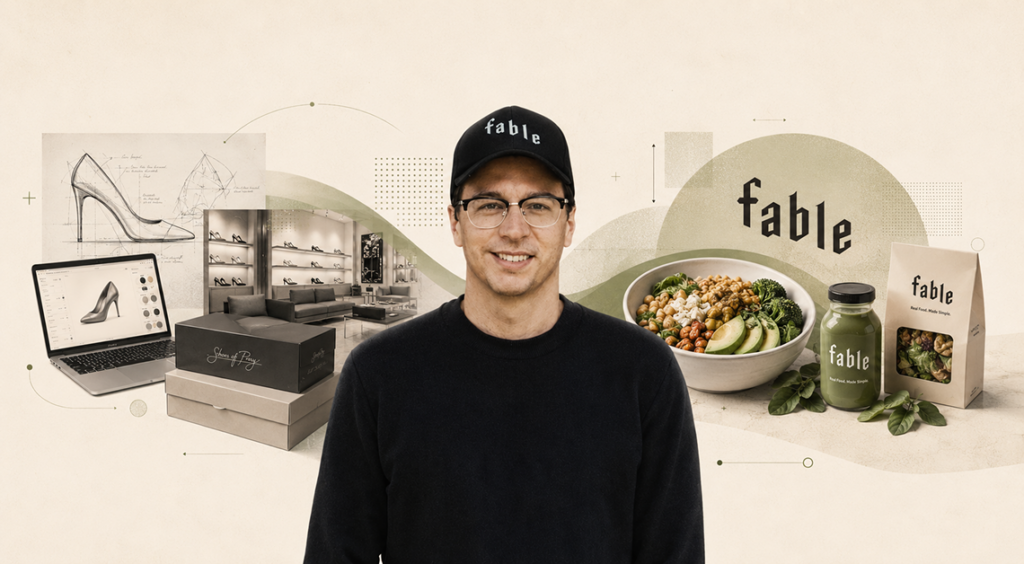
After Shoes of Prey collapsed in 2019, founder Michael Fox applied the lessons from the failed fashion-tech startup to build Fable Food Co, a fast-growing plant-based food company.
Michael Fox stepped away from ten years of work and a business that was once one of Australia’s most exciting startups when Shoes of Prey went into liquidation. Any other human being in his position would have probably needed to take a long break before even considering another project. Instead, Fox was shortly assembling an entirely new venture, one that would go on to thrive in ways the small business never did. This is the Fable Food Co story, how we turned an idea born from mushrooms into a fast-growing global brand.
From Shoes To Shiitake Mushrooms
The concept for Fable Food Co started neither from a business plan nor a perceived gap in the market Fox could see. The insight came from his own dissatisfaction with meat-free alternatives when he lived in Los Angeles in the last years of Shoes of Prey. He knew that nearly every plant-based product on the market is loaded with artificial, unrecognisable ingredients, which seemed to contradict all of the healthy motivations someone would have for cutting back on meat in the first place.
In late 2019, Fox along with chef, mycologist and chemical engineer Jim Fuller and organic mushroom farmer Chris McLoughlin founded Fable Food Co. Following trials with various base ingredients, the team settled on shiitake mushrooms, a type utilised within Asian cooking and traditional medicine for centuries due to its naturally meaty, umami taste and ability to replicate slow-cooked meat after being dried and prepared using a specific method.
Lessons From Past Mistakes
Fox’s prior business had to build and operate its own factory in China, with fixed costs that weighed on the company before it even proved it could sell. Fox was careful not to make the same mistake with Fable, refraining from acquiring any elements of the supply chain itself, opting instead to work with established mushroom farms and contract manufacturers in Malaysia.
Fable has been lean since the very beginning. In the early years of the business, the company operated with a lean full-time staff and focused its scarce capital on demonstrating demand for its product instead of wasting money on building infrastructure that it didn’t require yet. That one decision, to keep fixed costs low until you have something real in the business, is one of the most obvious lessons Fox translated from his first venture into his second.
Early Traction And First Investors
Not long after they started, Fable landed their first big break. The team visited Singapore in late 2019 to pitch their meaty pulled mushroom product to Heston Blumenthal, and got drawn on board as the first large customer of the then-nascent Fable brand placing the company onto menus at his restaurants. Then, only weeks later, meal delivery service Marley Spoon officially signed Fable for their ready-meals, a partnership that had been even more critical when home delivery of food exploded due to Covid.
Fable’s early investors include Blackbird Ventures, as well as Mike Cannon-Brookes’ Grok Ventures, who backed the $1.5 million pre-seed investment round for the company. A number of the same investors whose investments ended up being wiped out by Shoes of Prey chose to again invest in Fox, which plays into something he has referenced multiple times when talking about how the relationships with his investors survived the collapse of his first business.
Raising Capital And Scaling Up
After securing pre-seed funding, Fable raised a $6.5 million seed round in August 2021 which was subsequently used to develop a range of products and pursue international expansion. In February 2023, the company had expanded sufficiently to close an $8.5 million Series A round led by Singapore-based K3 Ventures with followers including ex-Yum, Brands CEO Greg Creed and Princeton Professor of Bioethics Peter Singer. Fable has raised almost $14.8 million across its funding rounds so far.
The manufacturing model behind Shoes of Prey is also more customised, while Fable’s fast-moving consumer goods structure scales easily once demand is established. That structure has delivered tangible results, with the company reporting a 50% year-over-year growth rate in 2022 on a currency-adjusted basis. Fable currently earns around $6.9 million in yearly revenue and has 30+ employees.
Supermarkets and Worldwide Sales
Fable now has its products in over 1,000 retail locations around Australia, including several Coles and supermarkets, many independent grocers such as Harris Farm Markets. In the food service space, it sells to chains such as Guzman y Gomez and Grill’d plus meal kit companies Marley Spoon and Dinnerly, and a couple of hundred independent restaurants.
Since launch, Fable has partnered with burger chain Honest Burgers, meal box delivery service Gousto and organic supermarket chain Planet Organic in the UK. The brand operates through plant-based restaurant chain Beatnic in the US, and New York meal delivery service CookUnity, plus launched via local chains around New Zealand, Canada, and Singapore.
From A Terrible Lesson To A Formula
The most notable aspect of Fable’s development is how swiftly you can trace a direct line from the mistakes that Fox experienced at Shoes of Prey. Rather than convince customers to alter their behaviour, as Shoes of Prey had attempted to persuade the mass market that designing its own shoes would be a thing, Fable created a product that fits seamlessly into a trend already underway: the shift to plant-based eating. Fable relied on farms and factories that already existed instead of sinking capital into pricey manufacturing infrastructure before validating demand, scaling only when the numbers warranted it.
Fox said that his ambition with Fable is not just a financially successful venture, but a meaningful contribution to a better food system (and the business results have since followed). In just under a decade, Fable Food Co has gone from a $1.5 million pre-seed round to approximately $14.8 million raised, from its very first sale to Heston Blumenthal, to securing shelf space in Coles & Woolworths; the kind of business Shoes of Prey never grew into and proof that one founder, with lessons learned through scaling failure can build something that genuinely not only works but scales.
At Inspirepreneurs Magazine, covering entrepreneurship, business failures, and the human stories behind the world's most ambitious founders. She writes at the intersection of strategy and storytelling.