


Insurance Void Leaves LA at Financial Risk Amid Wildfire Crisis
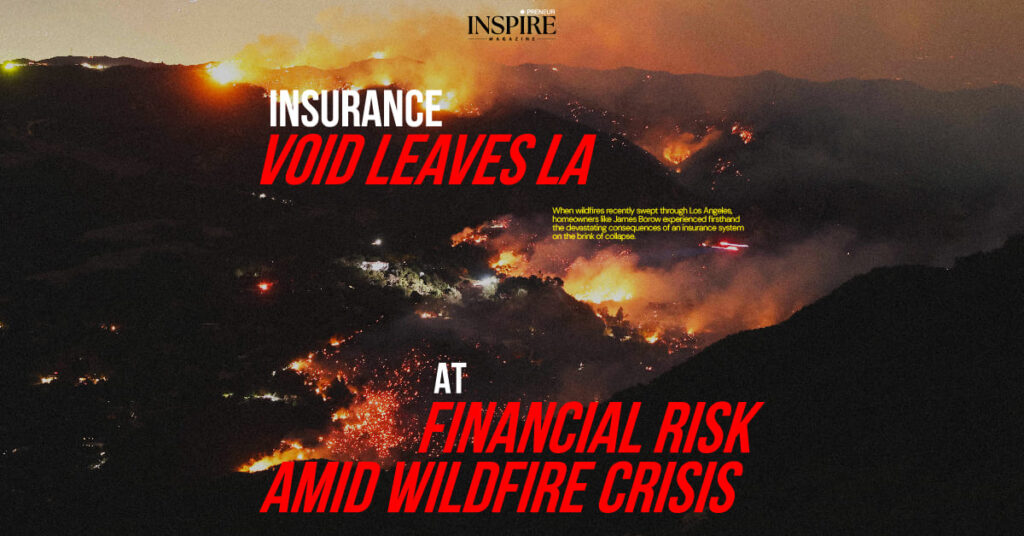
When wildfires recently swept through Los Angeles, homeowners like James Borow experienced firsthand the devastating consequences of an insurance system on the brink of collapse. After receiving notice from insurance giant State Farm that his policy wouldn’t be renewed, Borow reluctantly switched to the California FAIR Plan—a state-backed insurer of last resort. Despite the 400% premium increase, it seemed his only option. Months later, he watched from his Tesla's cameras as his Palisades home burned to the ground, underscoring the severity of the California wildfire insurance crisis.
Unfortunately, Borow's story highlights a growing crisis in California’s insurance industry. With wildfire risks soaring due to climate change, private insurers are pulling out, leaving homeowners facing staggering premiums, limited coverage, or total lack of insurance.
Insurance Policies Withdrawal Leaves Thousands Vulnerable
State Farm alone non-renewed fire insurance for 1,626 homes in Pacific Palisades in 2024, representing 70% of its local market share. For homeowners like Francis Bischetti, this unfolding insurance crisis has made retaining coverage impossible. After Farmers Insurance raised his premiums from $4,500 to $18,000 and demanded costly fireproofing adjustments—such as removing trees from his property—he couldn’t afford coverage. When wildfires ravaged his home, Bischetti faced the unthinkable with no insurance to fall back on.
The FAIR Plan is drawing more California homeowners as their last resort for wildfire insurance. This state-mandated pool is intended to insure properties deemed too risky by private companies. However, the FAIR Plan often comes with exorbitant costs or strict fireproofing prerequisites. Those who can afford its basic policies face limited coverage that caps payouts at £2.4 million—a figure far below the potential damage from significant fires.
FAIR Plan's Financial Fragility Raises Concerns
While more than 450,000 Californians relied on the FAIR Plan in 2024—double the number from 2020—concerns are growing about its solvency. The system’s reserves stand at just £297 million, sparking fears that a single catastrophic fire could bankrupt it. A 2023 hearing by FAIR Plan President Victoria Roach made grim headlines when she admitted the system was just "one large event away from insolvency.”
Given the financial uncertainty, policyholders worry whether their claims will be paid should another record-breaking wildfire occur. Borow himself faces an exhausting bureaucratic web trying to coordinate claims between State Farm and the FAIR Plan. "It’s like no one knows what they’re doing," says Borow of his experience navigating the system. "All I get from representatives is, ‘I honestly don’t know.’"
Insurance Companies' Retreat Amplifies the Crisis
The withdrawal of major insurers has far-reaching consequences, signalling a systemic issue tied to California’s intensifying wildfire risks and stringent regulatory environment. Private insurers cite rising claims costs and climate-related losses as overwhelming factors. State Farm, along with other major firms, has pointed to outdated state pricing regulations that prevent insurers from accounting for climate crisis risks in their premium structures. While new state regulations now allow insurers to incorporate future disaster probabilities into pricing, the damage to market stability may already be irreversible.
Michael Coffey, an insurance defence litigator, warns that further insurer withdrawals would deepen the crisis, creating a ripple effect of price hikes across remaining policies. "California homeowners will face stark choices," he argues. "Pay the increased premiums, go uninsured, or leave entirely."
Furthermore, delayed claim payouts exacerbate financial hardship for homeowners. Farmers Insurance denied nearly 50% of claims in 2023 for Californians, one of the highest rates nationwide, according to LA Times reporting.
Focus on Long-Term Solutions Amid Looming Climate Risks
California state officials appear torn between easing short-term pressures and seeking structural long-term fixes for their overstressed insurance market. For his part, LA County Insurance Commissioner Ricardo Lara has imposed a temporary moratorium on policy cancellations for wildfire-affected homeowners. However, emergency moratoriums fail to address systemic issues, leaving countless property owners just one natural disaster away from financial ruin.
Efforts to stabilise the market include expanding FAIR Plan coverage and encouraging insurers to return through adjusted regulations. Nonetheless, even these measures risk passing costs onto taxpayers. Coffey cautions against expecting the government to act as an unlimited backstop for private property losses. "The expense would be untenable and economically overwhelming," he warns.
Homeowners across the state are left navigating rising premiums, underinsured properties, and climate risks impacting both their day-to-day lives and long-term financial security.
National Trends Mirror California Wildfire Insurance Crisis
California’s wildfire insurance woes are not isolated. Across the United States, climate disasters are driving widespread premium hikes. Average homeowners insurance rates jumped 30% from 2020 to 2023, reports the Brookings Institution, with states like Florida facing parallel crises. Florida's government-backed Citizens Property Insurance Corp now ranks among the top 10 insurers in the state, raising concerns about its ability to handle exponential growth in climate-driven claims.
Both states’ struggles highlight a broader reckoning as extreme weather events accelerate financial risks for insurance providers. Without robust reforms and adaptive strategies, traditional private markets may continue retreating from high-risk areas, compounding inequality for the financially vulnerable.
Rebuilding Amid Uncertainty
For families like Borow's, plagued by unanswered questions and mounting stress, rebuilding feels a distant dream. "Hopefully four years from now, we’ll have a house again,” he says. “That’s the best-case scenario." Echoed across communities, this uncertainty leaves many questioning what lasting solutions might emerge for Californians navigating the fallout from a fraying insurance ecosystem, further highlighting the urgency of addressing the California wildfire insurance crisis.
Source
Explore more entrepreneurial insights and success stories at Inspirepreneur, your go-to magazine for business innovation and leadership.

At Inspirepreneurs Magazine, covering entrepreneurship, business failures, and the human stories behind the world's most ambitious founders. She writes at the intersection of strategy and storytelling.
You Might Also Like

Carro Enters Australia With CarPlace Acquisition, its eighth market

Global Markets in Chaos: Unwinding of Yen Carry Trade Triggers Selloff
