


Foreign Selling Pushes South Korean Won Toward Crisis-Era Levels

Synopsis
The won fell toward its weakest level since 2009 as overseas investors reduced exposure to South Korean equities, adding to pressure on Asian currencies as the U.S. dollar strengthened.
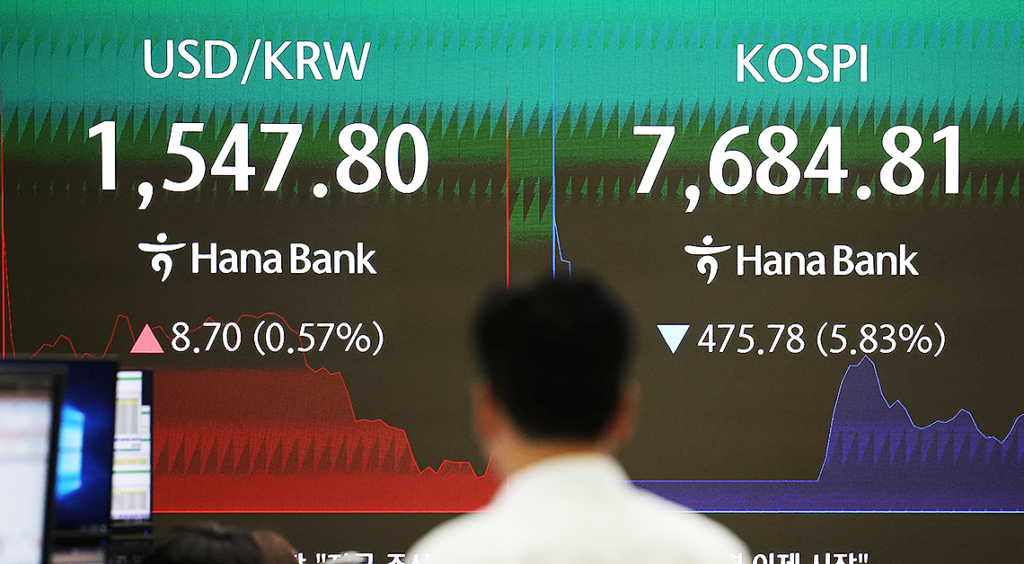
South Korea’s currency slid to the brink of global financial crisis-era lows after foreigners liquidated South Korean equity holdings en masse in the broadest outflow of capital from Asia in almost a month amid a broad dollar rally.
The won fell as far as 1,562.20 against the dollar, a level not seen since March 2009, having previously tested record territory for weeks, during a push toward 1,600 per dollar, traders said. South Korea’s benchmark Kospi index saw 1.46 trillion won ($938 million) in net equity outflows.
Dollar Strength Adds to Regional Currency Weakness
The selling, however, was focused on mega-cap tech firms as global investors adjusted their holdings in a sector after an extended bull market tied to AI and other technology, while the currency continued its decline.
Korea’s equity market is sensitive to the ups and downs of the technology market in particular given that it is home to several of the world’s largest chipmakers.
In the context of increased dollars demand, pressure on the won comes amid growing dollar demand as US rates stay high.
Forex outflow has put the South Korean currency in a tight spot. If current market conditions remain in place, some analysts predict the currency will likely fall to 1,600 to the dollar. The exact level is uncertain and no forecast has been given so far.
Market reforms persist despite market conditions
South Korea's economy is still being led by a powerful exporting sector, driven particularly by the chip market. However, increased dependency of the South Korean economy on imports and exports is what's putting its currency under pressure, according to South Korea’s central bank.
Starting on July 6th, South Korea plans to start a foreign exchange market for foreign investors, allowing them to trade in the won round the clock.
This reform aims to make the market more open, with the ultimate aim of making Korea’s position as a major trading market recognized in indexes of developed countries.
Source: Bloomberg
Follow Inspirepreneur Magazine for daily global business news.
Pooja Malik is a business journalist with over six years of experience covering startups, entrepreneurship, and emerging trends. She has previously worked with leading media platforms such as YourStory Media and BW BusinessWorld, where she reported on business, policy, and market developments. Currently, she serves as Editor at The Inspirepreneur Magazine, where she writes and edits stories across business, lifestyle, and travel, with a focus on clarity, accuracy, and reader relevance.


