


New Zealand Follows Australia With Proposed Under-16 Social Media Ban
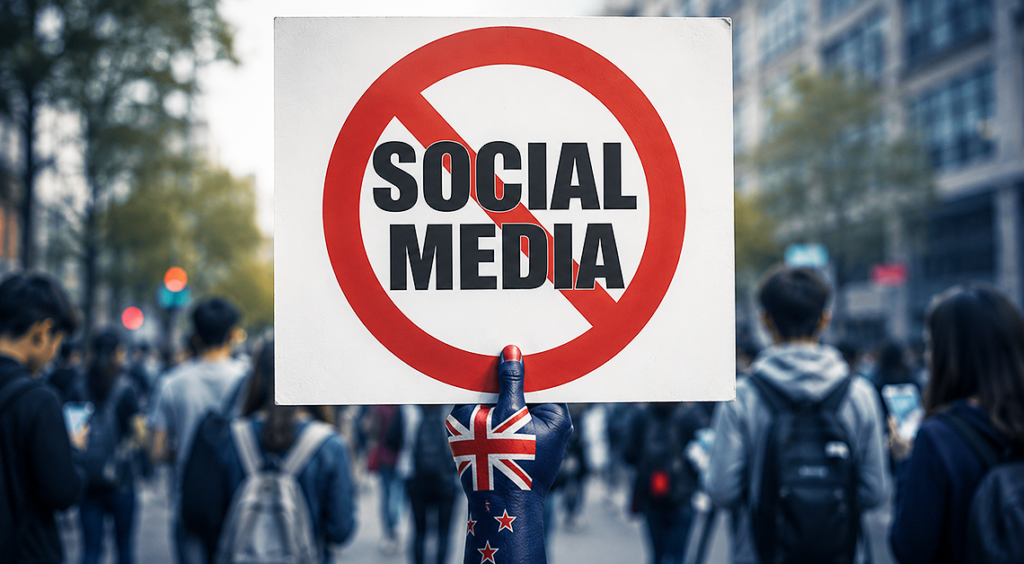
Synopsis
Prime Minister Christopher Luxon is pushing legislation to restrict social media access for children under 16, citing concerns about harmful content and addictive technology.
Social media in New Zealand will soon ban children below 16 years from having accounts on social media sites that are designed for children. This follows the restrictions in Australia, which were enforced in December 2025.
Prime Minister Christopher Luxon announced the Online Safety (Minimum Age and Child Safety Risk Assessment) Bill on August 24. This Bill would require the social media to take a “reasonable step” to verify the users’ ages.
The non-eligibility organisations would be fined up to 10% of the global revenue. This Bill would not target the children and their parents. The violation responsibility would be majorly faced by the social media sites.
Age Checks Become the Central Requirement
New Zealand’s social media ban proposal contains several options for verifying the ages of the users. It includes checking existing account information, estimating the ages through facial recognition and using digital ID documents.
The initial application of the age assessment would primarily focus on the high-risk social media software like Instagram, TikTok, Snapchat, and Facebook, according to the government. The proposal suggests that messengers, online games, productivity apps, and artificial intelligence software would be excluded from the same level of scrutiny.
One-third of New Zealand’s 13 to 17-year-olds are spending 5 hours every day on social media, according to Luxon. The government cited the danger to young people from hazardous content, loss of sleep, and detrimental effects on study, family time and mental health.
Australia Sets the Regional Precedent
New Zealand’s social media ban is inspired by Australia’s Social Media Minimum Age which will be enforced from December 10, 2025. The country’s e-Safety Commissioner released a report in January, following the enforcement of the Social Media Minimum Age law. It determined that the social media companies had disabled 4.7 million accounts of underage users in the first half of December.
The Australian law requires the social media sites taking “reasonable steps” to keep younger than 16-years-olds from opening accounts on their platforms. Similar to New Zealand’s proposed legislation, the Australian law does not target children and their parents but primarily focuses on the companies.
New Zealand’s proposal would add another layer of scrutiny for enforcing the social media companies’ age assurance and child-safety obligations for businesses operating in both Australia and New Zealand.
The UK has also announced its plan to restrict access to particular social media platforms for below 16 years and impose additional restrictions for those aged 16 and 17 from spring 2027.
Political opposition to New Zealand’s social media ban proposal.Political opposition to New Zealand’s social media ban proposal.
New Zealand’s social media ban proposal faces political opposition from some quarters. New Zealand First and ACT parties are against the motion, while the main opposition Labour Party supports the social media and internet changes.
The Online Safety Bill will not be voted on until New Zealand’s general election in October 2026.
Source: Startup Daily

Pooja Malik is a business journalist with over six years of experience covering startups, entrepreneurship, and emerging trends. She has previously worked with leading media platforms such as YourStory Media and BW BusinessWorld, where she reported on business, policy, and market developments. Currently, she serves as Editor at The Inspirepreneur Magazine, where she writes and edits stories across business, lifestyle, and travel, with a focus on clarity, accuracy, and reader relevance.
You Might Also Like

Australia’s Job Market Slows Down but Remains Resilient

AgriProve: Pioneering Soil Carbon Projects and Carbon Credits in Australia
