


Samsung Debuts 400-Layer AI Memory Chip

Synopsis
The next-generation BV-NAND technology promises higher storage density, improved performance and significantly better energy efficiency for AI workloads.
Key Highlights
- Samsung Electronics has introduced its new V10 Bonding V-NAND (BV-NAND) memory technology.
- The new chip has more than 400 layers and uses a new wafer-bonding design.
- Samsung also showcased its zHBM and zNAND-O memory concepts.
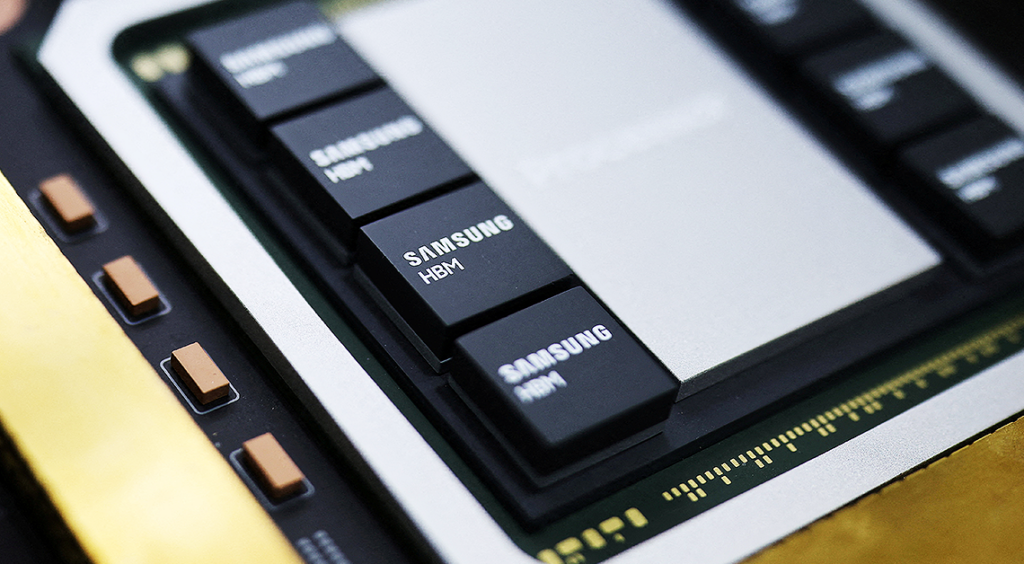
Samsung Electronics has unveiled its latest AI memory technology as it looks to strengthen its position in the growing AI chip market.
The company introduced its V10 Bonding V-NAND (BV-NAND) prototype at the Future of Memory and Storage (FMS) conference in Santa Clara, California.
The new memory chip has more than 400 layers and uses a wafer-bonding design that packs more data into the chip while improving its performance.
Samsung revealed the technology as demand for faster, higher-capacity memory continues to rise. As AI services become more widely used, they require memory that can process longer amounts of data quickly. NAND memory is also used in everyday devices, it’s not just smart phones.
Samsung Introduces New Memory Designs
Samsung said its new BV-NAND technology offers around 58% higher memory density than its previous V9 NAND. It also delivers faster read and write speeds and better overall performance while using less power.
The company also presented concept models for zHBM and zNAND-O, giving a glimpse of its future memory plans.
Samsung said zHBM places memory directly above AI processors instead of beside them. This shortens the distance data has to travel, helping improve speed while reducing power use.
According to the company, its wafer-bonding technology could deliver more than 10 times the memory density of current HBM5 technology, improve energy efficiency by three times, and cut thermal resistance by more than half.
AI Demand Continues to Support Memory Market
Some investors think that the slower smartphone sales in China could reduce demand for memory. However, strong analyst demand from the AI sector will continue to support the market.
Last week, Samsung said long-term customer agreements could eventually account for 60% to 70% of its memory sales.
Citi analysts also said inventories of both DRAM and NAND memory chips remain below historical levels despite concerns about softer demand in some markets.
Source: Reuters
At Inspirepreneurs Magazine, covering entrepreneurship, business failures, and the human stories behind the world's most ambitious founders. She writes at the intersection of strategy and storytelling.


