


The Cotton On Comeback: How an Australian Fashion Giant Recovered From Failure
Synopsis
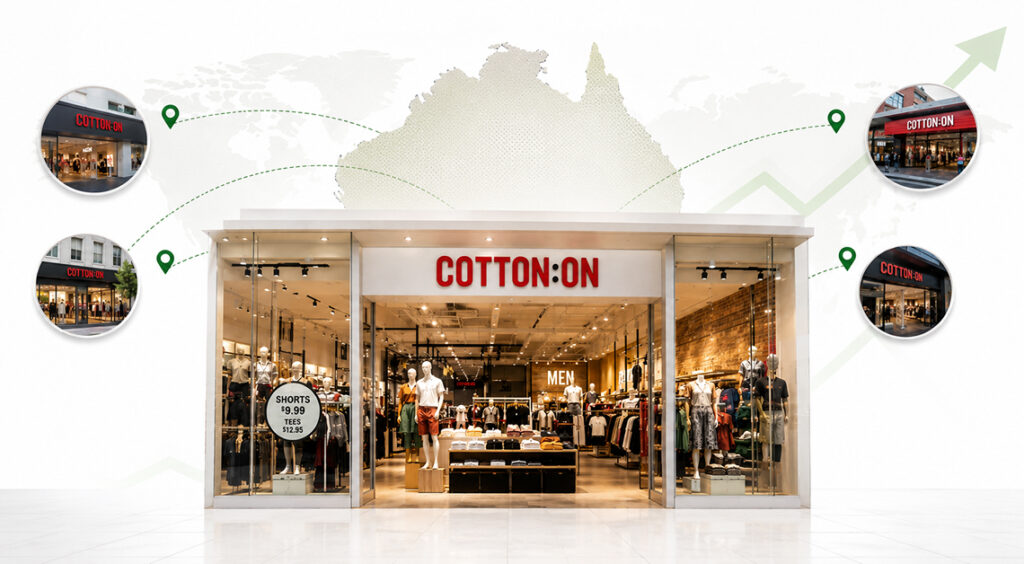
Australia’s Cotton On faced slowing sales growth, failed international markets, rising retail costs, and pressure from e-commerce competitors during the early 2010s. The company struggled under more than 900 physical stores and expensive global operations. However, Cotton On later rebuilt its business through a major digital transformation strategy. From investing $40 million AUD into automated logistics infrastructure to expanding online retail operations and restructuring its global business model, the Australian fashion retailer successfully transformed itself into a stronger omnichannel company. This case study explains how Cotton On recovered after one of its most difficult business periods.
Cotton On Group took its slowing sales along with failed international expansion and rising retail costs to the point where, after enduring a $1 million AUD regulatory loss, those close to the organisation were convinced it could not sustain its place globally.
Acquired expensive shopping mall leases, ran oversized retail operations and became too reliant on stores at a time when ecommerce was taking off. Multiple global markets faltered, growth slowed precipitously and online-first rivals began eating the lunch of traditional retail fashion names. But Cotton On was ultimately able to rederive its business model.
The Australian retailer, however, marked a turn away from continuing lengthy physical expansion and shifted to digital commerce, centralised logistics, operational efficiencies and data-led retail systems. More importantly, helped it pivot from being a partially lumbering brick-and-mortar retailer to a much more balanced omnichannel fashion concern The Cotton On case study details the brand’s recovery from a challenging period in retail and how it transformed into a fashion success story that is one of Australia’s largest private brands.
About Cotton On
Founded in 1991 by Nigel Austin in Geelong, Victoria, Cotton On It all started with a basic idea, to offer low-cost apparel for youth consumers. The company slowly grew from one fashion label into several retail brands; Cotton On Kids, Typo, Factorie, Rubi, Supré and Cotton On Body. The retailer quickly spread across malls and internationally during the rise of fast fashion.
From the peak of its expansion, Cotton On had over 900 stores worldwide. Although this approach allowed the company to grow at a rapid pace, it led to big operational strains when consumer shopping behaviour began moving online.
Following a very challenging business decade in the early-to-mid 2010s, the company ultimately pivoted and remade itself with a strategy almost entirely centred around logistics, digital commerce and operational excellence.
On That Day Cotton On Realised Its Old Way Was A Blunder
The biggest turning point for Cotton On was when they discovered their legacy approach to retail expansion was no longer viable. The retailer had expanded aggressively over several years with new option shopping mallsmanyernational markets. But the growth of online shopping transformed consumer behaviour much quicker than many traditional retailers anticipated.
Consumers increasingly preferred:
- Mobile shopping
- Home delivery
- Online browsing
- Faster product discovery
- Digital discounts
Meanwhile, online-first retailers were benefiting from lower running costs as they had much less investment tied into expensive physical spaces. Cotton On recognised that a continuation of aggressive brick-and-mortar expansion would only add operational pressure. But this meant that for long-term sustainability, the company had to completely rethink the way in which it ran its business. It marked the start of Cotton On’s turnaround plan.
The $40 Million Logistics Gamble
Instead of focusing on opening more stores, one of the company's major recovery decisions came in terms of investing heavily into logistics and digital infrastructure. Woolworths spent an estimated $40 million AUD on a top-of-the-line automated international connecting hub in Avalon, Victoria for Cotton On. This was to become one of the most critical investments on the path to recovery.
This attached the new logistics centre where Cotton On was able to process and manage millions of online orders much more efficiently. Then rather than just using physical retail stores as a crutch towards growing, the company began constructing systems that are meant for e-commerce in the 21st-century.
The investment also improved:
- Inventory management
- Delivery efficiency
- Online order processing
- Supply chain coordination
- Multi-brand operations
This was a significant change in mindset for the retailer. Cotton On acted like an omnichannel retailer more than it did a traditional mall-based fashion chain. The logistics investment became one of the pillars supporting the recovery for the company in question.
The Cotton On Group shifted to digital commerce
Cotton On set itself on aggressively expanding its digital operations when it found out how retail was changing at an incredibly fast pace through e-commerce. The company combined its brands onto more robust digital systems, investing in websites, digital shopping experiences and online fulfilment.
This enabled Cotton On to better compete against the online-only companies in clothing. Retailers did not wait for footfall; instead, they started serving customers directly via online channels. It also enabled better logistics systems that allowed consumers to browse digitally, shop across Cotton On brands, and receive delivery services more quickly.
The organisation further developed customer limitations through digital marketing campaigns and e-commerce-based retail. This transformation has enabled Cotton On to tighten its reliance on physical locations while more swiftly altering or altering consumer behaviour, alongside opening dozens of new outlets across the globe. The business evolved into a leaner, more efficient machine positioned for the future of retail.
Supré acquisition proved to be a massive turning point
The second solid step in Cotton On’s recovery came by way of the purchase of Supré. Supré was in the commercial sector and it had major operational problems at the time. The brand had been generating a loss and its short-term future in the Australian fashion industry was uncertain.
The business was acquired by Cotton On in 2013 and merged into its own retail infrastructure. Rather than as a standalone operation, Cotton On instead assimilated Supré into its broader logistics operations and supply chain. Instead, it helped modernise the floundering retailer while lowering operating costs.
The purchase revealed that Cotton On had revamped how it did business. Instead of emphasising store growth alone, it quickly took a more business-minded approach with the use of centralised systems and operational efficiency to drive performance between its various brands. Supré had ultimately found itself nestled into the wider
The Cotton Unified on Retail System
It unified its brands under a single ecosystem Cotton On’s path to recovery also involved connecting all of its retail brands into one cohesive ecosystem.
The company also integrated a clutch of brands, including:
- Cotton On
- Cotton On Kids
- Cotton On Body
- Factorie
- Typo
- Rubi
- Supré
This enabled customers to seamlessly switch between different brands via shared digital systems and loyalty programs.
Cotton On to Now Files follow up on its launch of Cotton On & Co perks and rewards structure as designers seek out ways to trial customers at a higher rate by also FutureMore collecting consumer shopping data into the tune. The strategy gave insights into customer purchase behaviour netted out across all brands, and fostered the retailer’s engagement within its own digital ecosystem.
They had unshackled the company from what felt like a collection of retail chains that were sprouting in places disconnected from each other. Instead, it established a more centralised, data-driven retail framework focused on sustained digital commerce expansion. This soon became another major factor in the recovery of the company.
Cotton On Cuts Dependence on Feeble Markets
Having previously tried and failed to expand internationally, Cotton On was very cautious in its management of global operations. It narrowed its reliance on the weaker global markets and concentrated more on the regions where its model excelled.
Cotton On became interested in how a little more operational efficiency and some measure of sustainability would spread the market gently rather than aggressively chasing expansion everywhere. The retailer also revamped the use of its brick-and-mortar stores.
The true test is to see if instead of just seeing stores as sales locations, the company started considering many spaces across its increasingly broad fulfilment and omnichannel network. Outlets began to support technological operations instead of running separately from it. This allowed Cotton On to accelerate their performance while keeping up with the trend of modern retail. This taught the company that mere expansion is not enough. Instead, smarter infrastructure and improved logistics took precedence over opening more locations.
Revenue Growth Returned
The new strategy at Cotton On matured and performance improved in both the profit line and its ability to pay dividends. Based on retail industry estimates and market analysis, Cotton On Group revenues later exceeded:
- $2.12 billion AUD in 2024
- $2.28 billion AUD in 2025
While striking a more balanced approach between its physical and digital commerce channels, the retailer also expanded its global footprint in 22 nations on a gradual basis.
Cotton On managed to keep its entire chain of stores, logistics systems and online shopping operations together instead of just being reliant on mall traffic. The recovery of the company demonstrates how even large-scale disruption of entire industries may still spare traditional retailers if they adapt to shifting consumer behaviour in time. Cotton On managed to turn itself around and eventually became one of the great retail recovery stories in Australia.
Nigel Austin’s long-term strategy would eventually pay off
As Cotton On stayed private, founder Nigel Austin was in a position to exercise significant control over the retailer during its tough year and recovery. Cotton On could rethink its strategy more boldly than public companies regularly pressured by shareholders every quarter.
Rather than pursue short-term retail growth, Austin concentrated on rebuilding the firm's operational backbone. Before Cotton On bounced back, it had turned Austin into one of Australia's wealthy retail entrepreneurs. According to Forbes estimates, his net worth later grew to US$1.36 billion. Small operational tweaks were proof of how some businesses that look stuck in old models are saved by the canny business owner.
Follow Inspirepreneur Magazine for daily global business news

At Inspirepreneurs Magazine, covering entrepreneurship, business failures, and the human stories behind the world's most ambitious founders. She writes at the intersection of strategy and storytelling.


