


What Makes Downer Group a Pillar of Infrastructure Services?
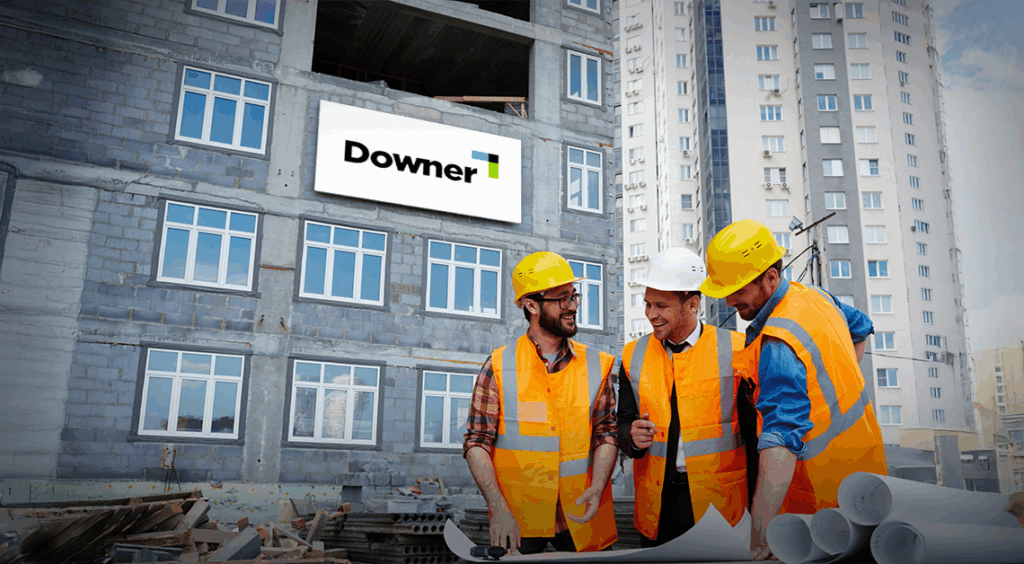
Understanding Downer Group and Its Market Position
Downer Group stands as one of Australia and New Zealand's most significant infrastructure and integrated services providers. Listed on both the Australian Securities Exchange and the New Zealand Stock Exchange as Downer EDI Limited (ASX: DOW), this publicly traded company represents a cornerstone of the ASX 200 index. With approximately 26,000 employees across more than 700 sites, Downer Group is a leading force in delivering essential infrastructure services that improve the lives of millions of people across the Asia-Pacific region, South America, and southern Africa.
The company's fundamental purpose is straightforward yet powerful: enabling communities to thrive. This guiding principle drives every decision, project, and initiative that Downer undertakes, demonstrating a commitment that extends far beyond commercial interests to encompass genuine community impact and social responsibility.
A Rich History Spanning Over 160 Years
The foundations of Downer Group trace back to the 19th century, with roots extending from multiple heritage companies that merged to create the modern organisation we know today. Arnold Downer, a visionary civil engineer, founded Downer and Company on 5 July 1933 in Wellington, New Zealand, alongside colleagues George McLean, Billy Mill, and Arch McLean. What began as a small engineering firm has evolved into a global infrastructure powerhouse.
The company's legacy includes contributions from several significant heritage businesses. Walkers Limited was established in 1863, when John Walker set up the Union Foundry in Ballarat, which eventually produced railway rolling stock and ship components. Evans Deakin Industries, founded in 1910, became renowned for engineering and shipbuilding excellence. In 1998, Downer was first listed on the Australian Securities Exchange, marking a significant milestone in its development. The pivotal 2001 merger between Downer and Evans Deakin Industries created Downer EDI, which established the foundation for today's comprehensive service offerings.
Over the decades, Downer has completed iconic infrastructure projects, including the Homer Tunnel (1935-1940), the Rimutaka Tunnel (1951-1955), and, more recently, major works including the City Rail Link in Auckland, the High Capacity Metro Trains for Sydney, and the Newcastle Light Rail. These projects demonstrate the company's capacity to deliver transformational infrastructure across both countries.
Core Business Divisions and Service Offerings
Downer Group operates through several interconnected service divisions that collectively create an integrated approach to infrastructure and facilities management.
Transport and Infrastructure Services
The Transport division comprises road services, rail and transit systems, and infrastructure projects. Downer delivers comprehensive solutions, including earthworks, civil construction, asset management, maintenance, and stabilisation services across Australia and New Zealand. The company maintains the national road network, manages pavement assets at ports and airports, and manufactures bituminous products. In rail services, Downer designs and constructs light rail, heavy rail, signalling infrastructure, track systems, and station works. This division reflects Downer's expertise in delivering complex projects within live operating environments.
Utilities and Energy Services
The Utilities division serves customers across the power, gas, water, communications, and renewables sectors. Downer designs, builds, operates, and maintains critical infrastructure, including electricity and gas networks, wastewater treatment plants, water assets, wind farms, solar farms, and telecommunications networks. The company's involvement in the National Broadband Network rollout further demonstrates its technological capabilities in modern communications infrastructure.
Facilities and Social Infrastructure Services
Through its substantial Facilities division, which includes the Spotless Group Holdings business (88 per cent owned), Downer delivers integrated facilities services to customers across defence, education, health, government, and hospitality sectors. This division operates across Australia and New Zealand, providing essential support services that keep critical institutions functioning efficiently.
Asset Services and Defence
Downer's Asset Services division provides comprehensive support to oil and gas, power generation, and industrial customers. The company recently secured a significant $750 million contract with Chevron Australia, valued over a potential 15-year term, to deliver maintenance and asset management services at the Wheatstone and Gorgon facilities in Western Australia. This contract exemplifies Downer's strength in providing long-term, value-based partnerships with major energy sector clients.
The Defence business is another critical component, offering professional, managed services to the Australian and New Zealand defence forces. Recent wins include a $220 million defence contract commencing September 2025, reflecting Downer's role as a trusted sovereign defence partner.
The Downer Difference: Culture and Performance Excellence
In July 2024, Downer launched a high-performance culture initiative called "The Downer Difference," built on three core pillars: accountability, customer centricity, and inclusion. This cultural blueprint seeks to embed values and behaviours that define how the organisation works and thinks.
Safety remains paramount within Downer's operations. Zero Harm is embedded in the company's DNA, representing an unwavering commitment to preventing workplace injuries and environmental incidents. Each division operates a certified Zero Harm management system aligned with occupational health and safety standards, with the Downer Board Zero Harm Committee providing oversight of compliance and performance.
Financial Performance and Strategic Transformation
Downer's financial trajectory demonstrates the success of its transformation strategy. For the financial year ending 30 June 2025, the company delivered statutory net profit after tax of $149.1 million, representing an 81.6 per cent increase from the prior year. Underlying earnings before interest, tax, and amortisation reached $474.2 million, with the underlying EBITA margin of 4.4 per cent marking the company's most substantial full-year margin in more than a decade.
The company's transformation program has delivered cumulative annualised gross cost savings of $213 million, exceeding the initial $200 million target. Cash conversion has reached 97.9 per cent on a normalised basis, reflecting disciplined execution across project delivery and operational efficiency. Net debt to EBITDA has improved to 0.9 times, demonstrating a strengthened balance sheet positioned for sustainable growth.
Commitment to Sustainability and Community Impact
Downer's commitment to sustainability extends beyond environmental management. The company operates with explicit recognition of social responsibility across its operations. In New Zealand, Downer spent $75 million with Māori- and Pasifika-owned businesses in the last financial year through its support for Amotai NZ. This organisation connects buyers to indigenous enterprises. The Downer Donate programme contributes $120,000 annually to charities and community organisations nominated by employees.
Downer's work-ready programmes, developed in partnership with government agencies including Te Puni Kōkiri and the Ministry of Social Development, have supported over 1,100 programme graduates since 2011. These initiatives include Downer Basic, designed for Work and Income clients seeking employment in infrastructure sectors, and Whakatipu Tētēkura, targeting Māori school leavers. Nearly one in four Downer employees in New Zealand identify as Māori, and one in ten as Pasifika, reflecting the company's commitment to creating workplaces where diverse populations can genuinely thrive.
Operational Scale and Geographic Reach
Operating across more than 700 sites primarily in Australia and New Zealand, Downer maintains a significant operational fleet. The company operates approximately 800 light vehicles, 1,020 heavy vehicles (including trucks and buses), and 580 specialised mobile plant items dedicated to infrastructure delivery across national and urban road networks, rail systems, and utility corridors.
Downer's geographic reach extends to strategically essential markets in the Asia-Pacific region, with select operations in South America and southern Africa. This international presence strengthens the company's portfolio whilst maintaining core focus on Australian and New Zealand markets, where infrastructure investment continues to drive growth opportunities.
Strategic Positioning in Infrastructure Markets
Downer operates within sectors closely connected to investment drivers, including population growth, urbanisation, national security priorities, and decarbonisation initiatives. These mega-trends create sustained demand for the company's integrated capabilities across roads, rail, ports, airports, power, gas, water, telecommunications, health, education, defence, and government sectors.
The company's portfolio simplification strategy, completed in 2025, has sharpened its focus on core urban services markets where long-term trends favour integrated service providers. By divesting non-core assets and exiting underperforming business lines, Downer has positioned itself for sustainable medium-term growth whilst maintaining financial discipline and shareholder returns through on-market share buyback programmes.
The recent Chevron contract win and expanded defence sector engagements demonstrate Downer's capacity to secure and deliver major long-term contracts in competitive markets. Chief Executive Peter Tompkins emphasises that such agreements reflect Downer's industry expertise, track record of performance improvements, and commitment to collaborating with customers to create meaningful community opportunities and support local and indigenous businesses.
Frequently Asked Questions
What does Downer Group do?
Downer Group is a leading integrated services provider delivering infrastructure, utilities, facilities, and asset management services across Australia and New Zealand. The company designs, builds, operates, and maintains critical infrastructure, including roads, rail, power networks, water systems, telecommunications, defence facilities, and other essential infrastructure supporting community wellbeing and economic growth.
How many employees does Downer Group have?
Downer Group employs approximately 26,000 people distributed across more than 700 sites, primarily in Australia and New Zealand, with additional operations in the Asia-Pacific region, South America, and southern Africa. This workforce makes Downer one of Australia and New Zealand's largest private sector employers.
Is Downer Group listed on the stock exchange?
Yes, Downer EDI Limited is publicly listed on both the Australian Securities Exchange (ASX: DOW) and the New Zealand Stock Exchange. The company is an ASX 200 constituent, making it one of Australia's 200 largest publicly traded companies by market capitalisation.
What was Downer's recent $750 million Chevron contract about?
In November 2025, Downer was awarded a $750 million maintenance and support services contract by Chevron Australia, with a potential term of up to 15 years. Commencing January 2026, the agreement covers maintenance, asset management, and capital projects for non-process infrastructure at Chevron's Wheatstone and Gorgon facilities in Western Australia.
What is Zero Harm at Downer Group?
Zero Harm is Downer's core safety and environmental commitment, embedded throughout the organisation's culture. It represents a goal to achieve zero work-related injuries and ecological incidents through strong leadership, effective risk management, continuous improvement, and unwavering commitment to preventing any workplace injury or environmental harm that the company considers unacceptable and preventable.
_________
Explore the latest insights on infrastructure, business innovation, and community-driven enterprises at Inspirepreneur Magazine. Discover inspiring stories of leaders and organisations transforming industries and creating lasting impact.

At Inspirepreneurs Magazine, covering entrepreneurship, business failures, and the human stories behind the world's most ambitious founders. She writes at the intersection of strategy and storytelling.


