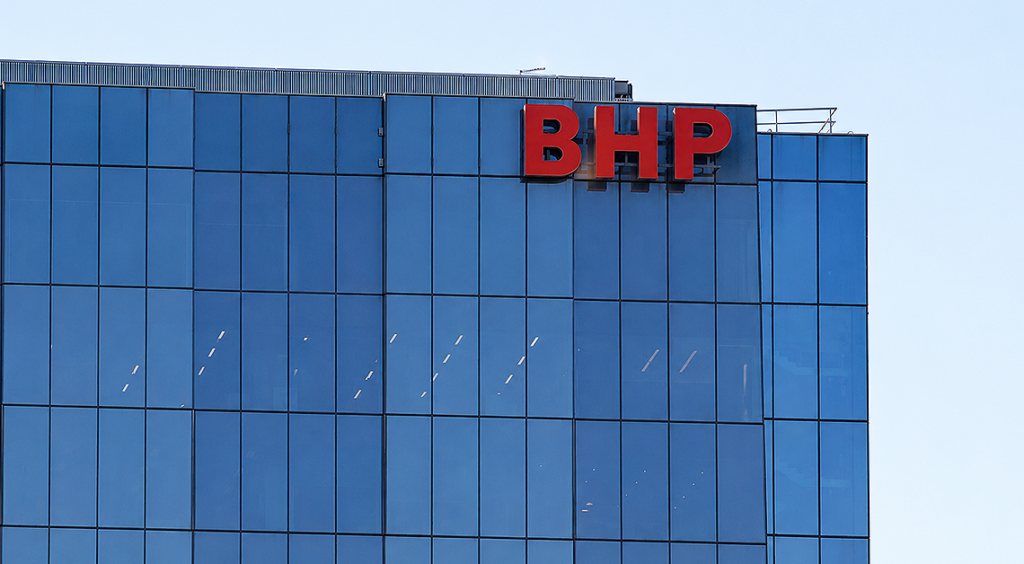
BHP Reports Highest Dividend in Four Years as Copper Drives Record Earnings
BHP delivered better than expected FY26 results as record copper prices boosted profits, supported a higher dividend and strengthened the miner's long-term growth outlook.


Recommended Articles
British entrepreneur James Dacombe became Europe’s youngest self-made billionaire after Olix raised $312 million at a $3.3 billion…
A Virgin Australia flight aborted take-off after a Qantas plane began crossing the runway, prompting another safety investigation…
Recommended Articles
Australia is considering mandatory low-carbon fuel blending as part of a broader strategy to improve fuel security, support…
KPMG’s audit scandal is intensifying scrutiny of Australia’s Big Four, raising concerns over auditor independence, corporate governance and…
Recommended Articles
Music publisher Round Hill Music is suing Anthropic and Suno over alleged unauthorised use of copyrighted lyrics to…
Nvidia has pledged up to $105 billion to support OpenAI’s Ohio AI data centre project and invested $1.5…
Recommended Bloopers
startup failure · Moodswing
Jake McKeon’s Moodswing showed strong early growth, reaching 100,000 users and attracting investor interest. But the social networking startup ultimately failed as it struggled…
A$40K LOST
founder failure · gaming · 2004
Before building VGW, Laurence Escalante founded White Knight Games, a Christian video-game company that struggled with distribution, inventory and publishing problems.
A$250K AT RISK
Fashion Tech • 2019
Shoes of Prey grew from a bootstrapped startup into one of Australia’s most high-profile fashion-tech companies, raising over US$25 million before its business model,…
A$36M LOST
Recommended Articles
Alphabet has mandated banks for its first Australian dollar bond issue as global tech companies increasingly turn to…
The Australian wellness company has locked in a $25 million global kava deal, supporting wider distribution and its…
Recommended Articles
Victoria has secured hosting rights for three of the next four Australian Open golf championships, including the 2027…
Turkey are set to play their first FIFA World Cup match in 24 years when they take on…
Recommended Articles
Night School Studio, creator of the Oxenfree series, will close alongside Moonloot Games as Netflix narrows its gaming…
Food and grocery delivery workers will be guaranteed at least A$31.30 an hour, above the national minimum wage,…
Recommended Articles
Property investor Centuria Capital has acquired a 50% stake in two A-grade Sydney CBD office assets from a…
House prices in Australia’s two largest cities fell sharply in June, marking the biggest downturn since 2022 and…
Recommended Case Studies
A structured overview of Nanosonics, detailing its trophon platform, founder journey, revenue model, and global scale, with insights into how the company…
This case study examines TechnologyOne’s transition from financial software provider to SaaS ERP company, highlighting its single-platform architecture, government and education focus,…
By combining technology with broker distribution, Prospa reduced approval times and aligned lending with real business cash flow.

BHP delivered better than expected FY26 results as record copper prices boosted profits, supported a higher dividend and strengthened the miner's long-term growth outlook.
Valley Eyewear has entered liquidation following a court-ordered sale with administrators seeking buyers for the business, inventory and intellectual property while operations continue.
By Vishal Pratap 5h ago

By Vishal Pratap 6h ago
TPG Global has proposed acquiring EQT Holdings for A$657.8 million, with the offer still subject to due diligence, approvals and EQT board recommendation.
By Shivangi 6h ago

By Vishal Pratap 6h ago