


Nissan Issues £4bn Loss Warning as Sales Falter and Costs Rise
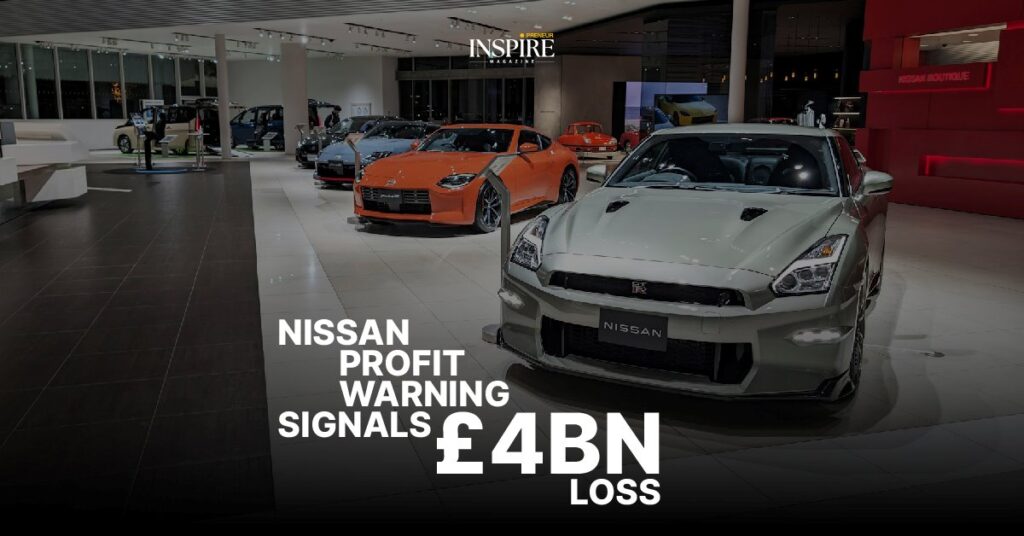
Nissan has issued a significant profit warning, announcing it expects a £4bn loss this year as it navigates rising costs, tighter competition, and the ongoing effects of tariffs on its global business. The Nissan profit warning puts fresh focus on the Japanese firm's efforts to stabilise after several turbulent years marked by management changes and shrinking sales.
Nissan Profit Warning Marks Sharp Shift in Outlook
Japan’s third-largest car manufacturer had previously forecast much smaller losses, but now faces almost ten times its earlier predicted deficit. Nissan’s £4bn loss comes on the back of a "competitive environment and deterioration in sales performance," with the company expecting global sales this year to reach just 3.35 million vehicles, down from 5 million in 2019.
New CEO Ivan Espinosa, who took the helm last month after a period of executive turmoil, made the announcement. Espinosa stressed that the revised outlook stemmed from a broad review of Nissan's performance plus a heavy impairment in the value of its production assets worldwide. "We are taking the prudent step to revise our full-year outlook, reflecting a thorough review of our performance and the carrying value of production assets. We now anticipate a significant net loss for the year," he said.
Asset Impairment Shakes Financial Standing
Most of the £4bn loss is due to a £2.6bn impairment related to the falling value of factories and other assets. Nonetheless, Nissan insists it retains "a solid cash position" in spite of market worries about mounting debts. However, confidence in Nissan's financial footing took a hit when ratings agency Moody’s downgraded its debt over the winter, pointing to uncertainty about the company’s ability to recover. Nissan’s struggles are compounded by a sharp decline in global sales, which have dropped significantly from their 2019 levels.
Rising Costs and Tariffs Add to Nissan’s Challenges
While the Nissan profit warning does not specifically call out US tariffs, industry analysts say these new costs weigh heavily on Japanese carmakers. The 25% tariffs on imported vehicles, introduced in recent years, increase expenses and reduce profits for brands like Nissan that export vehicles to the US.
According to Tatsuo Yoshida, a Bloomberg Intelligence analyst, Nissan is especially vulnerable. "If this situation goes on for ever, it can be a death blow for Nissan, in a sense that it will run out of cash and default," Yoshida told AFP before Nissan’s latest update.
Despite these challenges, Nissan highlights that some US manufacturing provides limited protection against tariffs. Of the 924,000 vehicles Nissan sold in the US last year, more than half were made at the company's large plant in Smyrna, Tennessee. Even so, Channel News Asia reports that Nissan has already scaled back production of its popular Rogue SUV in Japan due to the tariff situation.
Downsizing and Electric Ambitions
Nissan's turnaround plan includes cutting 9,000 jobs worldwide, a move intended to keep costs under control as the company makes a decisive shift from combustion-engine models to electric vehicles. The manufacturer faces stiff competition from both established rivals and new entrants into the EV market.
Despite these headwinds, Espinosa remains optimistic, pointing to a "strong product pipeline" and "the determination to turn around Nissan in the coming period." The company aims to reverse declining sales and sharpen Nissan's competitive edge in a rapidly evolving market by investing in new electric models.
Management Upheaval Adds to Uncertainty
Nissan’s leadership changes have compounded instability. Espinosa took over after former CEO Makoto Uchida was ousted, a move that followed failed merger talks with Honda earlier this year. The shadow of Carlos Ghosn, ex-CEO who was arrested and later fled to Lebanon, still hangs over the company, with the resulting board infighting playing out for years.
These disruptions have left Nissan’s turnaround efforts under sharp scrutiny from both industry rivals and potential investors. Rumours swirl that Nissan’s challenges could invite a takeover bid, possibly even from Honda or Taiwan's Foxconn. The latter, famously known for assembling iPhones in China, has expressed interest in the automotive sector and could see value in acquiring Nissan shares.
Nissan’s European Operations Also Under Pressure
The fallout from Nissan’s global struggles is impacting its key European plant in Sunderland, UK. Once hailed as a success story, the Sunderland factory suffered a £63m loss in the financial year ending March 2024, reversing a £32m profit just a year earlier. The Sunderland facility, Nissan’s only European assembly plant, provides further evidence that the challenges are truly global.
Nissan’s £4bn loss highlights the uncertainty and transition facing the car industry at large, not least as pressure mounts to adopt new technologies and adapt to changing global trade conditions. strategy will succeed where previous efforts have stumbled.
Source
The Guardian - Nissan warns of £4bn loss as costs rise and Trump tariffs loom
Explore more entrepreneurial insights and success stories at Inspirepreneur, your go-to magazine for business innovation and leadership.

At Inspirepreneurs Magazine, covering entrepreneurship, business failures, and the human stories behind the world's most ambitious founders. She writes at the intersection of strategy and storytelling.
You Might Also Like

Supreme Court Questions if Trump Can Legally Impose Global Tariffs

Rose Byrne: A Portrait of Versatility and Entrepreneurial Spirit
