


Why Sydney Is Australia’s Hub for Generative AI Startups
Synopsis
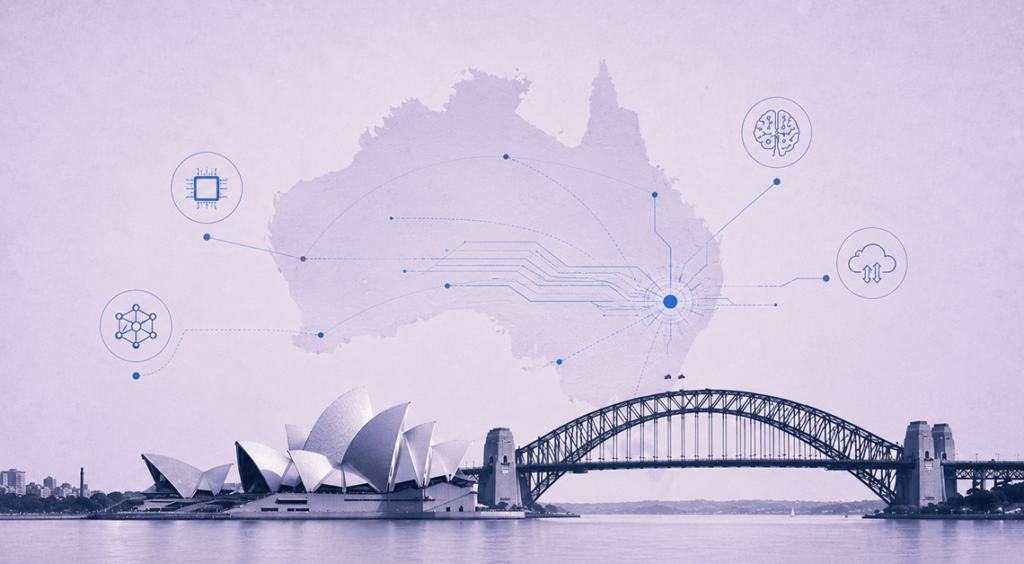
Sydney has emerged as Australia’s leading generative AI startup hub, driven by world-class universities, investor support, skilled talent and a thriving technology ecosystem attracting AI founders and global companies.
Sydney has always had the right ingredients for a thriving tech ecosystem: the universities, the capital, the talent, the density. What has changed in recent years is how those advantages have converged. The city is no longer simply producing promising AI startups-it is emerging as Australia's leading hub for generative AI innovation. The data reflects this shift, as does the growing attention from global investors, entrepreneurs and technology companies choosing Sydney as their base for expanding AI operations across the Asia-Pacific region.
The Numbers First
More than 200 active AI companies operate across Greater Sydney, almost half of Australia's total 544 AI companies are concentrated in a single city. Commonwealth Scientific and Industrial Research Organisation (CSIRO) and the Tech Council of Australia's Geography of Australia's Digital Industries report found Sydney to be home to 119,636 digital professionals and 81 ASX-listed digital technology companies with a combined worth of around A$52 billion. Three-quarters of Sydney's AI companies have been operating for less than a decade, which tells you something about how quickly this trend has accelerated.
Nationally, Australian startups raised A$5.4 billion in 2025, up more than 30% on the previous year, and more than 60% of that funding went to companies with AI embedded in their operations. The federal government has committed A$2.5 billion to the National AI Plan, including A$362 million in targeted grant funding, A$47 million for a next-generation graduates program, and A$39.9 million to focus on strengthening the AI ecosystem through the National AI Centre, which is headquartered in Sydney.
Why Sydney, Specifically
What is the reason for Sydney’s popularity as a Gen AI hub? Professor Toby Walsh, Scientia Professor of Artificial Intelligence at UNSW Sydney, says, "Sydney is the capital of AI startups for Australia and this part of Australasia. It's amazing how entrepreneurial the students are when they come to the university, and there are also a lot of fantastic incubators here now. Something else that's changed in the past 10 years is access to venture funding, which has improved dramatically."
The university ecosystem is a genuine differentiator. The University of New South Wales (UNSW), the University of Sydney and the University of Technology Sydney (UTS) collectively produced more than 1,000 peer-reviewed AI publications in 2021 alone. UNSW's AI Institute has the largest concentration of academics working in AI of any institution in the country and it functions explicitly as a bridge between research and industry, "a front door to industry and government," as Professor Walsh describes it. Alongside UNSW, the Sydney Artificial Intelligence Centre at the University of Sydney, the Australian Artificial Intelligence Institute at UTS, and Macquarie University's Centre for Applied Artificial Intelligence are all producing work that gets commercialised, not just published.
Then there's the infrastructure Sydney has accumulated over time.
Ninety-one of Australia's 270 data centres are in Sydney, more than any other city in the country. Microsoft has committed A$5 billion to expand cloud and AI infrastructure in Australia and opened a multimillion-dollar innovation hub in Sydney. Amazon has announced an A$20 billion investment into Australian infrastructure over four years. OpenAI's announced A$7 billion AI factory and its Australian program are centred here.
The hyperscalers chose Sydney because the ecosystem was already there and by choosing it, they have made that ecosystem stronger.
What's Actually Being Built
The most visible example of Sydney's generative AI output is Leonardo.ai, the image and video generation platform built in Sydney that powers Canva's AI tools. Canva ranks third globally by unique monthly users behind only ChatGPT and Gemini, and its sophisticated generation tools were developed here. That's not a minor footnote in the global generative AI story.
Neara, founded in Sydney, builds AI-powered digital twins of power grid infrastructure used by almost 90% of Australian network utilities, with clients now spread across the US, UK and Europe.
Harrison.ai, which supports medical imaging analysis, is used by around 50% of Australian radiologists and operates in more than 40 countries. These aren't companies building for the domestic market and hoping to expand their Sydney-founded companies that scaled globally from day one.
Professor Walsh points to three areas where Sydney has significant global strength: robotics, AI in medicine, and fintech. "As a whole, Australia punches well above its weight in the AI sector," he says. "We are easily in the top 10, and by some metrics we are in the top five in the world. For a country of just 25 million people, that is quite remarkable."
The Cluster Effect
What makes Sydney more than just a collection of good companies is the density that produces unexpected connections. CSIRO's Data61, headquartered in Sydney, runs programs in AI for science, cybersecurity-AI intersection, and quantum-AI crossovers. The University of Sydney's new Australian Centre for Quantum Growth, funded under the National Quantum Strategy, is building exactly the kind of quantum-AI nexus that researchers see as the next significant frontier.
As CSIRO's Professor Aaron Quigley puts it: "There's nowhere else in the world that you're going to get a quantum company, a games company, and a cybersecurity company in such close proximity." The proximity matters because generative AI doesn't develop in isolation; it develops at the intersection of compute, domain expertise, data and capital, and Sydney has all four in closer physical proximity than anywhere else in Australia.
Tech Central, the precinct taking shape between Central Station and the CBD, is meant to formalise this cluster, bringing research institutions, startups, accelerators and enterprise tenants into a deliberate innovation district. The Sydney Startup Hub on Castlereagh Street runs alongside it as the operational home for early-stage companies working through the ecosystem.
Where Melbourne and Brisbane Stand
Neither city is irrelevant. Melbourne has genuine strength in biotech, medical AI and education, and Brisbane is emerging in resources and agriculture AI. But Sydney has the financial services sector, the headquarters density, the university research output, and the infrastructure concentration that generative AI companies specifically need. Most of the major global AI companies with Australian operations Google, Microsoft, Amazon, LinkedIn, OpenAI have their primary presence here, not in Melbourne or Brisbane, and that concentration shapes where talent flows, where deals get done, and where the next generation of founders sets up.
The Honest Caveat
Australia's AI ecosystem, including Sydney's, still faces the knowing-doing gap flagged by researchers: strong on research and readiness, slower to convert that into commercial output and AI-specific hiring at the scale needed to compete with the US, UK and parts of Asia. The talent pool is growing: 77,000 software engineers specialising in AI and machine learning nationally, with 1,790 AI-specialised graduates in 2025 alone, up 35% on 2023, but it remains thin relative to demand, particularly for people who've shipped generative AI products at scale.
What Sydney has, and what no other Australian city currently has in the same measure, is the combination of research depth, capital access, infrastructure investment and corporate density that gives generative AI startups a genuine running start. The question for the next few years is whether the talent pipeline grows fast enough to keep pace with it.
Sydney AI company numbers, CSIRO/Tech Council data, Toby Walsh quote, Aaron Quigley quote
- BeSydney — Sydney's tech super-cluster propels Australia's AI industry forward (confirms 200+ companies, 544 nationally, 119,636 digital professionals, A$52 billion ASX figure, both professor quotes):
- https://www.besydney.com.au/news-insights/sydney-s-tech-super-cluster-propels-australia-s-ai-industry-forward/
- IEEE Spectrum — same article syndicated, confirms all figures and Walsh quote:
- https://spectrum.ieee.org/ai-sydney
CSIRO primary reports
- CSIRO — The Geography of Australia's Digital Industries:
- https://www.csiro.au/en/research/technology-space/data/the-geography-of-australias-digital-industries
- CSIRO — Australia's AI Ecosystem Report 2023 (confirms 544 companies, clustering data):
- https://www.csiro.au/en/news/all/articles/2023/december/australia-ai-ecosystem
Microsoft, Amazon, hyperscaler investment figures
- Austrade — Microsoft opens new Innovation Hub in Australia (confirms 544 AI companies, Microsoft investment):
- https://international.austrade.gov.au/en/news-and-analysis/news/australias-advantage-in-the-age-of-ai
National AI Plan funding figures (A$2.5 billion, A$362 million grants, etc.)
- Department of Industry, Science and Resources — AI adoption in Australian businesses:
- https://www.industry.gov.au/news/exploring-ai-adoption-australian-businesses
At Inspirepreneurs Magazine, covering entrepreneurship, business failures, and the human stories behind the world's most ambitious founders. She writes at the intersection of strategy and storytelling.
You Might Also Like

Future-Proofing Your Finances: A Scientific Guide to Financial Forecasting

Asian stocks fall for third day as oil rises
