


US Debt Crosses $40T After Adding $20T Under Trump, Biden
Synopsis
America’s debt has doubled under Donald Trump and Joe Biden, reaching $40.047 trillion as rising social-safety-net and interest costs outpace revenue, with tax cuts adding to the pressure.
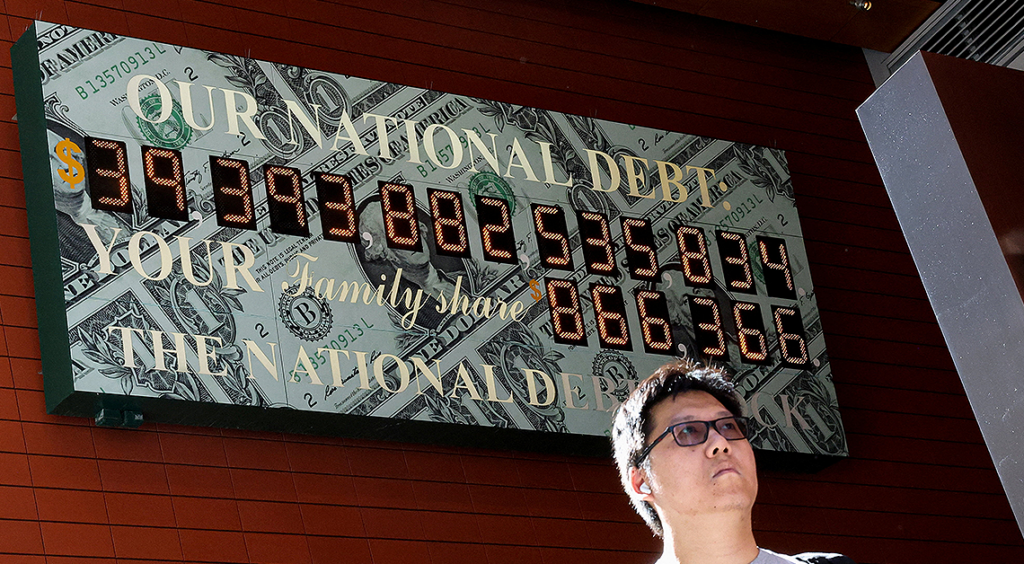
The United States' national debt has exceeded $40 trillion for the first time, highlighting growing concerns over the country's long-term fiscal outlook as government spending continues to outpace revenue.
According to the US Treasury Department, total public debt reached $40.047 trillion on Tuesday. It includes $32.266 trillion held by the public and $7.782 trillion in intra-governmental holdings.
The milestone comes less than five months after US debt crossed the $39 trillion mark and reflects years of rising deficits driven by pandemic-related spending, tax cuts, growing social welfare costs and higher interest payments.
Budget experts warn that without meaningful policy changes, the country's debt burden could continue to rise at an unsustainable pace.
Rising Borrowing Costs Add to Pressure
Analysts say mounting debt is increasing pressure on government finances as investors demand higher returns to buy US Treasury bonds. Higher bond yields raise borrowing costs for the government and often lead to more expensive mortgages, vehicle loans and business financing.
To ease pressure on long-term borrowing costs, Treasury Secretary Scott Bessent announced that the Treasury would double the size of selected long-term bond buybacks. President Donald Trump also renewed his call for lower interest rates, arguing that a strong US economy should support lower borrowing costs.
Mandatory Spending Remains a Key Challenge
Economists say the biggest drivers of federal spending remain mandatory programs such as Social Security, Medicare, Medicaid and veterans' benefits along with rapidly increasing interest payments on outstanding debt. Interest costs have now overtaken Medicare spending to become one of the largest items in the federal budget. It underscores the growing financial strain over the country.
Fiscal watchdogs have urged lawmakers to address the widening gap through a combination of spending reforms and higher revenue. They warn that continued borrowing could increase inflationary pressures, reduce fiscal flexibility during future crises and weigh on long-term economic growth if left unchecked.
Source: Reuters

Vishal is an experienced Editor at Inspirepreneur Magazine with key interests in artificial intelligence, eCommerce, entrepreneurship, lifestyle and startup sector. Prior to joining Inspirepreneur, he was a Content Writer cum Correspondent at Siliconindia Magazine, where he worked on Company Profiles, Cover Stories, Executive Profiles, Feature Articles and Thought Leadership content.
You Might Also Like
Nike Stock Plunges 20% After Disappointing Sales Forecast

UK Government Plans to Recognise Palestine State in September
