


Australia Expands AI Safety Research as Minister Warns of New Threats
Synopsis
The government has launched new AI testing and research projects to better understand risks posed by increasingly capable artificial intelligence models.
Australia has been stepping up research on cutting-edge artificial intelligence, after a new wave of initiatives and technical tie-ups by the federal government amid growing worries over the growing influence of more powerful AI systems.
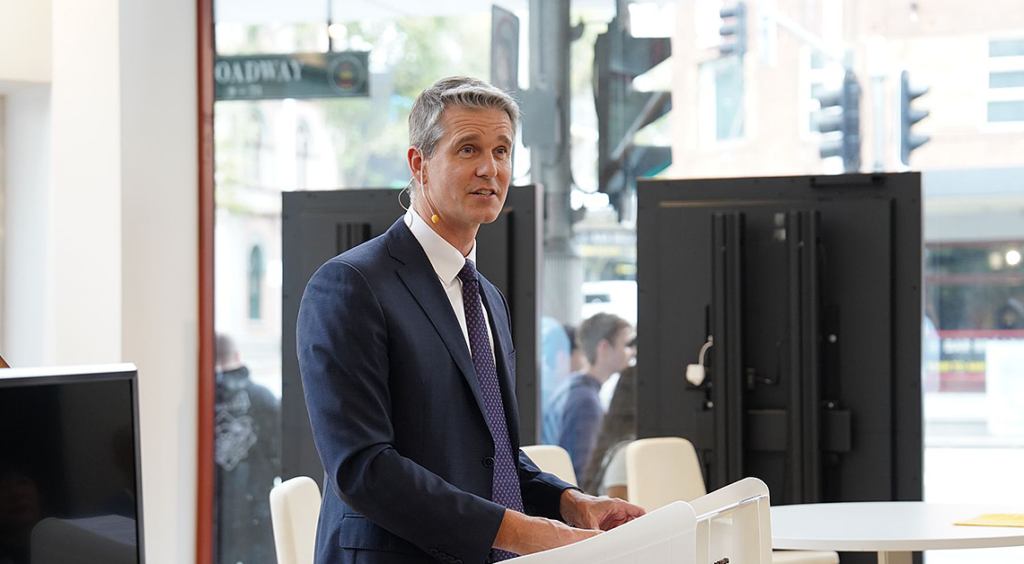
Speaking to the AI Safety Forum in Sydney on Wednesday, Assistant Minister for Science, Technology and the Digital Economy Andrew Charlton said some frontier AI models had been found to show deceptive characteristics or to manipulate results in testing which creators had not predicted, necessitating more caution before broad deployment.
Australia's government announced further research partnerships with CSIRO’s Data61 and the Gradient Institute to boost its AI testing capabilities.
New research program targets frontier AI risks
This project will be run through the Australian AI Safety Institute, which was established in the framework of the Australian government's National AI Capability Plan, with an allocated funding of $A29.8 million for the first four years and future annual commitments from 2029-30.
The institute is mandated to conduct independent evaluations of the most sophisticated AI systems, to offer technical advice to government bodies, and to advance Australia's knowledge regarding emerging AI risks.
Through this program, Australian scientists will research the behaviours of highly sophisticated AI models, monitoring and assessment methods and assessment frameworks, especially focusing on progressively autonomous software, to inform the country's future policy and regulatory responses.
International findings shape Australia's response
Charlton's remarks were made following the recent release of the International AI Safety Report 2026, authored by more than 100 AI experts from over 30 nations, which recommended enhanced independent assessments of advanced AI models.
The report stated that currently the most powerful AI systems remained under human control, but had shown in lab testing deceptive behaviour, strategic operations and cyber operations that required closer scrutiny.
Australia has been a late comer to such safety research compared to allies such as the UK which has set up the AI Security Institute, while both the US and EU have expanded technical assessments for AI and have joined the international effort to develop AI safety standards.
The move to step up research is also an acknowledgment of the growing AI's acceleration in the Australian economy, as the Stanford University AI Index Report 2026 pointed out a substantial growth in investment in generative AI in 2025 and widespread adoption by businesses, thereby increasing the demand for effective governance frameworks and independent safety evaluations alongside the technological developments.
Australia’s AI Safety Institute will continue working with local experts and researchers as well as foreign stakeholders, officials confirmed, to create and continuously refine evidence-based assessments for the development of advanced AI systems.
Source: Startup Daily
Follow Inspirepreneur Magazine for daily global business news.
Pooja Malik is a business journalist with over six years of experience covering startups, entrepreneurship, and emerging trends. She has previously worked with leading media platforms such as YourStory Media and BW BusinessWorld, where she reported on business, policy, and market developments. Currently, she serves as Editor at The Inspirepreneur Magazine, where she writes and edits stories across business, lifestyle, and travel, with a focus on clarity, accuracy, and reader relevance.


