


SpaceX Nasdaq-100 Entry to Drive Billions in Passive Inflows as Wall Street Turns Bullish
Synopsis
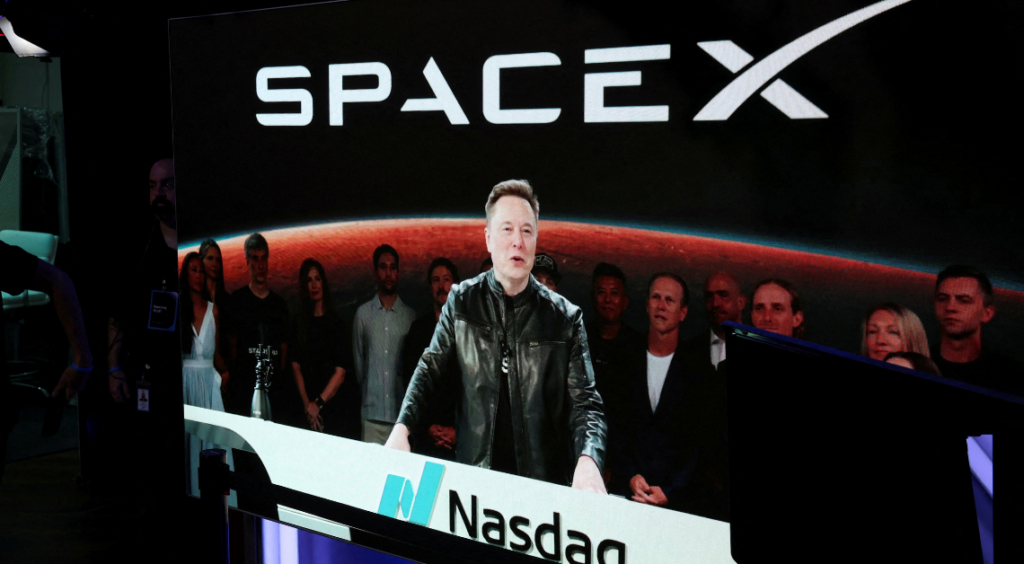
SpaceX has officially entered the Nasdaq-100 less than a month after its IPO, prompting bullish analyst coverage and an estimated US$4.3 billion in passive fund inflows as investors back its Starship, Starlink and AI growth ambitions.
Key Highlights
- SpaceX inputs billions in projected passive fund inflows within weeks of their Nasdaq-100 listing
- All of the major Wall Street brokerages started with at least neutral ratings
- Analysts identifies Starship, infrastructures for AI and Starlink as key long-term growth drivers
After its high-profile debut on Wall Street less than a month ago, SpaceX was added to the Nasdaq-100 index on Tuesday and brokerages initiated coverage with generally positive ratings, with passive investment expected to number in the billions of dollars flowing from the inclusion.
The addition comes just a month after Nasdaq revised its listing rules for newly-corporatized firms, and will likely compel index funds or ETFs following the benchmark to acquire SpaceX shares. J.P. Morgan estimates that the addition will provide around US$4.3 billion of passive inflows.
Wall Street Polishes Its Bullishness
Morgan Stanley, Goldman Sachs, J.P. Morgan, Citigroup and Wells Fargo all quickly began coverage of the stock with their highest ratings.
Morgan Stanley describes SpaceX as the last frontier for AI and Goldman Sachs says the doors are wide-open for the company to prevail across each of the multi-trillion dollar market ops upon long-term including space, connectivity and artificial intelligence.
Starship, SpaceX’s fully reusable next-generation rocket, was regarded by many analysts as the biggest long-term growth driver for the company. UBS has estimated the potential annual number of Starship launches by 2031 at over 1,500, while J.P. Morgan’s base case was closer to 5,000 except under optimistic scenarios for reusability and final deployment.
AI Ambitions Drive Valuation
SpaceX Investors putting valuation on SpaceX, no longer just an interesting space company, but a potential giant of AI infrastructure that will self-finance Grok development while completing the Starlink lockdown in satellite communications.
Still, not all analysts are so upbeat. This time, it received neutral-equivalent ratings from MoffettNathanson, KeyBanc and Argus Research on Thursday while CFRA reiterated its lone sell rating ever, saying the valuation on his name is “overly reliant” on unproven moon shots such as Starship and xAI.
SpaceX has become the sixth largest by market capitalisation (US$2.1 trillion) publicly traded company in the US. The index has already been part of FTSE Russell indices, but S&P Global said it would not fast-track a company into the S&P 500, so unlikely to happen for at least another year.
Investors are still grappling with post-IPO volatility as SpaceX shares gained over 6% since they started trading on June 12.
Source: Reuters
Follow Inspirepreneur Magazine for daily global business news.

At Inspirepreneurs Magazine, covering entrepreneurship, business failures, and the human stories behind the world's most ambitious founders. She writes at the intersection of strategy and storytelling.
You Might Also Like

Why Gold is Outperforming Nearly Everything in 2024

Australian and New Zealand Dollars Slip as Global Stocks Fall and Yen Strengthens
