


Why Nvidia Is Signing Deals Across Asia : And What It Means for the Global AI Supply Chain
If you've followed Nvidia over the past few months, you may have noticed a pattern.
Jensen Huang seems to be everywhere in Asia. In June the Nvidia CEO went to South Korea. Came back with some new partnerships with companies like LG Group, SK Telecom, SK hynix, Naver, Hyundai and Doosan. At first these deals seemed like a bunch of things. They were about things like robots that look like people and Nvidia artificial intelligence data centers.
When you really think about all these Nvidia partnerships you start to see a pattern, with the Nvidia partnerships
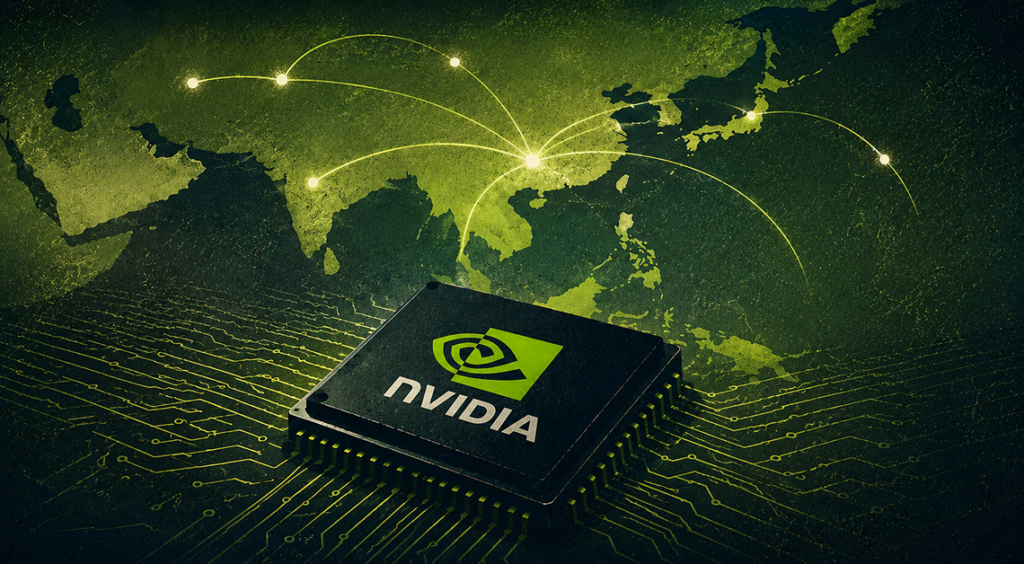
Nvidia is not simply signing a few separate partnerships across Asia. It is building deeper links across the entire AI supply chain from chips and memory to data centres, robotics and manufacturing. That is gradually turning Nvidia into something much bigger than a GPU company.
Why Nvidia's Asia AI Deals Matter
For a long time, Nvidia’s business was easy to explain: it made high-performance GPUs, cloud companies bought them, and AI developers used that computing power to train their models.
That is still a major part of the business. But Nvidia is now pushing well beyond simply selling chips.
The next phase of AI requires far more than chips. It needs advanced memory, specialised manufacturing, data centre infrastructure, robotics platforms, power systems, cooling technology, and software ecosystems that all work together.
That's why Nvidia's Asia deals are attracting so much attention. Rather than focusing on one part of the stack, the company is building relationships across the entire chain and doing it in a way that makes Nvidia increasingly difficult to replace.
Jensen Huang's Seoul Trip Was About More Than Robots
One of the most talked-about announcements involved Nvidia's discussions with LG Group around humanoid robots and "physical AI" , the emerging field of AI systems that operate in the real world rather than purely in software.
The robotics angle grabbed headlines. Nvidia's Isaac simulation platforms would allow LG to test robot behaviour digitally before deploying machines in the real world, which sounds futuristic enough to generate plenty of coverage.
But robotics was only part of the story.
The conversations also covered data centre architecture, autonomous driving, cloud infrastructure, and AI hardware deployment across LG's industrial operations. Taken together, they suggest Nvidia is trying to embed itself into the physical infrastructure that future AI systems will rely on, not just supply the components those systems run on.
The SK hynix Relationship May Be Even More Important
The LG talks point to Nvidia’s interest in robotics. Its relationship with SK hynix shows the other side of the story: AI hardware is only as capable as the memory behind it.
Today’s AI systems need high-bandwidth memory, or HBM, to move huge amounts of data quickly between components. Without it, even the most powerful AI chips cannot train or run large models efficiently.
SK hynix is now one of the key companies supplying HBM worldwide, and its demand is rising as AI models are growing and need more computing power. For Nvidia, having a stable supply of next-generation memory matters just as much as building faster GPUs. A powerful chip cannot do much on its own if it does not have enough fast memory to work with.
SK Telecom's Gigawatt Data Centre and What It Signals
The deal with SK Telecom is different again, and in some ways the most telling of all.
Nvidia is co-developing a gigawatt-scale AI data centre with SK Telecom, expected to come online in 2027. A gigawatt-scale facility is an enormous undertaking for context, a single gigawatt is roughly the output of a large nuclear power plant, and building data centre infrastructure at that scale costs billions of dollars.
This isn't a chip sale. It's Nvidia helping design the environment those chips will operate within.
That distinction matters more than it might seem. A company that buys Nvidia chips can theoretically switch to a competitor. A company that has built its entire data centre architecture around Nvidia's ecosystem faces a much harder decision.
How Nvidia Is Funding the Strategy
Here's the part that rarely makes the headlines but probably should.
Nvidia's approach to supply chain relationships increasingly mirrors a strategy Amazon pioneered with its logistics partners: warrant arrangements. Rather than paying large upfront amounts for supply access, Nvidia takes equity stakes in key suppliers aligning their incentives without requiring massive cash outlays.
The numbers tell the story. Nvidia's public equity portfolio has grown from roughly $230 million two years ago to over $13 billion by the end of 2025, with a further $8–10 billion in deals in early 2026. That's not passive investment. It's a deliberate mechanism for deepening supply chain relationships across the very companies its hardware depends on.
Why Asian Manufacturers Now Account for 90% of Nvidia's Production Costs
Bloomberg reporting this year revealed a figure that stopped a lot of people in the industry: Asian suppliers now account for roughly 90% of Nvidia's production costs, up from around 65% a year earlier.
That number reflects how completely modern AI hardware depends on a relatively concentrated set of suppliers. Taiwan provides advanced chip fabrication through TSMC. South Korea supplies critical HBM memory through SK hynix and Samsung. Companies across the region handle manufacturing, assembly, packaging, and infrastructure.
What makes this particularly interesting is that Nvidia's newer products Blackwell GPUs and Jetson Thor robotics platforms are competing for the same advanced TSMC manufacturing capacity. When two product lines chase the same fabrication resources, partners who secured commitments earliest get priority. That dynamic turns supply chain relationships into competitive advantages, not just logistics arrangements.
Far from reducing its exposure to Asia, Nvidia is deepening it. And that's not accidental.
Nvidia as Infrastructure
The most significant shift in Nvidia's strategy isn't any single deal. It's the pattern across all of them.
Whether it's co-developing a gigawatt data centre with SK Telecom, collaborating with LG on robotics, expanding memory partnerships with SK hynix, or supporting industrial AI with Hyundai and Doosan, Nvidia keeps moving further up the value chain. The company increasingly resembles an infrastructure integrator rather than a semiconductor designer and that distinction carries real strategic weight.
Infrastructure creates stickiness in a way that components don't. If a company builds its data centre, AI software stack, robotics platform, and hardware strategy around Nvidia technologies, switching to a competitor becomes a much harder conversation than simply ordering different chips.
The Real Test of Nvidia's Strategy
Several developments will determine whether this strategy delivers on its promise.
The SK Telecom gigawatt data centre, targeted for 2027, will be an early test of whether Nvidia can execute at genuine infrastructure scale. The rollout of SK hynix's next-generation HBM memory and whether it ships on Nvidia's Rubin GPU architecture timeline will be closely watched by investors and competitors alike. And the industrial AI projects with Hyundai and Doosan will provide an early read on how quickly physical AI moves from demonstration into everyday business operations.
There's also one wildcard that could reshape everything: US export controls. Any tightening of restrictions on advanced AI hardware would complicate parts of the Asian supply chain and force companies to rethink arrangements that currently look very settled.
For now, though, the direction is clear. Nvidia's Asia deals aren't simply about selling more chips. They're about securing a central role in the infrastructure that will power the next generation of AI and ensuring that infrastructure is built around Nvidia from the ground up.
FAQs
Why does Nvidia rely so heavily on Asian manufacturers?
Asia provides capabilities that are genuinely difficult to replicate elsewhere at scale. TSMC in Taiwan produces the world's most advanced chips. SK hynix in South Korea leads in high-bandwidth memory.
What is HBM memory and why is SK hynix so important to Nvidia?
High-bandwidth memory (HBM) is a specialised type of memory that sits close to the GPU and allows it to process enormous amounts of data at speed. It's essential for training and running large AI models. SK hynix is one of only a small number of companies in the world capable of producing HBM at the scale Nvidia requires, which makes the relationship strategically critical rather than simply commercial.
How do Nvidia's Korean deals compare to its deals in Taiwan, Japan, and India?
The Korean deals focus heavily on memory, data centre infrastructure, and industrial AI areas where South Korean conglomerates have deep expertise. Taiwan remains central to chip fabrication through TSMC, which is the manufacturing backbone for Nvidia's most advanced products. Japan and India represent newer fronts, with Nvidia pursuing partnerships around cloud infrastructure and sovereign AI development.
What is a gigawatt-scale AI data centre and what does it cost to build?
A gigawatt refers to the power capacity of the facility roughly equivalent to the output of a large nuclear power plant. Building at that scale requires billions of dollars in infrastructure investment covering power supply, cooling systems, networking, and physical construction. The SK Telecom facility planned for 2027 represents one of the largest AI infrastructure commitments currently underway in Asia.
Could US export controls disrupt Nvidia's Asian supply chain partnerships?
Potentially, yes. Export restrictions on advanced AI chips or related technologies could limit what Nvidia can sell or co-develop with certain partners in certain markets. The current partnerships are structured under existing rules, but any significant tightening particularly around advanced GPU exports or memory technology could force companies on both sides to restructure arrangements that currently look stable.
Follow Inspirepreneur Magazine for daily global business news.

At Inspirepreneurs Magazine, covering entrepreneurship, business failures, and the human stories behind the world's most ambitious founders. She writes at the intersection of strategy and storytelling.


